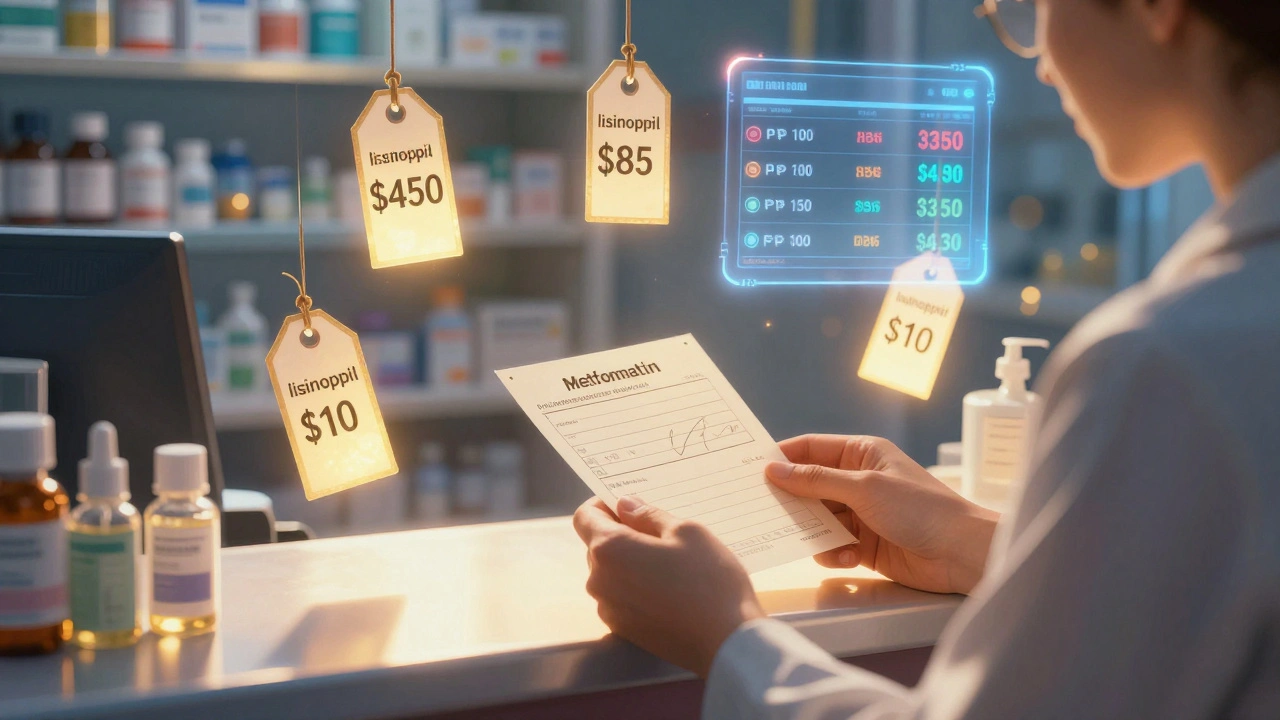
Price Transparency Tools: Know What You Pay for Medications
When you pick up a prescription, you should know exactly what you’re paying—and why. Price transparency tools, digital resources that show real-time drug costs across pharmacies. Also known as medication cost comparators, these tools let you see cash prices, insurance discounts, and even coupon savings before you walk into the store. Too many people end up paying more than they need to because they never check. That’s not just frustrating—it’s dangerous when you skip doses because the price is too high.
These tools don’t just show you prices. They connect to real data from pharmacies, insurers, and government programs like Medicare Extra Help, a federal program that cuts generic drug costs to $4.90 per fill for low-income seniors. They also link to programs that cover generic drugs, lower-cost versions of brand-name medications that work the same way. You might be surprised how much you can save by switching from brand to generic—or by using a different pharmacy. One person saved $120 a month just by switching from CVS to Walmart for their blood pressure med.
But price transparency isn’t just about comparing pills. It’s about understanding hidden costs. Are you paying for a drug that’s been reformulated? Is your insurance blocking a cheaper alternative? Tools that show you prescription pricing, the actual out-of-pocket cost after insurance, rebates, and coupons are applied. help you see the full picture. You might think your plan covers your meds, but if your deductible hasn’t been met, you’re paying full price. These tools fix that guesswork.
And it’s not just for seniors. People on Medicaid, private insurance, or no insurance at all can use these tools to find the lowest price. Some even show you how much a 90-day supply costs versus a 30-day one. Others flag when a drug has been recalled or when a generic just hit the market. You don’t need to be a pharmacist to use them—just someone who wants to stop overpaying.
Behind every high drug bill is a lack of information. Price transparency tools fix that. They’re not magic, but they’re the closest thing. And the best part? They’re free. No sign-up. No credit card. Just enter your drug name, your zip code, and see what’s cheapest nearby. You’ll find out why some pharmacies charge $3 for metformin while others charge $45. It’s not random—it’s system-wide, and now you can see it.
Below, you’ll find real stories from people who used these tools to cut their medication costs. Some found hidden savings through Medicare Extra Help. Others discovered that a generic they’d never tried worked just as well—and cost a tenth of the price. You’ll read about how people avoided dangerous interactions by checking costs before switching meds. And you’ll see how checking prices helped people stick to their treatment plans instead of skipping doses.
Learn how to use free price transparency tools to compare drug costs across pharmacies and insurance plans. Save hundreds on prescriptions by finding the lowest out-of-pocket prices with simple, step-by-step guidance.