
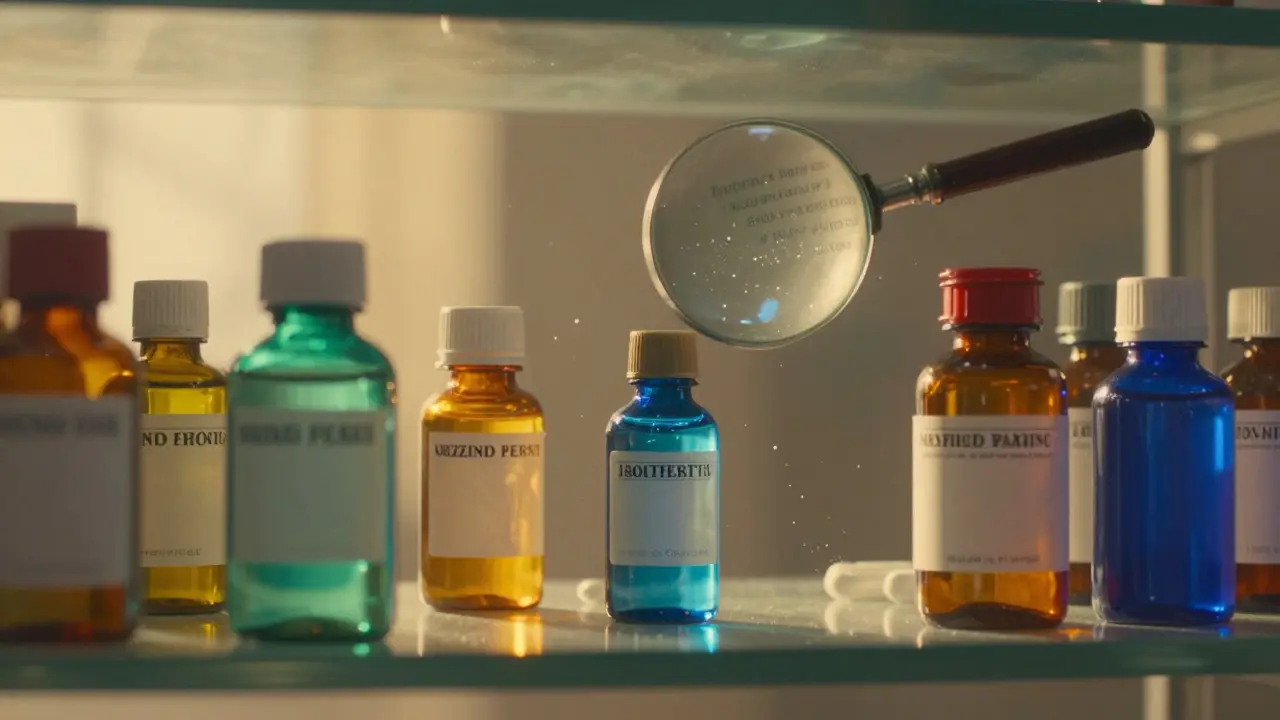
Every year, millions of people take generic medicines because they’re affordable, effective, and widely available. But what if the pill in your bottle isn’t what it claims to be? Counterfeit generic drugs are a growing threat - not just overseas, but right in your local pharmacy. The packaging might look perfect. The label might match exactly. Yet inside, the active ingredient could be missing, diluted, or replaced with something dangerous. Verifying authenticity isn’t just for regulators or big hospitals. It’s something every pharmacist, caregiver, and even patient should understand.
Why Generic Medicines Are Targeted
Generic drugs make up 90% of prescriptions in the U.S., but only 22% of total drug spending. That’s a big red flag for counterfeiters. Why? Because branded drugs have high profit margins - and strong security features. Generics? Low margins. Less investment in packaging security. That makes them the easiest target.Counterfeiters don’t need to be experts. They just need to copy what they see. A 2023 study found that 90-95% of modern fake packaging can fool the naked eye. The font on the expiration date? Matched. The logo? Replicated. Even the barcode scans correctly - because counterfeiters copy the real one. But here’s the catch: what’s inside? Often, it’s flour, chalk, or worse - toxic chemicals. One 2022 case in Nigeria involved fake metformin laced with diethylene glycol, a poison used in antifreeze. Patients didn’t just get no help - they ended up in intensive care.
The Three Layers of Verification
There’s no single way to catch a fake. Real verification uses three overlapping layers: overt, covert, and track-and-trace.Overt features are what you can see with your own eyes. Think color-shifting ink, holograms, or special fonts. Pfizer’s Viagra packaging uses Optically Variable Ink that shifts from green to blue when tilted. Johnson & Johnson’s Tylenol bottles have holograms with micro-text so small you need a 10x magnifier to read it. These aren’t just decorations - they’re the first line of defense. But here’s the problem: counterfeiters now have machines that replicate these. INTERPOL’s 2021 Operation Pangea report found that 80-90% of holograms on fake drugs are convincing enough to fool most people.
Covert features need a little help - like a UV light. Many manufacturers use invisible inks that glow under 365nm ultraviolet light. These are harder to copy because they require chemical knowledge. Lumilink® UV markers, for example, are embedded in the label and only show up with a handheld reader. These cost $200-$500, but they’re not magic. They only work if you know where to look. A 2023 survey of 1,500 U.S. pharmacists found that 76% didn’t have reference samples to compare against. Without knowing what the real label looks like under UV light, you’re guessing.
Track-and-trace is the most reliable - but also the most complex. Every package gets a unique serial number following the GS1 standard. In the EU, the Falsified Medicines Directive (FMD) requires every prescription drug to have a 2D barcode that links to a central database. When you scan it, the system checks: Is this package real? Was it sold to this pharmacy? Has it been tampered with? The European Medicines Verification System (EMVS) handles over 2.5 billion checks a year with 99.998% uptime. In the U.S., the DSCSA law requires the same by November 2023. But here’s the gap: generics often don’t follow the same rules. A 2023 report from the Generic Pharmaceutical Association found that 35-45% of generic products lack consistent serialization. That means your barcode scanner might say “valid” - even if the product is fake.
The Tools That Actually Work
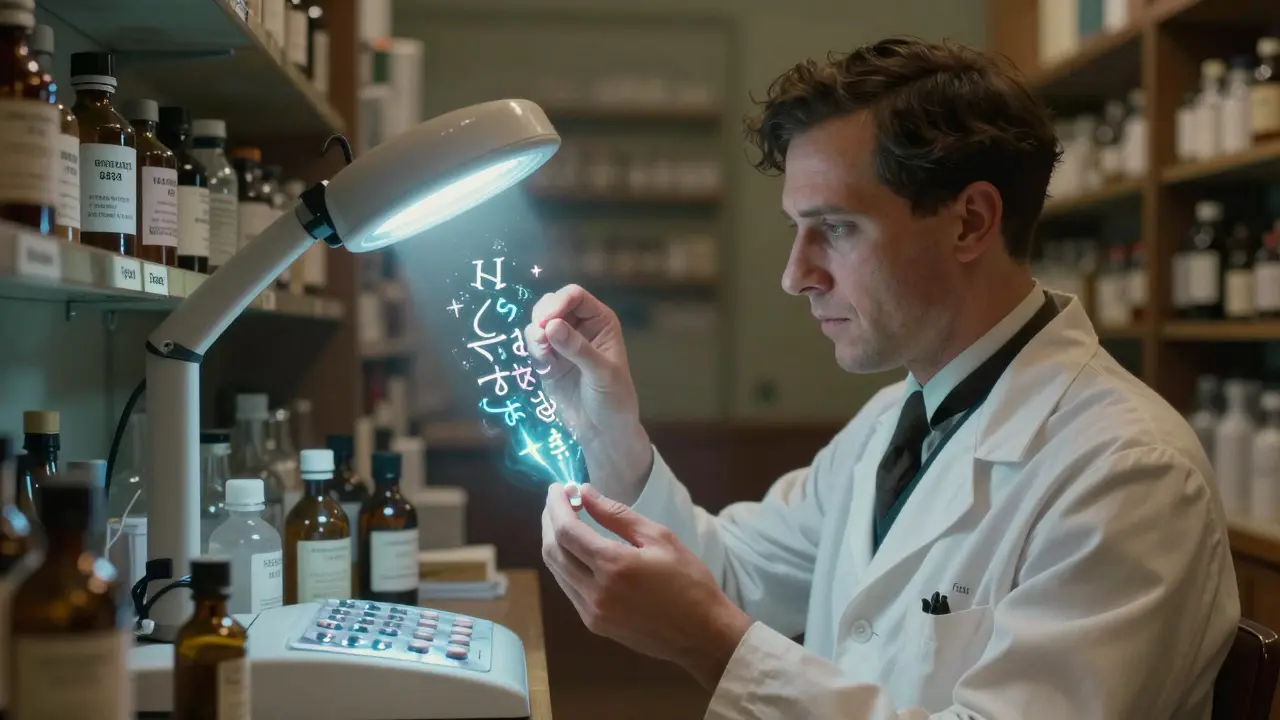
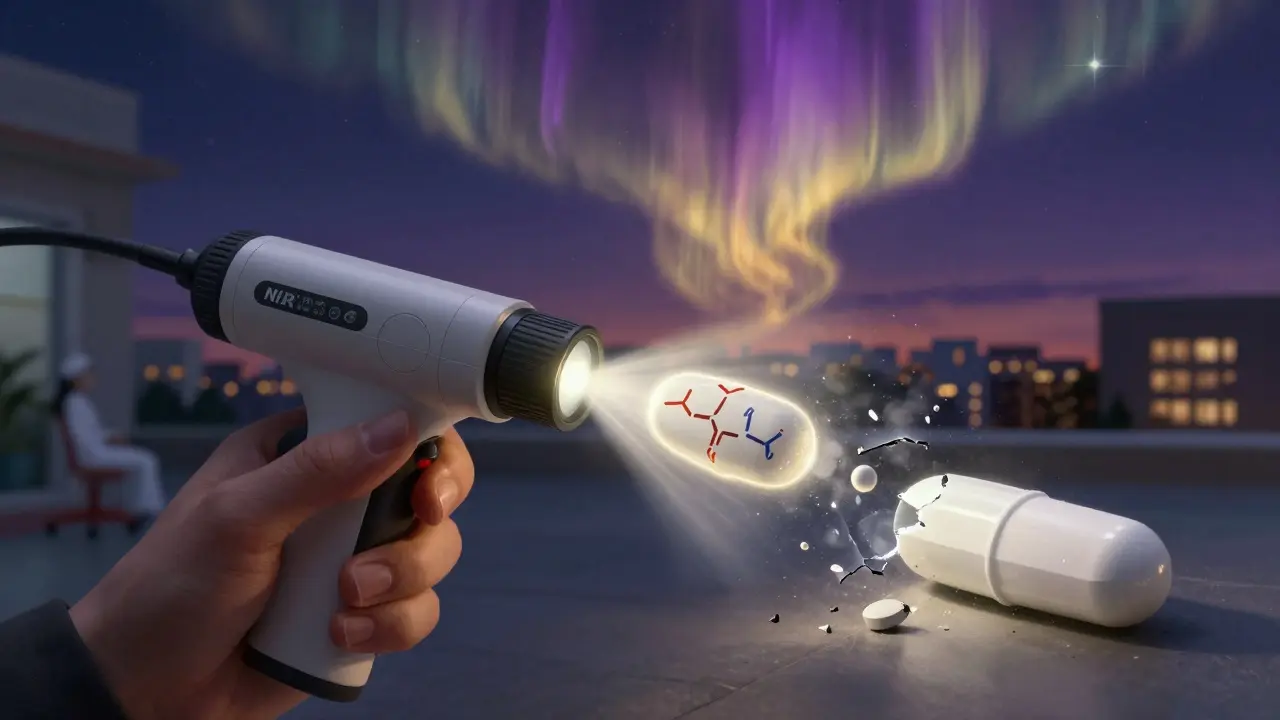
Visual checks aren’t enough. You need technology.Handheld NIR spectroscopy devices - like Thermo Fisher’s TruScan® RM - are becoming the gold standard. They shine infrared light on a pill and analyze how it reflects. Every drug has a unique chemical fingerprint. If the active ingredient is wrong, the reading changes. A 2020 study in the American Pharmaceutical Review showed NIR could detect counterfeit Plavix® generics with 92-97% accuracy - even when they looked identical. These devices weigh just 1.4 kg, analyze a pill in 10-30 seconds, and cost around $25,000. They’re not for everyone - but for pharmacies handling high-volume generics, they’re worth it.
Raman spectroscopy is another option. It’s great for identifying specific chemical compounds. But it struggles with dark-colored pills because of fluorescence interference. A 2023 Drug Topics survey found pharmacists using B&W Tek’s NanoRam® reported 94% satisfaction. One said: “It caught a fake metformin that looked perfect. Saved a patient from liver damage.”
But here’s the reality: most community pharmacies can’t afford these tools. That’s why the FDA recommends a layered approach. Start with a UV light ($50), a magnifier ($20), and a reference guide. Then, if something feels off - call the manufacturer. Pfizer’s Authentication Portal processes 15,000 requests a month and responds within 24 hours. You don’t need a lab. You just need to be curious.
What Pharmacists Are Seeing
Real stories matter more than statistics.On Reddit’s r/pharmacy, a pharmacist posted: “I caught a fake Nexium® because the expiration date font was 0.5mm narrower. Took me three tries to notice.” Another said: “The batch number was printed too dark. Real ones have a slight matte finish.” These aren’t glitches. They’re clues.
But 68% of pharmacists in a 2022 National Community Pharmacists Association survey said verifying generics was harder than verifying branded drugs. Why? Inconsistent security features. Missing reference samples. No training. One pharmacist in Ohio told me: “I’ve been doing this 20 years. I’ve never seen so many fakes. And no one’s teaching us how to spot them.”
Mobile apps like MediMark help - but they fail 40-50% of the time with generics. Why? Because many generics don’t have unique serial numbers. Or the barcode is smudged. Or the database isn’t updated. In rural Nigeria, a 2022 study found mobile verification worked only 65% of the time due to poor internet. That leaves health workers relying on sight and smell - which misses 30-40% of counterfeits.
What’s Changing in 2025 and Beyond
The good news? Things are getting better.The EU is updating its FMD in January 2025. All generic medicines will need 2D data matrix codes with cryptographic authentication - meaning each package has a digital signature that can’t be copied. The FDA’s 2023 pilot with blockchain technology achieved 99.2% accuracy across 500 pharmacies. The Generic Pharmaceutical Association is pushing for 100% serialization of all U.S. generics by 2026 - with $500 million in funding to help small manufacturers.
Technology is getting faster too. Thermo Fisher’s new TruScan® RM Gen3 cuts analysis time to 5-15 seconds. AI-powered systems are starting to combine visual, chemical, and tracking data to flag fakes in real time. Gartner predicts 70% of verification will use AI-driven multi-method systems by 2028.
But progress isn’t automatic. The WHO says 80% of clinics in sub-Saharan Africa still can’t afford basic verification tools. And while the EU has 98% compliance, Southeast Asia has just 45%. Counterfeiters adapt faster than regulations. The only way to win is global cooperation - and consistent standards.
What You Can Do
If you’re a patient: Check the packaging. Compare it to your last bottle. Is the font the same? Is the color too bright? Does the cap click differently? If something feels off - ask your pharmacist.If you’re a pharmacist: Use the tools you have. Start with a UV light and a magnifier. Keep reference samples. Train your team. If you suspect a fake, contact the manufacturer. Don’t wait for a crisis.
If you’re a policymaker: Push for mandatory serialization. Support funding for small pharmacies. Demand transparency from manufacturers. Generic drugs aren’t cheap because they’re inferior. They’re cheap because we’ve made them easy to copy. Fix that.
The truth is simple: you can’t trust a pill just because it looks right. The real test is what’s inside. And the only way to know is to verify - with your eyes, your tools, and your questions.
How can I tell if my generic medicine is fake?
Look for inconsistencies in the packaging - font size, color intensity, cap texture, or expiration date alignment. Use a UV light to check for hidden markings. Compare the pill’s appearance and imprint to a known authentic sample. If the packaging feels flimsy or the pills look different in color or shape, contact your pharmacist or the manufacturer. Never take a pill if you have doubts.
Are all generic drugs safe?
Yes - when they’re genuine. Approved generic drugs are required to have the same active ingredient, strength, and effectiveness as brand-name drugs. But counterfeit generics - which are not approved - can contain wrong ingredients, no active drug, or toxic substances. The problem isn’t generics themselves. It’s unregulated, falsified versions that slip into the supply chain.
Why don’t all generic manufacturers use security features?
Cost. Generic manufacturers operate on thin margins - often less than 10% profit. Adding security features like holograms, UV inks, or serialization can add $500,000 to $2 million per product line. Many small manufacturers skip these to stay competitive. Regulatory pressure is increasing, but enforcement varies globally. The EU requires it; many other countries don’t.
Can barcode scanners detect fake drugs?
Sometimes - but not reliably. Counterfeiters copy real barcodes and serial numbers. If the barcode matches a legitimate record, the scanner says “valid.” But that doesn’t mean the product is real. That’s why the EU now requires cryptographic authentication in 2D codes - not just a number, but a digital signature. Without that, barcodes alone can’t stop fakes.
What’s the best way for a small pharmacy to verify generics?
Start with low-cost tools: a UV light ($50), a 10x magnifier ($20), and a reference guide from the manufacturer. Train staff to compare packaging details. Keep authentic samples on file. If something looks off, call the manufacturer’s authentication line - most offer free verification. For higher-risk drugs, consider a handheld NIR device. It’s an investment, but it can prevent harm and liability.
Is it safe to buy generic drugs online?
Only from licensed, verified online pharmacies. Look for the VIPPS seal (Verified Internet Pharmacy Practice Sites) or equivalent national certification. Avoid websites that sell without a prescription, offer “too-good-to-be-true” prices, or don’t list a physical address. The FDA estimates that 96% of online pharmacies selling drugs without a prescription are illegal. Many sell counterfeit products.


