
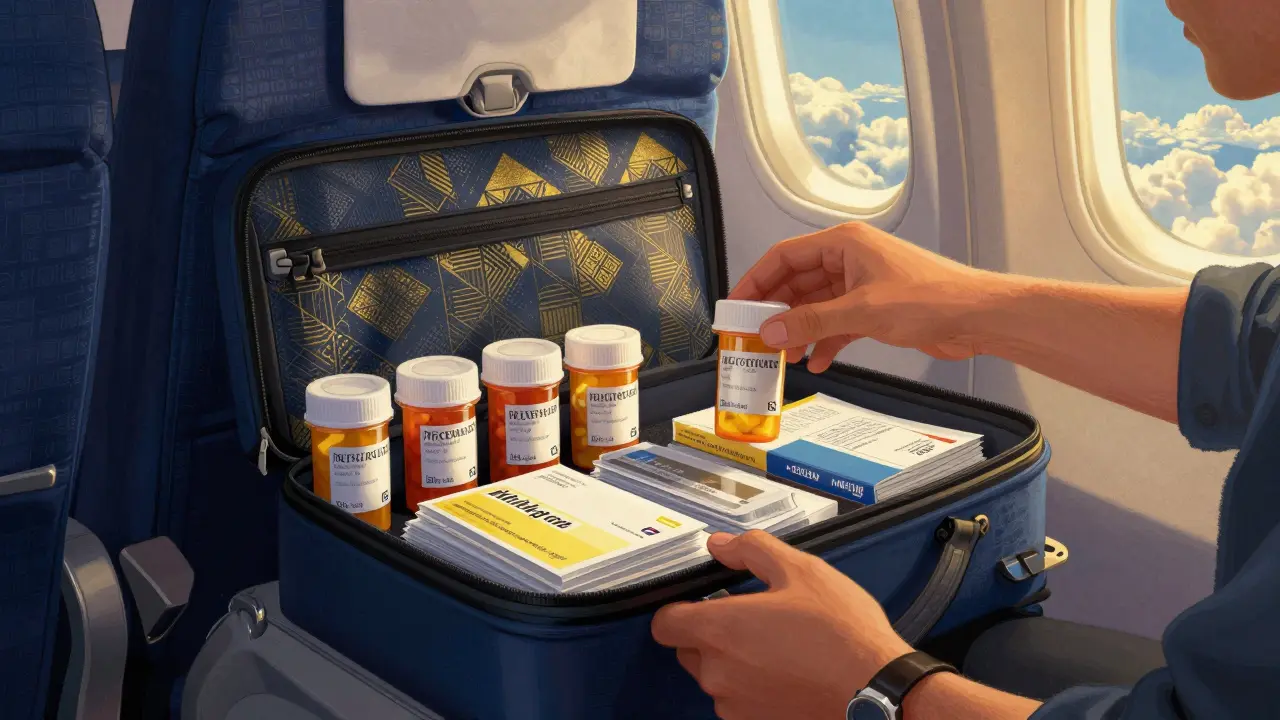
Imagine you are halfway through a week-long cruise, and you realize your daily blood pressure pills are in your checked suitcase. That bag just went missing in baggage claim. It sounds like a nightmare, but it happens more often than you think. According to reports, a small percentage of all checked bags get delayed or lost annually. For someone relying on specific prescriptions, losing your medicine isn't just an inconvenience-it’s a health risk. You need a system that keeps your treatments safe, accessible, and legal across borders.
This guide cuts through the confusion. We will look at the actual rules from transport authorities, how cruise lines handle drugs in international waters, and the best way to organize your case so nothing gets confiscated. Whether you are driving cross-country or sailing the Caribbean, your safety depends on proper preparation.
The Golden Rule: Never Check Your Meds
You might think checking your bag saves space, but when it comes to Prescription Medicationsare essential drugs prescribed by a doctor that travelers must carry safely during transit, there is only one place they belong. That is your carry-on luggage. The Federal Aviation Administration (FAA) explicitly advises keeping essential medicines with you because checked bags are prone to loss or extreme temperature changes in the cargo hold.
Why does this matter? If your flight is delayed, you still have your medicine. If the plane lands late and you miss your connecting transfer, you don't want your life-saving inhaler stuck in a storage locker at another airport. Even for road trips, keeping your medical supplies in the passenger cabin ensures they stay within reach if traffic jams stretch into overnight delays. Airlines lose about 0.02% of luggage each year, which sounds low until it is your specific bottle of insulin sitting on a conveyor belt somewhere else.
Keep Them in Original Containers
You might be tempted to dump everything into one cute weekly pill organizer to save space. While organized, this practice creates problems at security checkpoints. Transportation Security Administration (TSA) officers can verify prescription labels instantly, but they cannot verify loose pills in unmarked plastic bubbles. Major cruise lines like Royal Caribbean require guests to keep meds in their original pharmacy containers with the label intact.
Countries outside your home base have strict rules about importing drugs. Some nations consider certain painkillers or ADHD stimulants controlled substances even if you have a valid prescription from back home. Having the original bottle links the pill to your name and doctor directly. If you absolutely need to use a travel organizer, keep the original box or a copy of the pharmacy receipt visible alongside it. This simple step prevents unnecessary stops and inspections.
Original Packagingpharmacy-labeled containers that display patient name, drug dosage, and prescribing physician details.For example, if you are crossing state lines in the US, laws vary regarding medical marijuana or other compounds. In some states, possession without the original container can lead to detention. Sticking to the labeled bottle proves legality immediately.
The Paperwork That Saves Time
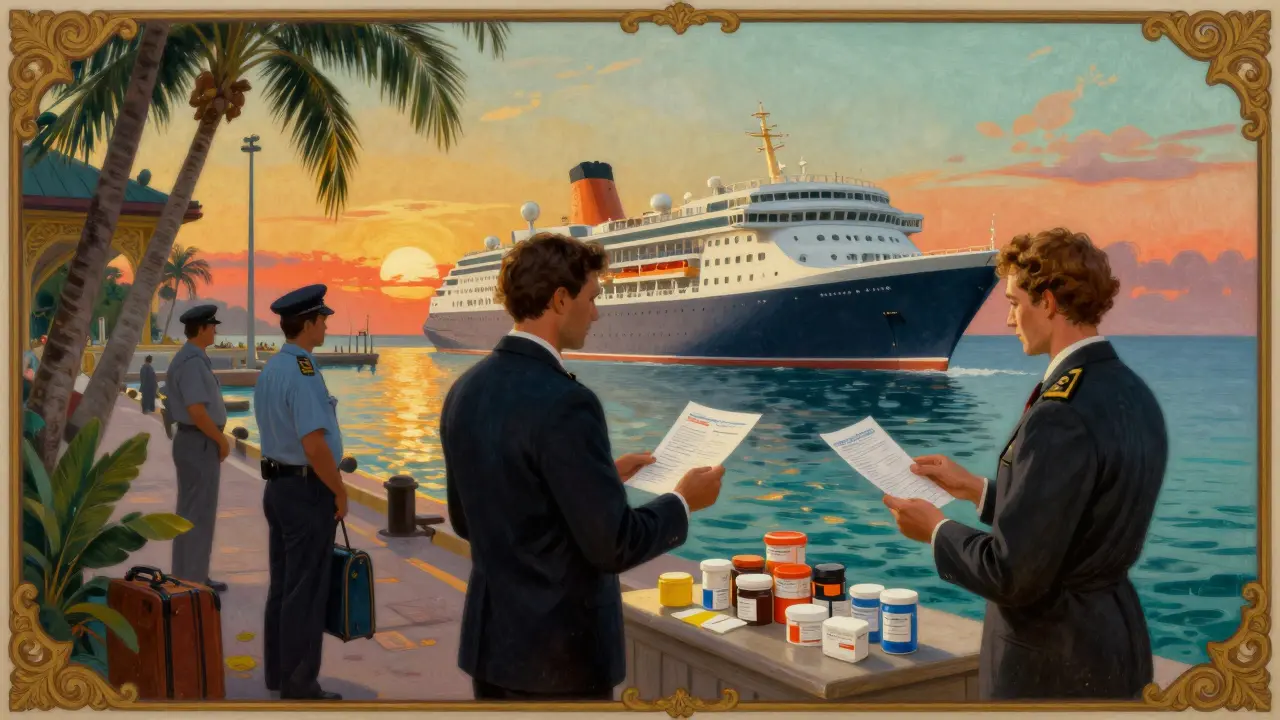
Sometimes, the label on the bottle isn't enough. International customs officers might ask for more proof. A letter from your doctor goes a long way. This document should be printed on official letterhead and signed. It needs to list every drug you are carrying, why you need it, and confirm the quantities match the duration of your trip.
Cruise itineraries change frequently. Ports of call might shift last minute due to weather or docking issues. Carrying a digital copy of this letter on your phone helps. It also helps to carry a physical copy in your waterproof document sleeve. The Centers for Disease Control and Prevention suggests including both brand names and generic names in this list. Foreign pharmacists may recognize one but not the other.
Don't forget to add a copy of your passport details. Customs regulations often require the name on the prescription to match the traveler exactly. If you are traveling for someone else, like a grandparent taking care of their own meds while you drive, you need a notarized permission letter explaining their relationship and the reason they are on board.
Crucial Differences: Cruise Ships vs. Road Trips
Your packing strategy shifts depending on how you move. Cruise ships operate under different rules than land vehicles. On a ship, you are essentially entering a foreign jurisdiction every time you dock. Cruise lines enforce stricter policies to protect themselves from local laws. Norwegian Cruise Line, for instance, asks passengers to declare controlled substances before the voyage even starts.
Road trips present their own set of challenges. If you are driving across multiple states, police can stop you anywhere. While pharmacies are easier to find on land-roughly 90% of Americans live near one-you can't always buy emergency stock quickly in remote areas. For cruises, once you leave port, buying meds becomes nearly impossible unless the ship has a full hospital inventory, which rarely covers specific brand-name formulations.
| Aspect | Cruise Travel | Road Trip |
|---|---|---|
| Accessibility | Limited to ship clinic inventory | High access to local pharmacies |
| Customs Risks | High (multiple countries) | Moderate (state/federal borders) |
| Declaration | Often required pre-sailing | Usually checked on demand |
| Quantity Buffer | +3 days supply recommended | +2 days supply recommended |
Managing Heat and Humidity
Your medicine works best within a specific temperature range. Tropical ports and desert highways bring heat that ruins delicate drugs like insulin or biologics. Standard plastic bags offer little protection against direct sunlight or high temperatures in a parked car.
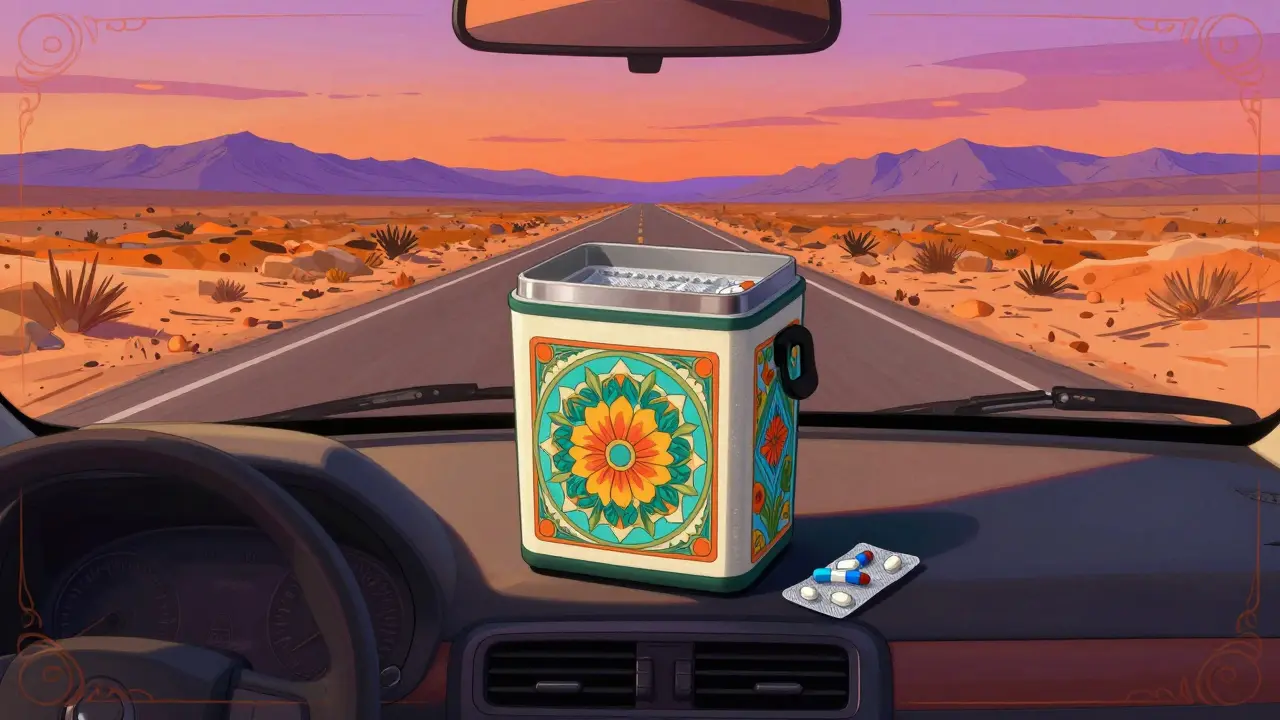
Use insulated coolers designed for travel. They maintain stable temperatures for up to 72 hours according to industry standards. Just remember, do not freeze your meds unless specified. Once you arrive, store them in the ship's mini-fridge or hotel room immediately. If you are cruising, check if the ship offers temperature-controlled storage for guest medications. Most do, but you must request it at check-in.
Avoid leaving bags in closed cars during summer stops. Temperatures inside a vehicle spike dangerously fast. Even ten minutes in a parking lot can degrade liquid suspensions. If you are on a road trip, keep the cooler in the air-conditioned zone of the van, not the trunk.
Preventing Theft and Loss On Board
Cargo theft is rare, but onboard theft does happen. Medical facilities report a small percentage of incidents regarding missing medication. Keeping your meds in a locked cabin safe adds security. However, never hide your daily necessities in a spot you might forget.
Label your bags clearly with your name and return address. Using ziplock bags with color-coding helps speed up your routine. One user shared on a travel forum how switching to color-coded bags reduced their morning errors to zero during a two-week Mediterranean trip. Simplicity wins when you are tired.
Emergency Planning for Travel Delays
We hope for smooth sailing, but delays happen. Flights get grounded, storms cancel ferries, and bus schedules slip. Special Journeys recommends carrying extra doses specifically for unexpected stops. You should have at least three extra days of supply beyond your itinerary end date.
If you get stranded far from home, your digital records become your lifeline. Travel insurance covers many costs, but it won't replace the pill itself. Make sure your policy covers pre-existing conditions. Dr. Jane Chen, a specialist in travel medicine, points out that roughly 28% of medical emergencies at sea require expensive evacuation. Being prepared with the right stock means you avoid triggering these scenarios unnecessarily.
Also, keep contact info for your pharmacy and doctor handy. If you run out or lose a batch, they can advise on replacements at the nearest location. Don't wait until you are panicked to call them.
Can I put my pills in a pill organizer for security?
You can use organizers for daily ease, but always keep a portion in original pharmacy bottles for verification at borders. Unlabeled pills risk confiscation by customs agents.
How many extra doses should I pack?
Pack at least three extra days' worth of medication. This buffer covers travel delays, missed flights, or extended stays at destinations.
What if I am crossing international borders?
Check destination country rules ahead of time. Bring a doctor's letter confirming the necessity of your meds, and keep them in original labeled packaging.
Is travel insurance necessary for meds?
Yes, comprehensive insurance is vital. Medical costs abroad can exceed tens of thousands of dollars, especially if evacuation is required.
Can I take liquid medication in carry-on?
Yes, liquids for prescription use are exempt from the standard 3-1-1 rule limits. Just declare them separately during screening.


