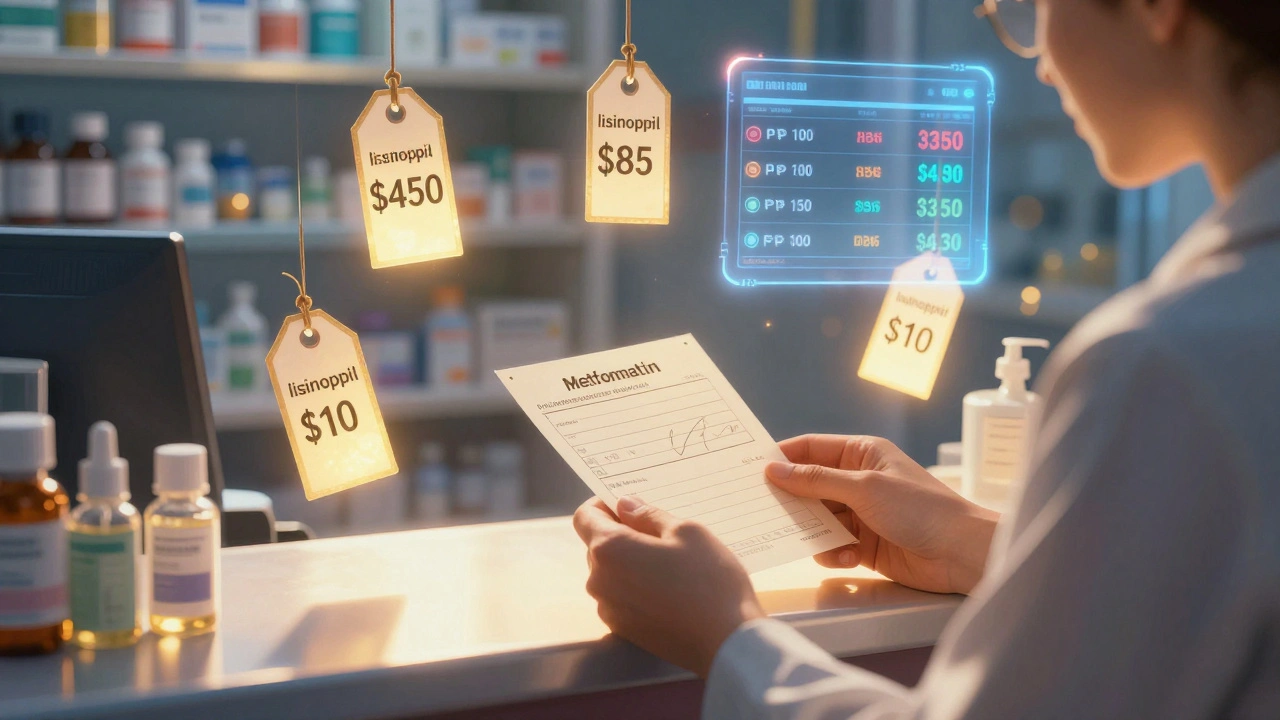
Drug Cost Comparison: Find Affordable Medications and Avoid Overpaying
When you need medication, the price shouldn’t feel like a surprise. Drug cost comparison, the practice of evaluating prices across pharmacies, insurance plans, and generic options to find the most affordable choice. Also known as medication price shopping, it’s not just smart—it’s necessary when a single pill can cost $50 or more. Many people don’t realize that the same drug can cost $4 at one pharmacy and $80 at another, even with insurance. The difference often comes down to whether you’re getting a generic drug, a chemically identical version of a brand-name medicine sold at a lower price, an authorized generic, a brand-name drug sold under a generic label by the same manufacturer, or a counterfeit version with no quality control.
Why does this matter? Because $50 adds up fast. If you take three meds a day, that’s $450 a month. That’s why drug cost comparison isn’t just about saving a few bucks—it’s about staying on your treatment plan. People on fixed incomes, seniors on Medicare, and those without good insurance are hit hardest. But help exists. Programs like Medicare Extra Help, a federal program that cuts prescription costs for low-income beneficiaries can bring your copay down to $4.90 per fill. Meanwhile, switching to a generic version of your drug can save you 80% or more. Not all generics are created equal, though. For drugs like phenytoin, even small differences in formulation can cause serious side effects. That’s why knowing your options isn’t optional—it’s life-saving.
Some drugs don’t have generics yet. Others are sold under different names in different countries. And then there are the hidden costs: shipping, insurance deductibles, pharmacy network restrictions. That’s where real comparison comes in. You’re not just looking at the sticker price—you’re checking if your plan covers it, if a mail-order pharmacy offers better rates, or if a patient assistance program can help. The posts below show you exactly how people saved hundreds on epilepsy meds, avoided dangerous interactions by switching formulations, used Medicare to cut costs, and spotted fake pills sold online. These aren’t hypotheticals. These are real stories from people who took control of their medication expenses—and lived better because of it.
Learn how to use free price transparency tools to compare drug costs across pharmacies and insurance plans. Save hundreds on prescriptions by finding the lowest out-of-pocket prices with simple, step-by-step guidance.