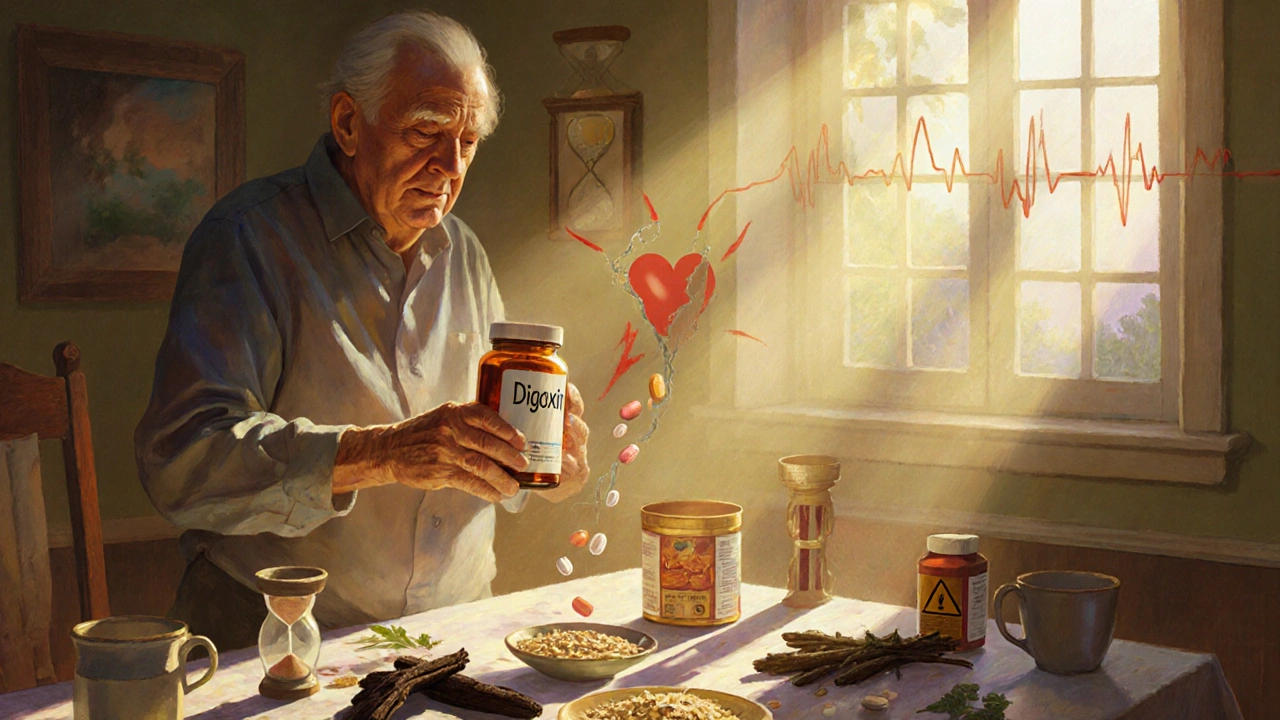
Digoxin Interactions: What You Need to Know About Dangerous Drug Combos
When you take digoxin, a heart medication used to treat irregular heartbeats and heart failure. Also known as digitalis, it works by slowing your heart rate and strengthening each beat. But digoxin has a very narrow safety window — too little doesn’t help, too much can kill you. That’s why knowing what it interacts with isn’t optional — it’s essential.
Digoxin doesn’t play well with many common drugs. potassium levels, the amount of this mineral in your blood are critical. Low potassium — from diuretics like furosemide or even too much coffee — makes digoxin way more toxic. High potassium, often from kidney issues or salt substitutes, can mask digoxin’s danger signs, making it harder to spot trouble. Then there’s macrolide antibiotics, like clarithromycin and azithromycin, which slow how fast your body clears digoxin. That’s why people on these antibiotics often end up in the ER with nausea, blurred vision, or a dangerously slow pulse. Even over-the-counter antacids, like those with aluminum or magnesium, can reduce digoxin absorption, making it useless. And don’t forget supplements — st. john’s wort, a popular herbal remedy for depression, speeds up digoxin breakdown, dropping its levels and leaving your heart unprotected.
These aren’t theoretical risks. Real people have had heart attacks, strokes, and even died because their meds clashed without anyone noticing. That’s why every time you start or stop a new pill — even something as simple as ibuprofen or a magnesium supplement — you need to tell your doctor you’re on digoxin. Your pharmacist can flag these interactions too. The good news? Most of these dangers are preventable with simple blood tests and clear communication. Below, you’ll find real-life guides on how to check labels, understand drug safety in hospitals, and spot hidden risks in everyday meds. These aren’t just articles — they’re tools to help you stay alive.
Digoxin helps manage heart failure and atrial fibrillation but has dangerous interactions with common drugs, foods, and supplements. Learn what to avoid and how to monitor for toxicity.