
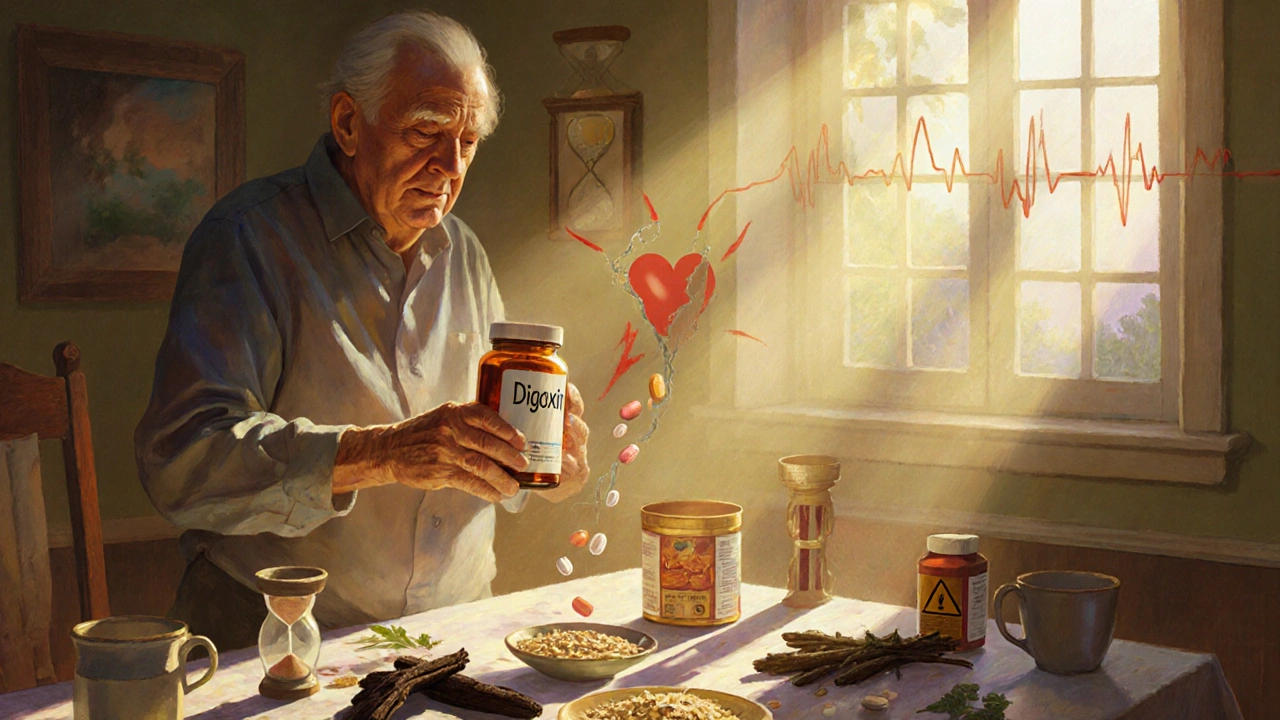
When you’re on digoxin for heart failure or atrial fibrillation, it’s not just about taking your pill every day. The real danger lies in what else you’re taking - or eating - that can turn a life-saving drug into a silent threat. Digoxin has a razor-thin safety margin. Too little, and it doesn’t work. Too much, and you could end up in the ER with nausea, blurred vision, or a dangerously slow heartbeat. And here’s the catch: many common medications, supplements, and even foods can push your digoxin levels into the danger zone - often without you realizing it.
Why Digoxin Is So Tricky
Digoxin, sold under brands like Lanoxin and Crystodigin, has been used for nearly a century. It works by strengthening heart contractions and slowing down fast, irregular heart rhythms. But unlike newer heart medications, digoxin doesn’t have a wide safety buffer. The ideal blood level? Between 0.5 and 0.9 ng/mL. Anything above 2.0 ng/mL is considered toxic. Even levels in the therapeutic range can become dangerous if you have kidney problems, are over 65, weigh less than 60 kg, or have low potassium. Studies show that 0.8% to 4% of people on digoxin experience toxicity - and many of those cases are caused by drug interactions, not overdose.
Top 8 Drug Interactions That Can Be Deadly
Some medications don’t just mix poorly with digoxin - they make it far more likely to cause harm. Here are the biggest offenders:
- Dronedarone (Multaq): Used for atrial fibrillation, this drug can spike digoxin levels by over 50%. The 2012 PALLAS trial found patients on both drugs had a 2.5-times higher risk of sudden death. If you’re starting dronedarone, your digoxin dose should be cut in half - immediately.
- Verapamil and Diltiazem (Calcium channel blockers): These are common for high blood pressure and arrhythmias. Together with digoxin, they can cause heart rates below 40 bpm. In the 2019 BEAUTIFUL trial substudy, 18% of patients on digoxin and ivabradine dropped below 35 bpm - a life-threatening drop.
- Amiodarone: This powerful antiarrhythmic can increase digoxin levels by up to 100%. One patient on Reddit reported his levels jumped from 0.8 to 1.9 ng/mL after starting amiodarone, leading to vision changes and vomiting. His doctor had to slash his dose by half.
- Quinidine: An older antiarrhythmic, it reduces how fast your kidneys clear digoxin. The result? A 100% increase in digoxin concentration - a recipe for toxicity.
- Macrolide Antibiotics (Erythromycin, Tetracycline): These change gut bacteria that normally break down digoxin. That means more digoxin stays in your system - up to 40% more.
- Rifampin: This TB drug speeds up digoxin breakdown, making it less effective. Your levels can drop below therapeutic range, leaving your heart unprotected.
- St. John’s Wort: This herbal supplement boosts a liver enzyme that flushes digoxin out of your body. Studies show it can reduce digoxin levels by 25%, making your treatment useless.
- Thiazide and Loop Diuretics (Furosemide, Hydrochlorothiazide): These drain potassium from your body. Low potassium makes your heart extra sensitive to digoxin - even at normal levels, toxicity can strike.
The Hidden Culprits: Food, Supplements, and OTC Meds
You might not think your morning oatmeal or antacid is a problem - but they are.
- High-fiber foods like oatmeal, bran, and psyllium supplements can reduce digoxin absorption by 20-40%. If you take digoxin with breakfast, you’re getting less than half the dose. The fix? Take it at least 2 hours before or after eating.
- Black licorice contains glycyrrhizin, which causes potassium loss. One case study in the Journal of the American College of Cardiology described a 72-year-old woman who developed life-threatening arrhythmias after eating a bag of black licorice daily while on digoxin. Avoid it completely.
- Antacids with aluminum or magnesium (like Maalox or Mylanta) can block digoxin absorption. A Mayo Clinic study found 22% of digoxin-related ER visits were tied to these over-the-counter meds.
- Hawthorn, a popular herbal remedy for heart health, can prolong the QT interval - the same way digoxin does. Together, they raise the risk of torsades de pointes, a deadly heart rhythm.
- Milk can also interfere with absorption. Don’t take digoxin with a glass of milk - wait at least two hours.
Who’s at Highest Risk?
Not everyone on digoxin is equally likely to have problems. The American College of Cardiology’s 2023 toxicity risk score highlights who needs extra care:
- Age 75 or older (2 points)
- Potassium below 4.0 mmol/L (2 points)
- Creatinine clearance below 50 mL/min (2 points)
- Digoxin dose over 0.25 mg/day (1 point)
- Taking amiodarone or verapamil/diltiazem (1 point each)
- Weight under 60 kg (1 point)
If your score is 5 or higher, you’re in the high-risk group. Weekly blood tests for digoxin and potassium aren’t optional - they’re essential.
Older adults are especially vulnerable. A 2021 survey found people over 75 were nearly three times more likely to have digoxin toxicity than younger patients. And if your kidneys aren’t working well - a common issue in older adults - your body can’t clear digoxin properly. That’s why the European Medicines Agency now restricts digoxin use in patients with creatinine clearance below 15 mL/min.
What You Should Do - Step by Step
If you’re on digoxin, here’s your action plan:
- Keep a complete list of every medication, supplement, and OTC product you take - including herbal teas and vitamins. Bring it to every appointment.
- Take digoxin at the same time every day, preferably on an empty stomach, at least 2 hours before or after meals, especially high-fiber ones.
- Avoid black licorice - no exceptions. Even “licorice-flavored” candy can contain glycyrrhizin.
- Get your potassium checked monthly. If it’s below 3.5 mmol/L, tell your doctor immediately. You may need a potassium supplement - but never take it without medical advice.
- Ask before starting anything new. Even a simple cold medicine or allergy pill could interact. Don’t assume it’s safe.
- Know the warning signs: Nausea, vomiting, loss of appetite, blurred or yellow-green vision, dizziness, confusion, or a heart rate below 50 bpm. Call your doctor or go to the ER if you notice any of these.
- Get digoxin levels tested when you start or stop any other medication, and at least every 3-6 months if stable. More often if you’re high-risk.
Why Digoxin Is Still Used - And When It Makes Sense
Digoxin prescriptions have dropped 38% since 2010. That’s because newer drugs like sacubitril/valsartan and SGLT2 inhibitors have proven more effective and safer. But digoxin isn’t obsolete. For patients with persistent symptoms despite optimal therapy, it still helps. It’s especially useful for those with atrial fibrillation who need better heart rate control.
It’s also affordable. While newer heart failure drugs cost $500-$700 a month, generic digoxin runs $4-$6. For elderly patients on fixed incomes, that matters.
As Dr. Scott D. Solomon wrote in the 2023 update to Braunwald’s Heart Disease: “In carefully selected patients with appropriate monitoring, digoxin remains a valuable tool.” But that “carefully selected” part is everything. Without strict monitoring, it’s a gamble.
Final Reminder: Your Body Is the Only Monitor That Matters
Digoxin doesn’t come with a warning label you can ignore. It’s not like a blood pressure pill you can skip if you feel fine. The side effects creep in slowly - nausea, fatigue, fuzzy vision. By the time you feel it, the damage might already be done.
There’s no substitute for vigilance. Talk to your pharmacist. Keep a symptom journal. Don’t let a new prescription or a bag of candy ruin your heart health. You’re not just taking a pill - you’re managing a delicate balance. And that balance depends on you.
Can I take digoxin with my morning oatmeal?
No. High-fiber foods like oatmeal, bran, and psyllium can reduce digoxin absorption by 20-40%. Take digoxin at least 2 hours before eating breakfast. Many patients stabilize their levels simply by changing when they take their pill - not by changing the dose.
What should I do if I miss a dose of digoxin?
If you miss a dose and remember within 12 hours, take it right away. If it’s been more than 12 hours, skip the missed dose and take your next dose at the regular time. Never double up. Digoxin builds up in your system, and taking too much too soon can cause toxicity.
Is digoxin safe if I have kidney problems?
It’s risky. Digoxin is cleared by the kidneys. If your creatinine clearance is below 50 mL/min, your body can’t remove it properly, leading to buildup. Your doctor should lower your dose and check your levels more often - possibly weekly. If your kidney function is very poor (below 15 mL/min), many guidelines now recommend avoiding digoxin altogether.
Can I use over-the-counter antacids while on digoxin?
Avoid antacids containing aluminum or magnesium, like Maalox or Mylanta. They can block digoxin absorption. If you need heartburn relief, ask your doctor about alternatives like famotidine or omeprazole, which don’t interfere. Always wait at least 2 hours between digoxin and any antacid.
How often should my digoxin level be checked?
For stable patients, every 3-6 months is standard. But if you start or stop any new medication - including antibiotics, heart drugs, or supplements - get tested within 1-2 weeks. High-risk patients (over 75, low kidney function, low potassium) should be tested weekly until levels stabilize.
Does digoxin cause weight gain?
Digoxin itself doesn’t cause weight gain. But if your heart failure isn’t well controlled, fluid retention can occur - and that’s what causes swelling and weight gain. If you notice sudden weight gain (more than 2-3 pounds in a day), it’s a sign your heart failure may be worsening, not that digoxin is working too well. Call your doctor.
Can I drink alcohol while taking digoxin?
Moderate alcohol is usually okay, but heavy drinking can worsen heart failure and cause electrolyte imbalances - especially low potassium - which increases digoxin toxicity risk. Avoid binge drinking. If you drink regularly, tell your doctor. They may need to adjust your monitoring.
What are the early signs of digoxin toxicity?
The earliest signs are often gastrointestinal: nausea, vomiting, loss of appetite, and diarrhea. Then come visual changes - blurred vision, seeing halos around lights, or yellow-green tinted vision. A slow heart rate (below 50 bpm) or irregular rhythm can follow. If you notice any of these, don’t wait. Contact your doctor or go to the ER immediately.


