

Warfarin saves lives. It’s one of the most common blood thinners in the world, used to prevent strokes, clots in the legs, and dangerous blockages in the lungs. But here’s the catch: warpain doesn’t play nice with much of anything else. A single change in your diet, a new supplement, or even a common antibiotic can send your INR - the measure of how thin your blood is - soaring or crashing. And when that happens, you’re at risk of bleeding or clotting. No one warns you enough about this until you’re in the ER.
How Warfarin Actually Works
Warfarin blocks vitamin K from doing its job. Vitamin K isn’t bad - it’s essential for making proteins that help your blood clot. Warfarin stops the liver from using vitamin K to make clotting factors II, VII, IX, and X. Less clotting factors = thinner blood = less risk of dangerous clots. But here’s the problem: your body needs a steady amount of vitamin K every day. If you eat a big plate of kale one day and nothing green the next, your INR swings. That’s why doctors tell you to eat the same amount of vitamin K daily - not to avoid it, but to keep it consistent.
Warfarin’s effects last 2 to 3 days. You don’t feel it working. You can’t see it. You only know it’s working if your INR stays between 2.0 and 3.0. If it drops below 2.0, you’re at risk of clots. If it climbs above 4.0, you could bleed internally - even from a bump on the head. That’s why regular blood tests aren’t optional. They’re life-saving.
Foods That Change Your INR
Vitamin K is the biggest dietary factor. But it’s not about avoiding greens - it’s about consistency. One cup of cooked spinach has 1,062 micrograms of vitamin K. One cup of cooked broccoli? 220. A salad with kale, spinach, and Brussels sprouts can have over 1,500 mcg. That’s enough to cut your INR in half overnight.
- High vitamin K foods: Spinach, kale, collard greens, broccoli, Brussels sprouts, cabbage, asparagus, green tea, soybean oil.
- Low vitamin K foods: Apples, bananas, carrots, potatoes, chicken, rice, bread.
People who eat a salad every day at dinner? Their INR stays stable. People who go from eating no greens to three servings of kale in one week? Their INR crashes. A 2022 survey by the National Blood Clot Alliance found 24% of warfarin users had a dangerous INR shift after a dietary change - often because they thought "eating healthy" meant loading up on greens.
Here’s what works: Pick one or two high-vitamin-K foods you like. Eat them the same amount, same time, every day. One cup of cooked spinach at dinner? Fine. Just don’t skip it for three days and then eat three cups. That’s when things go wrong.
Alcohol is another sneaky one. One or two drinks a day? Probably okay. Three or more? That triples your bleeding risk. It messes with liver enzymes that break down warfarin. And it’s not just about binge drinking - daily moderate drinking adds up.
Supplements That Can Kill You
"Natural" doesn’t mean safe. A lot of people on warfarin take supplements thinking they’re helping - and they’re putting themselves in danger.
- St. John’s Wort: This popular herb for depression cuts warfarin levels by up to 50%. You could end up with a clot.
- Ginkgo biloba: Increases bleeding risk. It’s a blood thinner on its own. Combining it with warfarin? You’re doubling down on risk.
- Ginseng: Can either increase or decrease warfarin’s effect - no one knows why. But the risk is real.
- Garlic, ginger, turmeric: These are all natural anti-inflammatories. They can thin your blood. Not enough to replace warfarin, but enough to push your INR into danger zone.
- Vitamin E (over 400 IU/day): High doses interfere with clotting. Your doctor might not even ask if you’re taking it.
One patient in a Reddit thread (r/Warfarin) shared that after taking a "heart health" supplement with 500 mg of garlic extract, her INR jumped from 2.5 to 5.8. She ended up in the hospital with internal bleeding. No one told her the supplement had garlic in it.
Always check labels. Many multivitamins contain vitamin K, ginkgo, or vitamin E. Don’t assume they’re safe. Talk to your pharmacist. Bring your supplement bottle to every appointment.
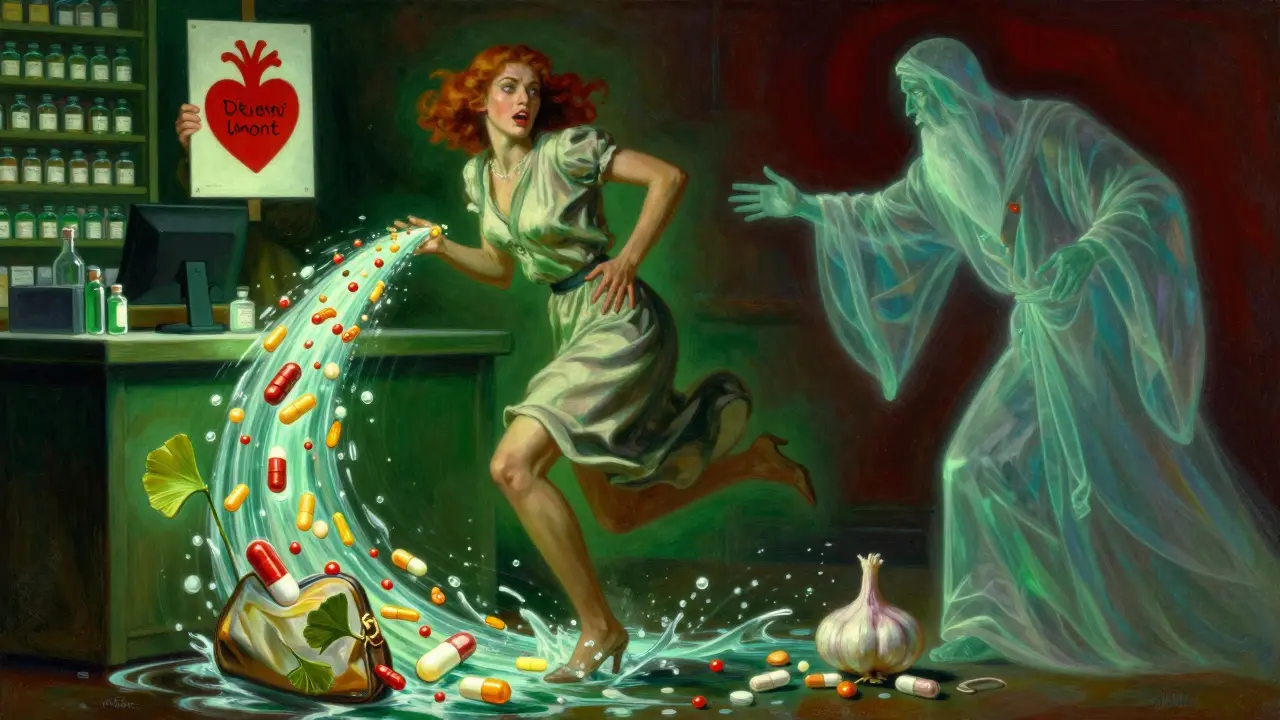
Prescription Drugs That Change Everything
Over 300 drugs interact with warfarin. That’s more than double the number for newer blood thinners like Eliquis or Xarelto. And most of them are common.
- Antibiotics: Especially Bactrim (trimethoprim-sulfamethoxazole) and Cipro (ciprofloxacin). They block how your liver breaks down warfarin. INR can spike in 48 hours. A 2020 study found 42% of warfarin-related ER visits were tied to antibiotics.
- Antifungals: Fluconazole (Diflucan) increases warfarin levels by 50-100%. Your dose may need to be cut in half.
- Amiodarone: Used for heart rhythm problems. It’s one of the most dangerous interactions. It can make warfarin 2-3 times more potent. Dose reductions of 30-50% are often needed.
- NSAIDs: Ibuprofen, naproxen, even aspirin. They irritate your stomach lining and make bleeding more likely. Tylenol (acetaminophen) is safer - but even that can raise INR if taken daily for weeks.
- SSRIs: Antidepressants like fluoxetine (Prozac) and sertraline (Zoloft) can increase bleeding risk by interfering with platelet function.
Here’s the scary part: Many of these interactions happen without warning. You get a UTI. Your doctor prescribes Bactrim. You don’t think twice. Two days later, you notice blood in your urine. You go to the ER. Your INR is 6.5. You need vitamin K, plasma, and a hospital stay.
A 2021 review in JAMA Internal Medicine found that 72% of drug interactions with warfarin made it stronger (increasing bleeding risk). Only 15% made it weaker. The rest? Unpredictable.
Why DOACs Are Replacing Warfarin - But Not Everywhere
Newer blood thinners like apixaban (Eliquis), rivaroxaban (Xarelto), and dabigatran (Pradaxa) don’t need diet changes, don’t need regular blood tests, and have far fewer interactions. So why isn’t everyone on them?
Because warfarin still has a place.
- If you have a mechanical heart valve, DOACs don’t work. Warfarin is your only option.
- If you have severe kidney disease (creatinine clearance under 15), DOACs can build up in your body. Warfarin is cleared by the liver - safer here.
- If you have antiphospholipid syndrome (an autoimmune clotting disorder), warfarin is still the gold standard. DOACs have 2.8 times higher risk of clots in this group.
- Cost. Warfarin costs $4-$10 a month. Eliquis costs over $500. Medicare patients often pay $0 for warfarin. For DOACs? Out-of-pocket can be $300+.
That’s why 22 million people in the U.S. still take warfarin. It’s not outdated - it’s essential for specific cases. But it demands more from you.

What You Should Do Right Now
If you’re on warfarin, here’s what you need to do - today:
- Get your INR checked every 4 weeks - even if you feel fine. Stability doesn’t mean safety.
- Eat the same amount of vitamin K every day. Pick one high-K food. Eat it daily. Don’t change it.
- Never start a new supplement or medication without asking your doctor or pharmacist. Even OTC painkillers.
- Carry a warfarin card. It should list your dose, your last INR, and your doctor’s contact info. Many ERs ask for it.
- Know the signs of bleeding: Unusual bruising, nosebleeds that won’t stop, pink or red urine, black or bloody stools, headaches or dizziness (could mean brain bleed).
One man in Canberra told his doctor he was taking "just a little turmeric for arthritis." His INR went from 2.3 to 5.1 in 10 days. He didn’t bleed - but he came close. He now carries a list of every supplement he takes. He shows it to every new provider.
What’s Changing Now
There’s new hope. In 2023, the FDA approved a genetic test called Warfarin GenAssist. It looks at your CYP2C9 and VKORC1 genes - the two biggest factors that determine how your body handles warfarin. People who get tested reach stable INR 2.3 weeks faster. That means fewer ER visits, fewer dose adjustments.
And AI is stepping in. A 2023 study showed a machine learning model could predict warfarin dose changes with 82% accuracy - better than human doctors. It factors in age, weight, diet, genetics, and other meds.
But none of that matters if you don’t stay consistent. No algorithm can fix a skipped blood test or a sudden kale binge.
Can I still eat green vegetables on warfarin?
Yes - but you must eat the same amount every day. Don’t avoid them. Don’t suddenly eat a lot. Pick one or two greens you like, eat the same portion daily, and stick with it. Consistency beats avoidance.
What should I do if I need an antibiotic?
Call your anticoagulation clinic or pharmacist before filling the prescription. Some antibiotics like Bactrim and Cipro can spike your INR dangerously. Your warfarin dose may need to be lowered immediately. Never assume it’s safe.
Is it safe to drink alcohol while on warfarin?
One or two drinks occasionally is usually okay. But three or more in one day triples your bleeding risk. Daily drinking - even one drink - can interfere with how your liver processes warfarin. Limit it. Track it.
Why does my INR keep changing even when I eat the same food?
Many things affect warfarin: illness, stress, sleep changes, new medications, even weather. Your liver’s enzyme activity shifts. That’s why regular INR checks are non-negotiable. Don’t assume you’re stable just because your diet didn’t change.
Can I switch from warfarin to a newer blood thinner?
Maybe - but not always. DOACs like Eliquis or Xarelto don’t work for people with mechanical heart valves, severe kidney disease, or antiphospholipid syndrome. Talk to your hematologist. Cost and lifestyle matter, but safety comes first.
Final Thought
Warfarin isn’t a drug you take and forget. It’s a daily balancing act. It asks you to be consistent, informed, and proactive. It’s not perfect. But for millions of people, it’s the only thing keeping them alive. The right knowledge doesn’t just prevent bleeding - it gives you control. And that’s worth the effort.


