
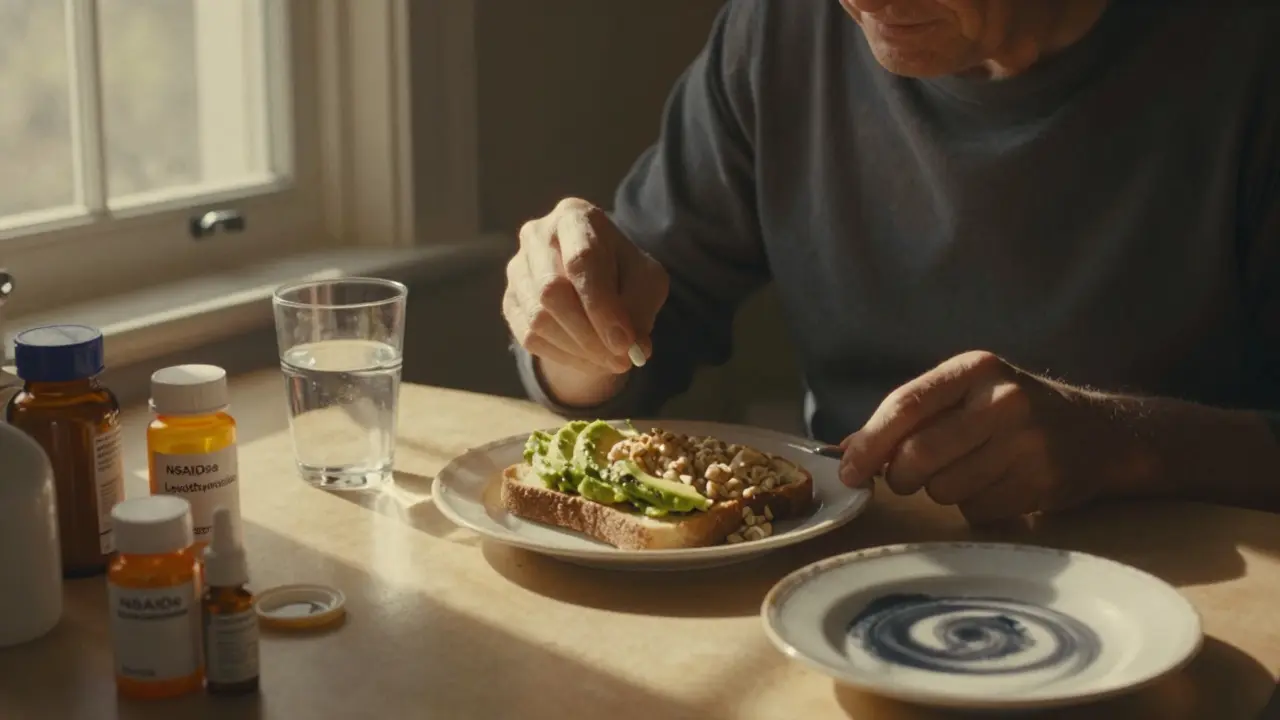
Medication-Food Interaction Checker
Check Your Medication Safety
Select your medication to see how food affects absorption and side effects. Based on FDA guidelines and clinical studies.
Recommended Actions
Warning: Taking incorrectly may cause
Many people pop pills without thinking about what’s on their plate. But what you eat - or don’t eat - when taking medication can make the difference between feeling better and feeling worse. Taking medicine with food isn’t just a suggestion. For a lot of drugs, it’s a safety rule. And skipping it can lead to nausea, stomach ulcers, dizziness, or even dangerous spikes in drug levels in your blood.
Why Food Changes How Medicines Work
Your stomach isn’t just a container. It’s a chemical factory. Food changes the pH, slows down how fast your stomach empties, and triggers enzymes that interact with drugs. That’s why some medications work better - or safer - when taken with food.
Take NSAIDs like ibuprofen or naproxen. These painkillers irritate the stomach lining. Studies show that 38% of people who take them on an empty stomach develop microscopic bleeding in their gut. That number drops to 12% when taken with a meal. Food acts like a buffer, protecting your stomach lining. The same goes for antibiotics like doxycycline or tetracycline. Without food, they can cause severe nausea. With food? Much easier to tolerate.
But it’s not always about protection. Sometimes, food helps your body absorb the drug. Griseofulvin, an antifungal, needs fat to dissolve properly. Take it with a high-fat meal like eggs or avocado, and your body absorbs 15-30% more of the drug. Same with some statins - simvastatin gets absorbed way better when eaten with food. That’s why your doctor might tell you to take it at dinner.
When Food Makes Things Worse
Food isn’t always a friend. For some drugs, eating can block absorption or cause dangerous spikes in blood levels.
Take levothyroxine, the hormone replacement for hypothyroidism. It needs an empty stomach. Calcium in milk, yogurt, or fortified orange juice binds to it and stops it from working. Studies show absorption drops by 30-55% if taken with food. That means your thyroid levels stay low, and you keep feeling tired, cold, and sluggish - even if you’re taking the right dose.
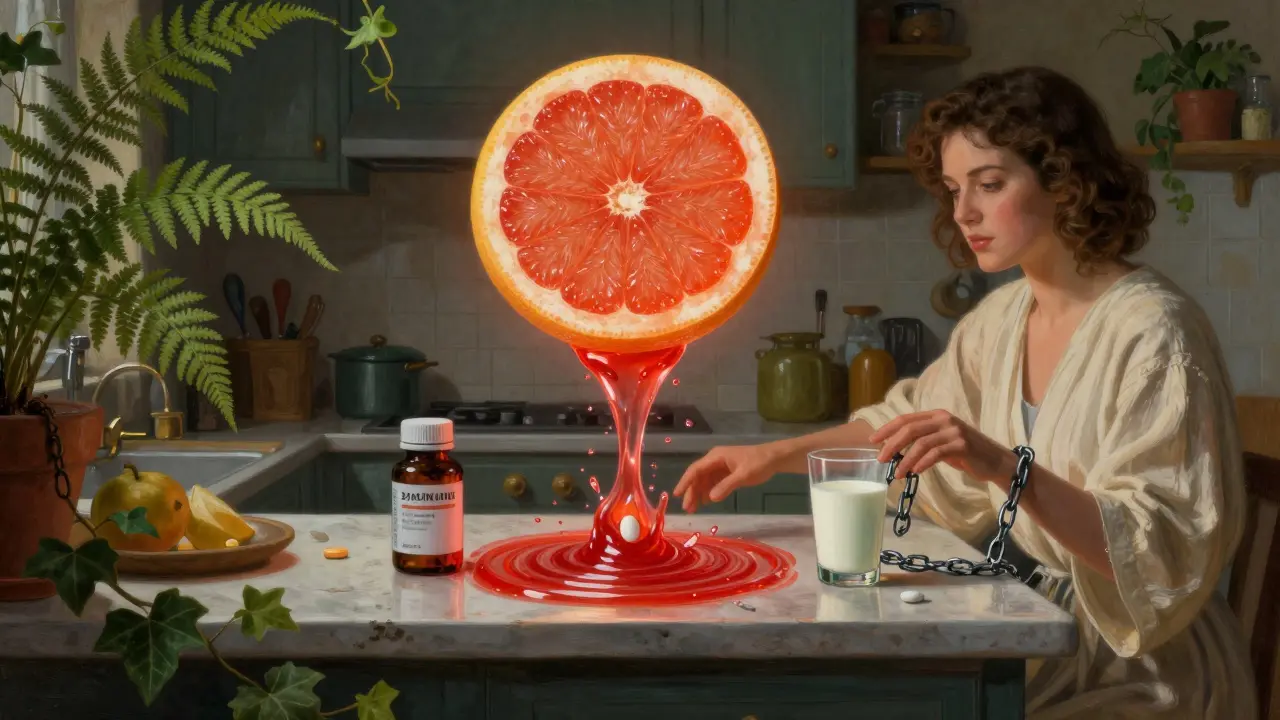
Then there’s grapefruit juice. One glass can shut down an enzyme in your gut called CYP3A4, which normally breaks down certain drugs. Without it, drugs like cyclosporine, some statins, and even certain blood pressure pills can build up to toxic levels. Mayo Clinic found that grapefruit juice can make cyclosporine levels jump 300-500%. That’s not a minor bump - it’s a medical emergency waiting to happen. And the effect lasts 24 to 72 hours. So even if you drink grapefruit juice at breakfast, it can still interfere with your evening pill.
Antibiotics like ciprofloxacin and levofloxacin also get blocked by calcium, iron, and zinc. That means no dairy, no antacids, no multivitamins for at least two hours before or after taking them. If you take your antibiotic with yogurt, you’re basically flushing half the dose down the drain.
What "With Food" Actually Means
When your prescription says "take with food," it doesn’t mean a cracker or a sip of coffee. The FDA defines it as at least 250-500 calories. That’s a small meal: two slices of toast with peanut butter, a banana with yogurt, or a bowl of oatmeal.
On the flip side, "take on an empty stomach" means no food for one hour before and two hours after. That’s tough if you’re used to grabbing coffee and a bagel first thing. But for drugs like levothyroxine, risedronate (for osteoporosis), or certain HIV meds, even a light snack can cut absorption in half.
And timing matters. Proton pump inhibitors like omeprazole need to be taken 30 minutes before breakfast. That’s because they work best when your stomach is still producing acid - before food triggers more. Take them after eating, and they won’t work as well.
Medications That Need Special Care
Some drugs have rock-solid rules. Here’s what you need to know:
- NSAIDs (ibuprofen, naproxen): Always take with food or milk. Reduces stomach ulcers by over 60%.
- Metformin (for diabetes): 63% of users report severe nausea on an empty stomach. Take with dinner to cut side effects.
- Warfarin (blood thinner): Keep vitamin K intake steady. Spinach, kale, broccoli - eat the same amount daily. Too much or too little can throw off your INR.
- Levothyroxine: Take alone, 30-60 minutes before breakfast. No coffee, no calcium, no soy.
- Antibiotics (tetracycline, ciprofloxacin): Avoid dairy, antacids, iron supplements. Wait two hours.
- Statins (simvastatin, lovastatin): Take with evening meal. Grapefruit juice? Absolutely avoid.
- Clozapine (antipsychotic): High-fat meals can increase blood levels by 40-60%. Risk of extreme drowsiness or low blood pressure.
And don’t forget about supplements. Calcium, magnesium, and iron can interfere with thyroid meds, antibiotics, and even some osteoporosis drugs. Always check with your pharmacist before adding anything new.
What Patients Really Experience
Real people have real stories. On Reddit, users taking methotrexate for arthritis say 78% feel less nausea when they eat with their pill. But 22% worry it’s making the drug less effective - and they’re not wrong. Some drugs do absorb less with food. That’s why consistency matters.
Drugs.com analyzed 15,000 reviews of metformin. Sixty-three percent said they got sick without food. Eighteen percent had issues when they took it with meals. That’s a huge drop. But it only works if you do it every time.
And here’s the scary part: a Mayo Clinic study found that 68% of people over 65 didn’t know how to take their meds with food. Only 22% got clear instructions from their doctor. That’s not a patient problem - it’s a system problem. Prescriptions come with tiny print. Pharmacists are rushed. And most people assume the pill will work no matter what.
How to Get It Right
Here’s how to avoid mistakes:
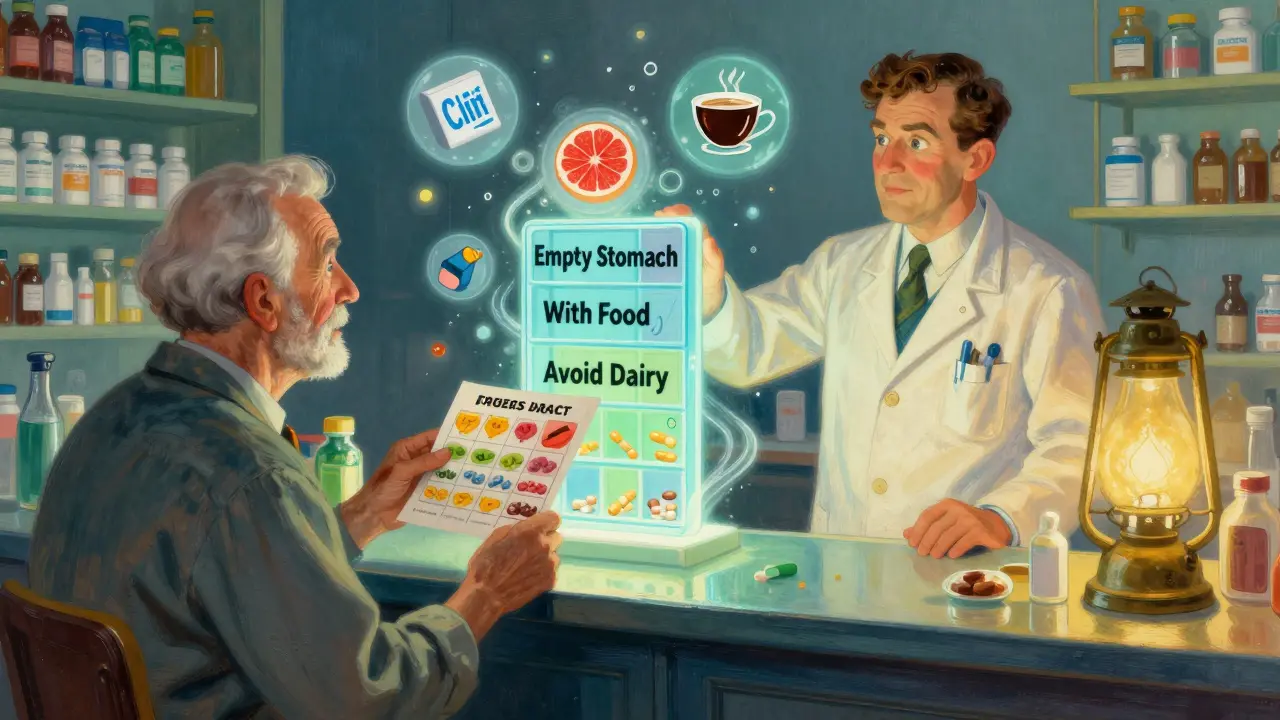
- Ask your pharmacist - not just your doctor. Pharmacists are trained in food-drug interactions. Ask: "Should I take this with food? What should I avoid?"
- Use a pill organizer with time labels. Mark "with breakfast," "empty stomach," "with dinner." Visual cues help.
- Download a medication app. Apps like Medisafe send reminders and flag food conflicts. Clinical trials show they cut errors by 37%.
- Keep a food and med log. Write down what you ate and when you took your pill. If you feel off, you’ll know if it’s the food or the drug.
- Don’t guess. If the label says "take with food" and you’re not sure what that means, call your pharmacy. A small bowl of soup counts. A sip of tea doesn’t.
And if you’re on five or more medications? You’re not alone. One in three Medicare patients juggle conflicting food rules. That’s why color-coded food interaction charts - now used in 82% of U.S. hospitals - are so helpful. They turn confusion into clarity.
The Bigger Picture
Improper food-drug timing costs the U.S. healthcare system $177 billion a year. That’s billions in hospital visits, ER trips, and extra prescriptions because someone took their pill wrong.
But the future is changing. The FDA now requires food interaction warnings on 92% of prescription labels - up from 67% in 2018. CVS and Walgreens now include automated alerts in packaging. Smart pills like Abilify MyCite track when you take your medicine relative to meals. And researchers are starting to use gut microbiome tests to predict how your body will handle drugs with certain foods.
For now, though, the simplest fix is also the most powerful: take your medication with food when told to. And avoid food when told to avoid it. It’s not about being perfect. It’s about being consistent. One meal, one pill, one day at a time.
Can I take my medication with just a glass of milk?
It depends on the drug. For NSAIDs like ibuprofen, yes - milk helps protect your stomach. But for antibiotics like tetracycline or thyroid meds like levothyroxine, milk blocks absorption. Calcium binds to these drugs and stops them from working. Always check the label or ask your pharmacist.
Why does grapefruit juice interact with so many drugs?
Grapefruit juice blocks an enzyme in your gut called CYP3A4, which normally breaks down certain medications. Without it, the drug builds up in your blood - sometimes to dangerous levels. This affects drugs like statins, blood pressure meds, and immunosuppressants. The effect lasts up to 72 hours, so even if you drink grapefruit juice in the morning, it can interfere with your night pill.
What if I forget to take my pill with food?
If you realize right away, take it with food now. If it’s been more than an hour, wait until your next dose. Don’t double up. For drugs like levothyroxine or antibiotics, missing the food timing means you didn’t absorb the full dose - but taking two pills at once can be dangerous. Consistency matters more than perfection.
Do I need to take all my pills the same way?
No. One pill might need food, another needs an empty stomach, and a third doesn’t care. That’s why keeping a list or using a medication app is so important. Mixing them up can reduce effectiveness or increase side effects. Always check each medication separately.
Can I take my medication with coffee?
Coffee can interfere with some drugs. It can reduce absorption of thyroid meds and certain antibiotics. It can also increase side effects of stimulants or blood pressure meds. For safety, wait at least 30 minutes after taking your pill before drinking coffee - unless your pharmacist says otherwise.
If you’re managing multiple medications, don’t rely on memory. Talk to your pharmacist. Use a tracker. Stick to the rules. Your body will thank you - and so will your doctor.


