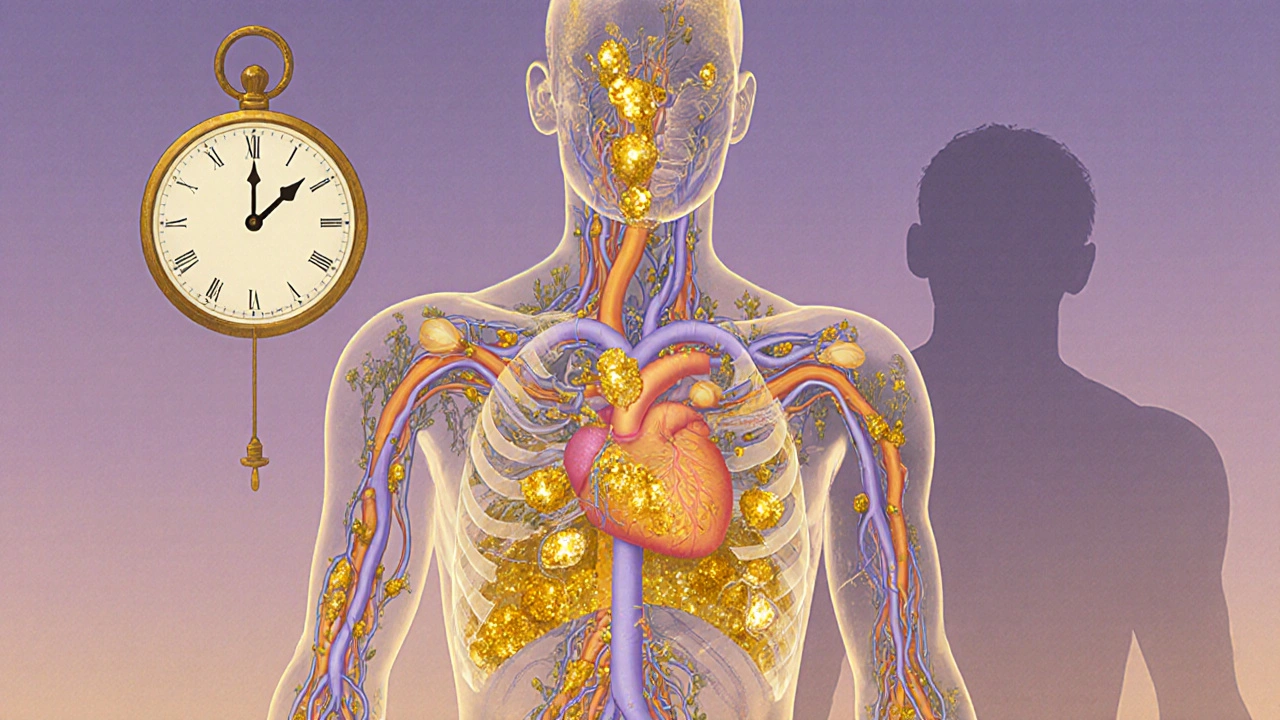
Familial Hypercholesterolemia: What It Is, How It’s Managed, and Why It Matters
When someone has familial hypercholesterolemia, a genetic disorder that causes lifelong high levels of LDL cholesterol. Also known as FH, it’s not just about eating too much fat—it’s inherited, often passed down from just one parent, and can lead to heart attacks in your 30s or 40s if untreated. This isn’t a rare oddity. About 1 in 250 people have it, and most don’t even know.
People with familial hypercholesterolemia often have LDL cholesterol levels over 190 mg/dL as kids, sometimes even over 300. That’s far beyond what diet or exercise alone can fix. You might see physical signs—yellowish bumps around the eyes or tendons, called xanthomas—or no signs at all. The real danger? The plaque builds up silently in your arteries, starting young. A 2021 study in the Journal of the American College of Cardiology found that untreated FH patients have a 20 times higher risk of early heart disease than the general population.
It’s not just about cholesterol numbers. Familial hypercholesterolemia forces you to think differently about heart health. Unlike lifestyle-driven high cholesterol, FH needs strong medication—statins, ezetimibe, or even PCSK9 inhibitors—starting as early as childhood. It also means family screening is critical. If one person has it, their siblings, parents, and kids should be tested. And because it’s genetic, you can’t out-exercise or out-eat it. You need to manage it like a chronic condition, not a temporary issue.
Many of the posts below focus on how medications interact, how to avoid dangerous side effects, and how to spot hidden risks in everyday treatments. That’s because people with familial hypercholesterolemia often take multiple drugs long-term—statins, blood thinners, or even newer injectables—and those combinations can be tricky. One wrong interaction, like mixing a statin with certain antibiotics or grapefruit juice, can lead to muscle damage or liver stress. You’ll find real advice here on checking labels, understanding drug risks, and knowing when to push back on your doctor if something doesn’t feel right.
What you’ll see here isn’t theory. It’s what people with FH and their families actually deal with: managing complex meds, spotting red flags, and staying alive despite a condition that doesn’t give you a second chance. This isn’t about avoiding cholesterol—it’s about surviving it.
High cholesterol, or hypercholesterolemia, is a silent risk factor for heart disease and stroke. Learn what causes it, how to test for it, and what treatments actually work-especially for genetic forms like familial hypercholesterolemia.