

Most people think of their pharmacy as a place to pick up prescriptions. But if you’ve never sat down with your pharmacist for a medication review, you’re missing out on one of the safest, most underused tools in healthcare. Your pharmacist isn’t just filling bottles-they’re trained to catch errors, spot dangerous interactions, and help you save money. And unlike your doctor, they’re available every time you walk in.
Why Your Pharmacist Is Your Best Medication Safety Ally
Pharmacists see your full medication list-every pill, patch, supplement, and over-the-counter drug you take. They know how these interact, what side effects to watch for, and whether your doses make sense for your age, weight, or other conditions. In fact, community pharmacists in the U.S. handle an average of 12.7 medication consultations per day, each lasting about 15 minutes. That’s more direct time spent on your meds than most primary care doctors get in a full visit.Here’s the reality: 40% of medication lists reviewed during hospital transitions contain errors-missing drugs, wrong doses, or dangerous combinations. Pharmacists catch these before they hurt you. One study found that pharmacist-led reviews prevented 87% of potential severe adverse drug events. That’s not luck. That’s expertise.
And it’s not just about big mistakes. A 65-year-old patient on four medications for diabetes, high blood pressure, and arthritis might not realize that one of their over-the-counter painkillers is raising their blood pressure. Or that a new cholesterol drug is making their muscle pain worse. Your pharmacist spots these quietly, without you needing to schedule a specialist appointment.
What Happens During a Pharmacy Consultation?
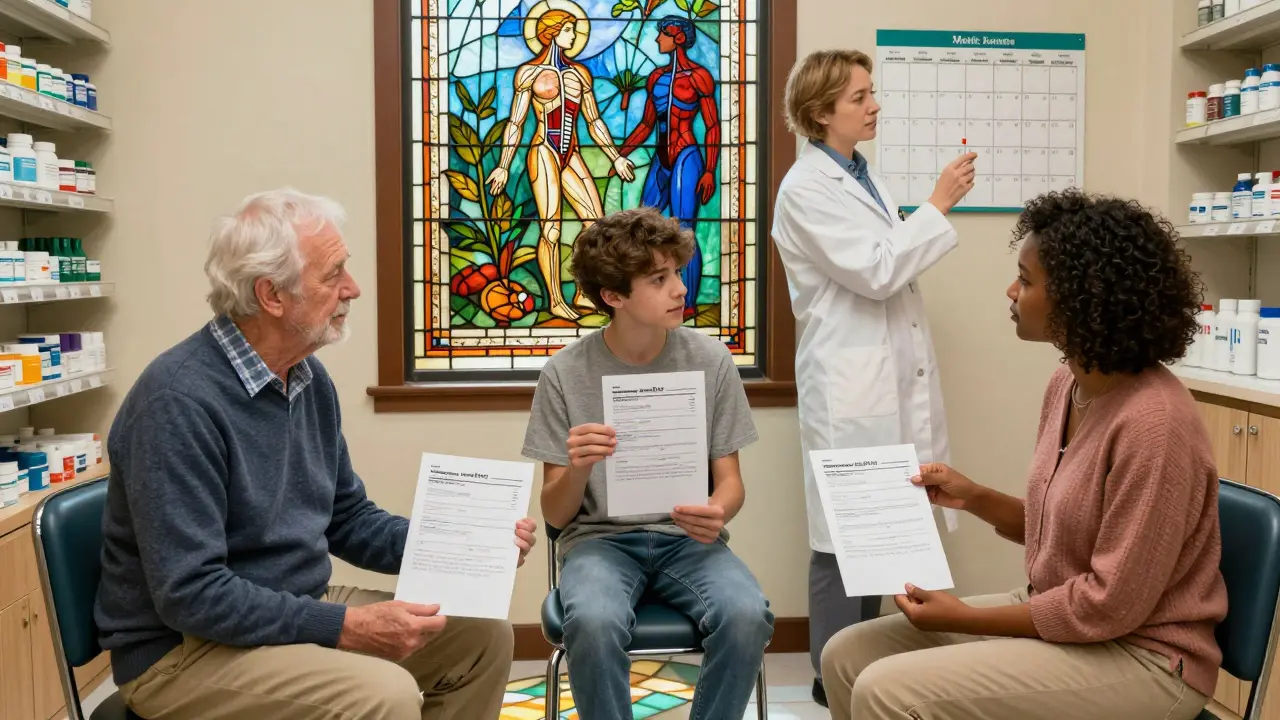
A real consultation isn’t a quick chat while you wait for your script. It’s a structured review. Here’s what it looks like when done right:- Medication list update-You bring in every pill, bottle, and supplement. Even the ones you take “only when needed.”
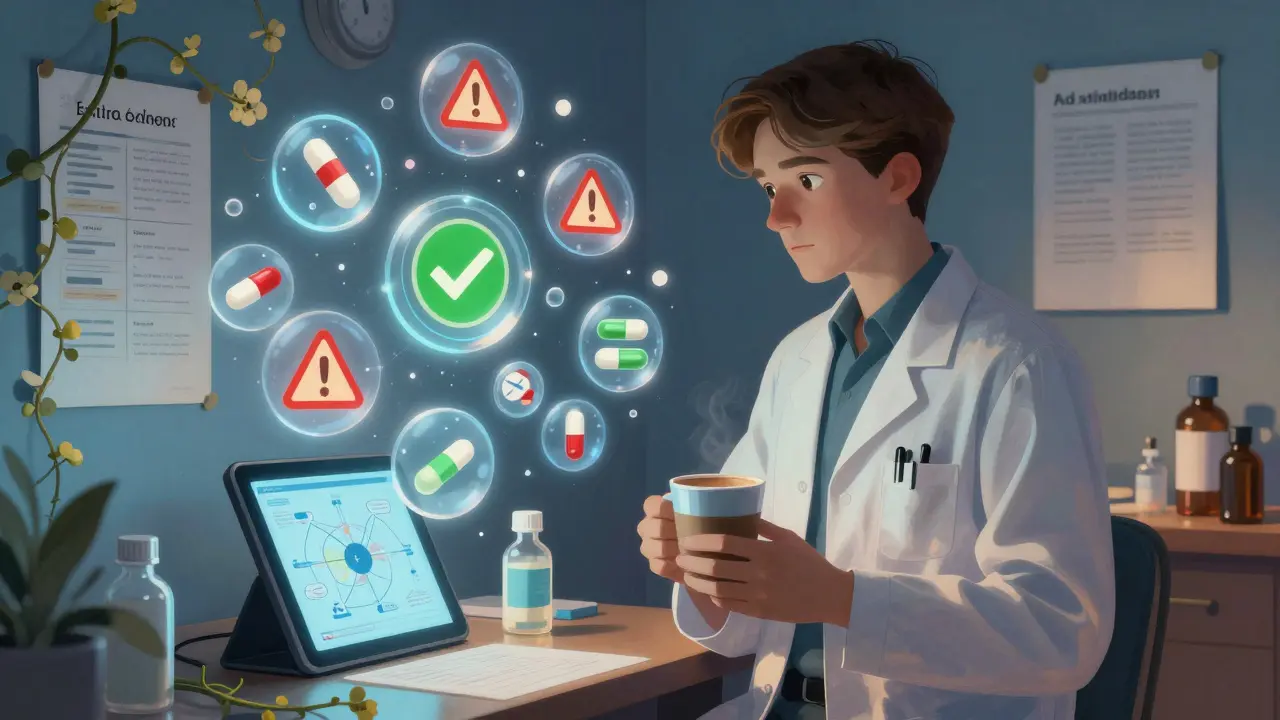
- Drug interaction check-Your pharmacist runs each drug against the others, plus any vitamins or herbal products.
- Side effect review-They ask: “Have you felt dizzy since starting this new pill?” “Any stomach upset?” “Did your sleep change?”
- Adherence check-“Do you ever skip doses?” “Do you find the schedule confusing?”
- Cost and alternatives-They’ll tell you if a generic version exists, or if another drug costs $200 less per month with the same effect.
- Action plan-You walk out with a written summary: what to keep, what to stop, what to watch for.
This isn’t hypothetical. A 2023 VA study showed these consultations saved $1,250 per patient on average by preventing hospitalizations. One patient had their insulin dose cut in half after their pharmacist noticed signs of low blood sugar-avoiding a possible emergency.
Who Should Get a Consultation?
You don’t need to be sick or in crisis to benefit. Here’s who should definitely ask for one:- You take three or more prescription medications regularly
- You’re on medications for chronic conditions like diabetes, heart disease, or COPD
- You’ve been recently discharged from the hospital
- You’ve had a recent change in medications (new drug, stopped one, dose changed)
- You take over-the-counter drugs, vitamins, or supplements daily
- You’ve ever missed a dose or felt confused about your meds
Medicare Part D covers full medication therapy management (MTM) for eligible patients-those with multiple chronic conditions and taking multiple meds. Even if you’re not on Medicare, many private insurers now cover these services at $25-$75 per visit. Ask your pharmacist. It’s often free or low-cost.
How to Make the Most of Your Consultation
Don’t just show up. Prepare. Here’s how to turn a 15-minute chat into a life-changing safety net:- Bring everything-All pills in original bottles. Even the ones you haven’t taken in months. Don’t rely on memory.
- Write down your questions-“Why am I on this?” “What happens if I skip it?” “Is there a cheaper option?”
- Ask about timing-“Should I take this with food?” “Can I take it with my coffee?”
- Request a written summary-A printed list of your meds, changes, and next steps. Keep it in your wallet.
- Ask for a follow-up-“Can I come back in a month to check how I’m doing?”
One patient brought in 17 bottles. The pharmacist found three duplicates, two expired drugs, and a supplement that was causing her blood pressure to spike. She saved $1,800 a year and stopped feeling foggy all day.
What If Your Pharmacy Doesn’t Offer Consultations?
Most do-but not all. If yours doesn’t, ask. Here’s what to say:“I’d like to schedule a full medication review with the pharmacist. Is this something you offer? If not, can you recommend a pharmacy that does?”
Many pharmacies now offer virtual consultations via phone or video. In fact, 62% of community pharmacies now provide telehealth medication reviews-up from just 18% before the pandemic. You don’t need to leave your house.
If your pharmacy says no, ask if they can at least do a quick interaction check while you wait. Many will do a basic review even without a formal appointment. Just ask.
Common Myths About Pharmacy Consultations
Myth: “My doctor already knows what I’m taking.”
Reality: Doctors rarely see your full list. Pharmacists do. A 2022 study showed 40% of discharge summaries had missing or incorrect meds. Your pharmacist fills those gaps.
Myth: “It’s just for seniors.”
Reality: Anyone on multiple meds benefits-even young adults with asthma, depression, and birth control. One 28-year-old found out his anxiety meds were making his migraines worse.
Myth: “It’s too expensive.”
Reality: Medicare covers it for eligible patients. Many private insurers do too. Even if you pay out of pocket, $50 for a session that prevents a $20,000 ER visit is a no-brainer.
Myth: “They’ll just tell me to stop my meds.”
Reality: Pharmacists don’t make decisions for you. They give you facts. Then you and your doctor decide together.
Real Stories, Real Results
A 72-year-old man in Ohio was on six medications. His pharmacist noticed he was taking two different blood thinners-one prescribed by his cardiologist, another by his primary care doctor. Both were dangerous together. The pharmacist contacted both doctors, got one stopped, and avoided a major bleed.
A woman in Texas was paying $320 a month for her diabetes drug. Her pharmacist found a generic version with the same active ingredient that cost $42. She saved $3,336 a year.
A teenager in Florida started a new ADHD medication and began having panic attacks. Her mom thought it was stress. The pharmacist recognized the side effect immediately and got her switched to a different drug within 48 hours.
These aren’t rare cases. They’re the norm when pharmacists are given the time to do their job.
What’s Holding Back Wider Use?
The biggest problem? Time. Pharmacists are stretched thin. In high-volume stores, they often have only 6.2 minutes per patient-far less than the 15-minute minimum recommended for a full review. That’s why many pharmacies now offer scheduled appointments. Book ahead. Don’t wait until you’re in crisis.Another issue? Lack of awareness. Only 28% of patients say they’ve ever had a formal medication review. Most don’t know it’s an option. But that’s changing. Since 2023, Medicare has expanded eligibility to include patients taking three or more chronic condition meds-not just two. That adds millions more people who qualify for free consultations.
And now, 22 states allow pharmacists to start or adjust certain medications without a doctor’s note-like blood pressure or diabetes drugs. That means your pharmacist isn’t just spotting problems-they can help fix them faster.
Your Next Step
Go to your pharmacy this week. Walk up to the counter. Say: “I’d like to schedule a medication safety review.”Don’t wait for a problem. Don’t wait for your doctor to bring it up. Don’t assume your meds are fine just because you’ve been taking them for years. Medications change. Your body changes. Your risks change.
Pharmacists are the last line of defense against medication errors. And they’re right there-open seven days a week, no appointment needed for a basic check. All you have to do is ask.
Is a pharmacy consultation free?
It depends. If you’re on Medicare Part D and meet the criteria (multiple chronic conditions and taking multiple medications), the consultation is completely free. Many private insurers also cover it-check your plan. Even if you pay out of pocket, most consultations cost between $25 and $75. That’s far less than the cost of an ER visit caused by a medication error.
Do I need to make an appointment?
You don’t always need one, but it helps. Many pharmacies now offer scheduled consultation hours-usually early morning or late afternoon when it’s less busy. Call ahead and ask if they have a dedicated time for medication reviews. If they don’t, you can still ask for a quick check while you wait for your prescription.
Can my pharmacist change my prescription?
No, they can’t change your prescription on their own. But they can identify problems and contact your doctor to suggest alternatives. In 22 states, pharmacists have expanded authority to adjust certain medications-like blood pressure or diabetes drugs-without a doctor’s note. Even in states without expanded authority, they can recommend changes that your doctor will often approve quickly.
What if I’m taking herbal supplements or vitamins?
Bring them. Many herbal supplements interact dangerously with prescription drugs. For example, St. John’s Wort can reduce the effectiveness of blood thinners, birth control, and antidepressants. Garlic supplements can increase bleeding risk. Your pharmacist needs to see everything-even the “natural” stuff.
How often should I get a medication review?
At least once a year. But if you’ve had a recent hospital stay, started or stopped a medication, or noticed new side effects, get one right away. People on multiple chronic medications should consider a review every 6 months. Medication safety isn’t a one-time fix-it’s an ongoing process.
Can I get a consultation over the phone or video?
Yes. Since the pandemic, 62% of community pharmacies now offer virtual medication reviews. You can call or video chat with your pharmacist from home. Just make sure you have your medication list ready and your bottles nearby so they can see what you’re taking.


