
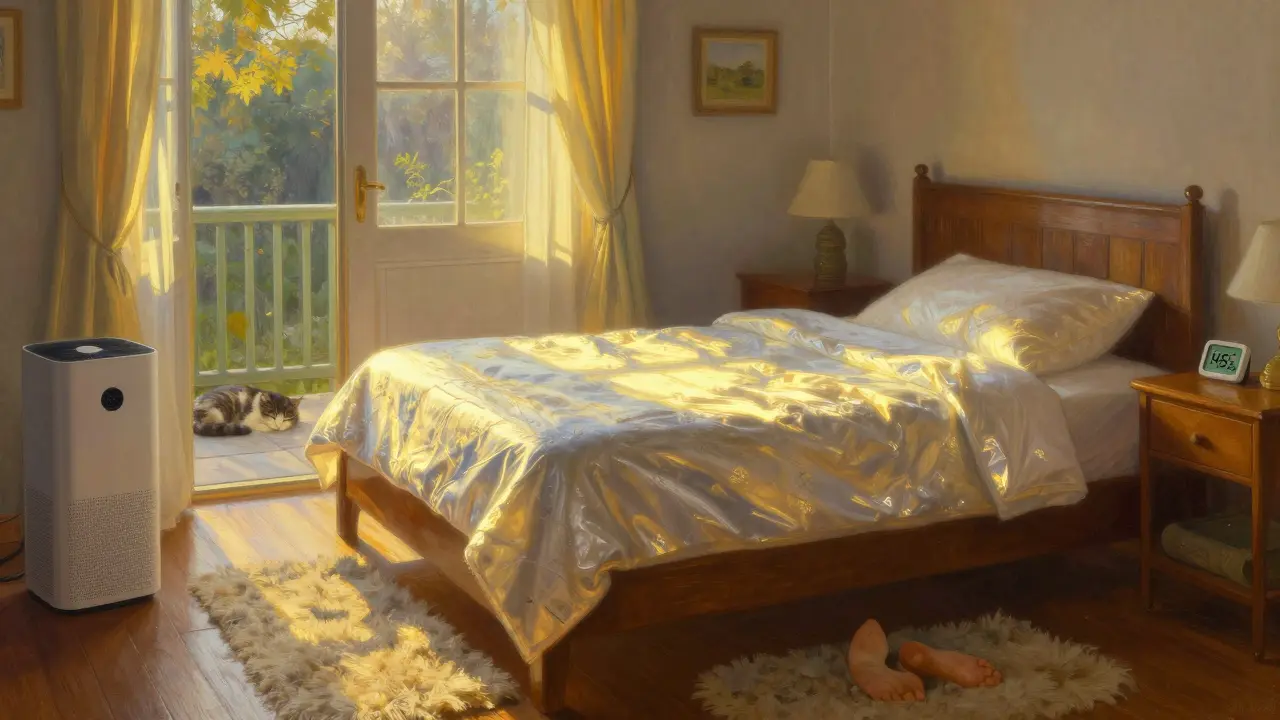
For millions of people, breathing freely isn't just a comfort-it's a daily struggle. If you wake up with a stuffy nose, cough through the night, or feel your chest tighten when you walk into your own home, the problem might not be your lungs. It might be what’s in your air. Allergen avoidance isn’t about being overly clean. It’s about smart, targeted changes to your home environment that actually work. And the science behind it is clear: when you reduce exposure to the allergens you’re sensitive to, your symptoms drop-sometimes dramatically.
Why Your Home Is the Problem (And How to Fix It)
Your home should be a safe space. But for people with allergies or asthma, it’s often the biggest source of triggers. Dust mites, pet dander, mold, and cockroach particles don’t just float around-they cling to your bedding, settle in carpets, and hide in curtains. The good news? You don’t need to move out. You just need to change how you manage what’s already there.
The most common indoor allergen? Dust mites. They live in warm, humid places. Your mattress, pillows, and upholstered furniture are basically their five-star resorts. Studies show that 80% of allergy sufferers in the U.S. are sensitive to them. And if you’re one of them, your symptoms won’t improve unless you tackle this head-on.
Start With Your Bed: The Most Important Room
Your bedroom is where you spend a third of your life. That’s why it’s ground zero for allergen control. If you’re allergic to dust mites, your bed is your worst enemy. Here’s what actually works:
- Use allergen-proof mattress and pillow covers. These aren’t regular zippered sheets. They’re specially woven fabrics that block mite particles and their waste-what actually triggers your immune system. Look for ones labeled as “barrier” or “impermeable.” They cut exposure by 73% to 90%.
- Wash all bedding weekly in hot water at 130°F (54.4°C). Cold water doesn’t kill mites. Hot water does. And don’t forget pillowcases-they’re just as important as sheets.
- Remove or cover carpeting in the bedroom. Hard floors are easier to clean and don’t hold allergens. If you must have rugs, choose washable ones and vacuum them weekly.
These three steps alone are enough to help many people cut their nighttime symptoms in half. You don’t need to buy expensive gadgets. Just be consistent.
Control Humidity: The Silent Trigger
Humidity isn’t just about comfort-it’s about survival. Dust mites thrive when the air is above 50% relative humidity. Mold grows fast above 60%. Both are invisible, but both wreck your breathing.
Here’s the fix: keep your home’s humidity between 30% and 50%. In Canberra, where humidity can spike in winter and summer, this often means using a dehumidifier. You don’t need a fancy one. A basic unit under $150 will do the job if it’s sized for your room. Place it in your bedroom or main living area. Use a simple hygrometer (they cost under $20) to monitor levels. If your device reads above 50%, run the dehumidifier. If it’s below 30%, you might need to add moisture-but that’s rare in most homes.
Fix leaks immediately. A dripping faucet under the sink or condensation on windows? That’s mold waiting to happen. Clean bathroom tiles and shower curtains weekly with a bleach-based cleaner or vinegar solution. Mold doesn’t need dirt to grow-just moisture and time.
Pets: Love Them, But Limit Their Access
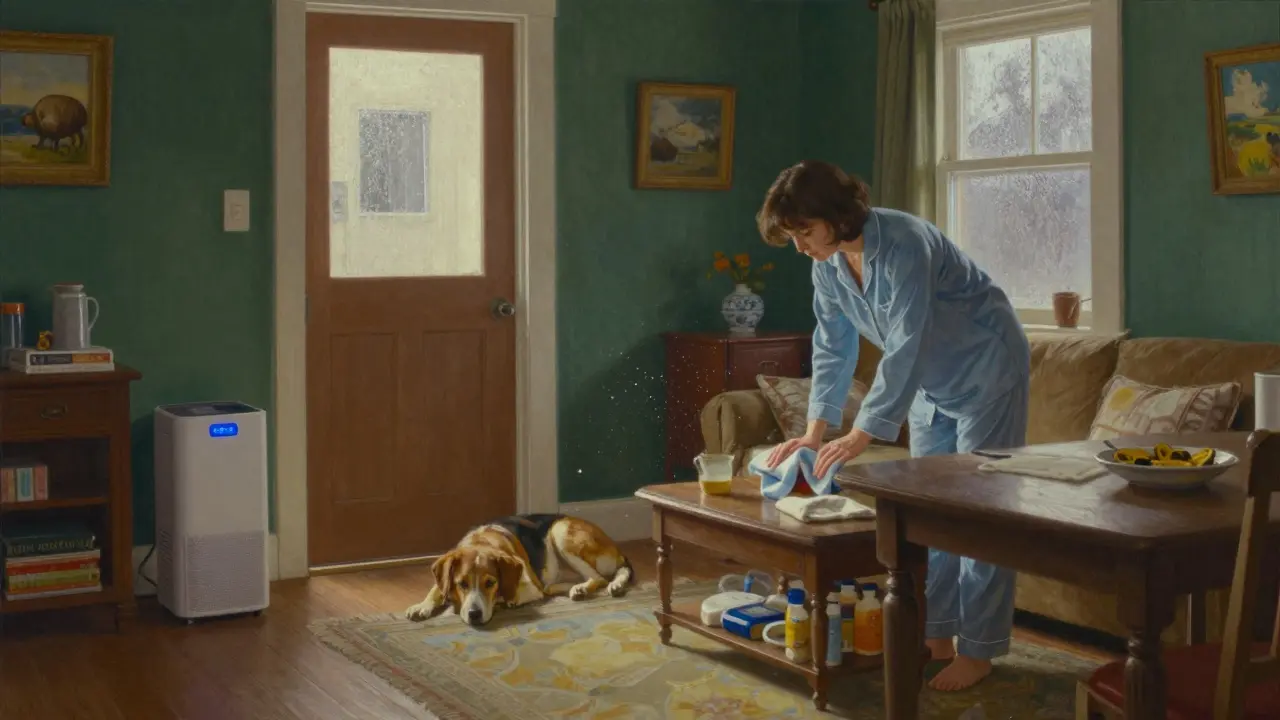
If you have a cat or dog, you’re likely exposed to dander. It’s not fur-it’s the proteins in their skin flakes and saliva. Cat allergen (Fel d 1) is especially stubborn. It sticks to clothes, carpets, and even walls.
You don’t have to give up your pet. But you do need boundaries:
- Keep pets out of the bedroom. This one change alone can reduce allergen levels by 50% or more.
- Bathe your cat weekly. Studies show this reduces airborne Fel d 1 by 41%. Brushing them outside helps too.
- Use a vacuum with a HEPA filter. Regular vacuums just blow allergens back into the air. HEPA filters trap 99.97% of particles as small as 0.3 microns. Vacuum at least twice a week, focusing on areas your pet frequents.
- Wipe down surfaces with a damp cloth daily. Pet dander settles on tables, shelves, and TV stands. A microfiber cloth picks it up better than a duster.
Some people think air purifiers alone will solve pet allergies. They won’t. They help-but only as part of a bigger plan.
HEPA Filters: Not All Air Purifiers Are Equal
There are hundreds of air purifiers on the market. Most are useless. The only ones that matter have a true HEPA filter and enough airflow to clean the room several times per hour.
Here’s what to look for:
- Look for “True HEPA” on the label-not “HEPA-type” or “HEPA-like.”
- Choose a unit rated for your room size. If your bedroom is 200 square feet, get a purifier rated for at least 250 sq ft.
- It should provide 4 to 6 air changes per hour. That means the entire volume of air in the room gets filtered 4-6 times every hour.
- Run it 24/7 in your bedroom. Turn it off, and allergens build up again within hours.
Don’t waste money on ionizers, UV lights, or scented filters. They don’t remove allergens. Stick to HEPA. And replace the filter every 6-12 months, depending on use.
Multi-Pronged Approach Wins Every Time
Here’s the hard truth: doing just one thing rarely helps. One study looked at 15 clinical trials. When people only used mattress covers, symptoms didn’t improve in 78% of cases. When they combined mattress covers, HEPA filters, humidity control, and pet restrictions? Symptoms dropped in 83% of cases.
It’s not magic. It’s math. Each step reduces exposure by a little. Together, they cut it by 75-90%. And when allergen levels fall below your personal trigger threshold, your body stops reacting.
Start simple:
- Week 1: Get mattress and pillow covers. Install a HEPA air purifier in your bedroom.
- Week 2: Buy a hygrometer. Start using a dehumidifier if humidity is above 50%.
- Week 3: Keep pets out of the bedroom. Vacuum with a HEPA vacuum twice a week.
- Week 4: Wash bedding weekly in hot water. Clean bathroom surfaces with antimicrobial cleaner.
By the end of a month, you’ll have a system that works. You don’t need to overhaul your whole house. Just make your bedroom a low-allergen zone. That’s where you spend the most time-and where your body repairs itself.

What Doesn’t Work (And Why)
There’s a lot of noise out there. You’ve probably heard:
- “Air fresheners help.” No. They irritate airways and mask odors, not allergens.
- “Essential oils reduce dust mites.” No evidence. Some oils can trigger asthma.
- “Cleaning once a week is enough.” Not if you’re allergic. Daily surface wiping and weekly washing are the minimum.
- “I’ll just take more antihistamines.” Medication helps-but it doesn’t fix the root cause. Avoidance reduces your need for meds over time.
And for food allergies? Don’t go overboard. If you’re allergic to peanuts, don’t ban them from the whole house unless someone eats them there. Focus on cleaning surfaces and washing hands after handling allergens. Extreme changes create stress without real safety gains.
Cost vs. Benefit: What’s Worth It?
You don’t need to spend thousands. Here’s a realistic breakdown:
| Strategy | Cost | Effectiveness | Time to See Results |
|---|---|---|---|
| Allergen-proof mattress/pillow covers | $30-$100 | 73-90% reduction | 1-2 weeks |
| HEPA air purifier (bedroom) | $150-$300 | 60-80% reduction | 1-2 weeks |
| Dehumidifier | $100-$200 | 70-85% reduction (in humidity) | 1-3 days |
| HEPA vacuum cleaner | $200-$500 | 66% reduction in airborne pet allergens | 1-2 weeks |
| Professional pest control (cockroaches) | $150-$300 per treatment | 86% reduction in allergen levels | 2-4 weeks |
The best value? Mattress covers + humidity control + HEPA filter. Together, they cost under $500 and tackle the three most common allergens. That’s less than one month’s worth of allergy meds for many people.
What Comes Next
Technology is catching up. New smart thermostats now monitor humidity and trigger dehumidifiers automatically. Air purifiers with built-in sensors can alert you when allergen levels rise. But none of this replaces the basics.
The real breakthrough isn’t a gadget. It’s consistency. People who stick with these changes for six months see a 40-60% drop in symptom severity. They use less inhalers. They sleep better. They spend less time off work or school.
And if you’re unsure where to start? Get tested. Knowing exactly what you’re allergic to makes all the difference. A simple skin prick test can tell you if dust mites, cats, mold, or pollen are your main triggers. Then you can focus your efforts where it matters most.
Do I need to remove my pet to control allergies?
Not always. Removing a pet reduces allergen levels dramatically-but many people can manage symptoms by keeping pets out of the bedroom, bathing them weekly, using HEPA filters, and vacuuming frequently. If your symptoms are severe or you’re highly sensitive, removal may be the best option. But for most, it’s about managing exposure, not eliminating the pet.
Can I use regular vacuum cleaners?
No. Regular vacuums blow fine particles back into the air. You need a vacuum with a true HEPA filter and a sealed system that prevents leaks. Look for models certified by the Asthma and Allergy Foundation of America (AAFA). They’re more expensive upfront but prevent allergens from circulating.
Is air conditioning helpful for allergies?
Yes, if you keep the filters clean. Air conditioning reduces outdoor pollen and humidity. But if filters aren’t changed regularly, they become allergen traps. Replace filters every 1-3 months, and consider using a HEPA filter in your HVAC system if possible.
How long does it take to see results from allergen avoidance?
Some people notice improvement in days-especially if they fix humidity or start using a HEPA filter. For others, especially those with long-term asthma or severe sensitivities, it takes 4-8 weeks. The key is consistency. Don’t stop after two weeks. Give it time.
Are there any risks to allergen avoidance strategies?
The main risk is spending money on ineffective products or creating unnecessary stress. Avoid extreme measures like banning all pets or using harsh chemicals daily. Focus on evidence-based steps: HEPA filters, humidity control, hot water washing, and targeted cleaning. These are safe, sustainable, and proven.
Managing allergies at home isn’t about perfection. It’s about progress. You don’t need to eliminate every allergen. Just reduce them enough so your body doesn’t react. Start small. Stick with it. And breathe easier.


