
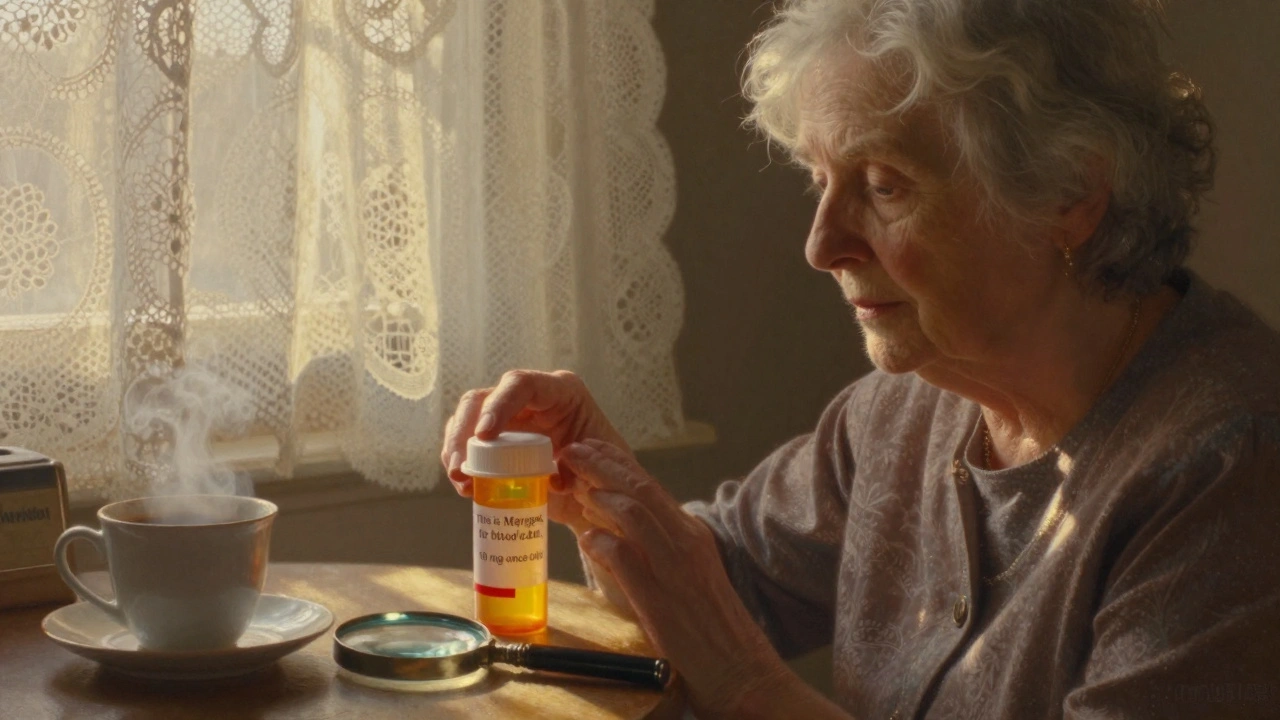
Every year, thousands of people in the U.S. die from medication errors-not because the drug was wrong, but because they took the wrong one. You open the bottle, grab the pill, swallow it, and move on. But what if that pill wasn’t meant for you? What if it’s the wrong dose? Or worse-what if it’s not even the right medication?
Checking the label before every dose isn’t just a good idea. It’s the single most effective thing you can do to protect yourself. According to the FDA, 33% of all medication errors happen because someone didn’t read the label. That’s not a small risk. That’s one in three chances you could end up in the hospital-or worse-because you skipped a three-second check.
Why This Habit Matters More Than You Think
You’re not alone if you’ve ever taken a pill without looking. Morning routines are rushed. You’re tired. You’ve been on the same meds for months. You think you know what’s in the bottle. But that’s exactly when mistakes happen.
Take insulin. One patient confused saline solution with insulin because the bottles looked similar. He didn’t check the label. He died within hours.
Or consider blood pressure pills. One woman took her husband’s medication because the bottle was on the counter. She ended up in the ER with dangerously low blood pressure.
These aren’t rare cases. The Agency for Healthcare Research and Quality says medication errors cost the U.S. system $42 billion a year. And most of them? Preventable. The key? Checking the label every single time.
Studies show people who check their labels before every dose reduce their risk of error by up to 76%. That’s more than double the protection you get from using a pill organizer alone. And it’s the only habit that works whether you’re on one pill or ten.
The 10 Things You Must Check Every Time
You don’t need to memorize a manual. Just run through this list-out loud if you can-before you swallow anything.
- Your full name-Does it match your ID? Even a missing middle initial can mean the wrong person’s meds.
- Drug name-Both brand and generic. If it says “Lisinopril” but you thought it was “Zestril,” they’re the same. But if it says “Metformin” and you were expecting “Glipizide,” stop.
- Dosage-Is it 5 mg or 50 mg? A tenfold difference can be deadly.
- How often to take it-Once a day? Three times? At night? Don’t assume.
- Prescriber’s name-Is it your doctor? If it’s someone else’s name, question it.
- Expiration date-Never take expired meds. They lose potency. Some become toxic.
- Fill date-If it’s been over 30 days since it was filled, ask your pharmacist. Some meds degrade quickly.
- Warnings-No alcohol? Avoid grapefruit? Don’t drive? These aren’t suggestions. They’re safety rules.
- Pharmacy name and number-If something feels off, call them. Pharmacists are trained to catch mistakes.
- Quantity and refills-Did you get 30 pills or 60? Are you supposed to have more refills? If not, why?
You don’t have to remember all ten at once. Start with the top three: your name, the drug name, and the dose. Add one more each week until it’s automatic.
How to Make It Stick: The Three-Touch Method
Willpower doesn’t work for habits. Repetition does.
The American Society of Health-System Pharmacists recommends the Three-Touch Method. Here’s how it works:
- Touch the label with your finger.
- Speak out loud: “This is [Your Name], for [condition], [dose] [times per day].”
- Pause for two seconds. Let it sink in.
That’s it. Three touches. Three seconds. One sentence.
Why does this work? Because you’re engaging three senses: sight, touch, and sound. Your brain remembers things better when you’re not just seeing them-you’re interacting with them.
One study found that people who used this method had 92% adherence after 30 days. Those who just looked silently? Only 64%.
Try it for 21 days. That’s how long it takes for your brain to rewire itself. After that, you won’t even think about it. You’ll just do it.
What If You Can’t Read the Label?
If you’re over 65, have vision problems, or struggle with small print, you’re not broken. The system is.
Since January 2025, FDA rules require all prescription labels to use:
- Minimum 6-point sans-serif font for basic info
- 8-point or larger font for warnings
- High-contrast colors (black on white, never gray on yellow)
But not all pharmacies comply yet. And even compliant labels can be hard to read.
Here’s what to do:
- Ask your pharmacist for a large-print label. They’re required to provide one.
- Use a handheld magnifier. A $10 one from the drugstore cuts errors by 38%.
- Take a photo of the label with your phone and zoom in. Most phones now have great magnification tools.
- Use color-coded stickers. Red for daily meds, blue for as-needed, green for vitamins. Put them on the bottle.
One woman in her 70s told me she used to skip checks because she couldn’t read the tiny text. After her pharmacist gave her a red sticker for her heart med and a blue one for her blood thinner, she hasn’t made a mistake in over a year.
When Apps and Pill Organizers Aren’t Enough
Many people think apps or pill boxes solve everything. They help-but they’re not foolproof.
An app can remind you to take your pill. But if you grab the wrong bottle and log it anyway? The app doesn’t care. You still took the wrong thing.
Pill organizers are great for sorting-but if you fill them wrong once? You’re stuck with the mistake for a week.
The best tools combine verification with convenience:
- Apps that require you to scan the barcode before logging a dose
- Smart pill bottles that light up or beep if you open the wrong one
- Pharmacy apps that send you a photo of the label when your prescription is ready
Pharmacies like CVS and Walgreens now offer barcode scanning apps. You point your phone at the label, scan it, and the app confirms it matches your prescription. If it doesn’t? It won’t let you log the dose.
These tools don’t replace checking-they reinforce it.

How to Help Someone Else (A Parent, Partner, or Friend)
If you care for someone who takes multiple meds, don’t just remind them. Train them.
Use the teach-back method. After they check the label, ask: “Can you tell me what this pill is for and how much to take?”
Studies show this boosts retention by 57%. It’s not about testing them. It’s about helping their brain lock in the info.
One caregiver told me her dad kept mixing up his diabetes meds. She started sitting with him every morning. They’d check the label together. She’d ask him to explain it. Within two weeks, he started doing it on his own.
Don’t do it for them. Do it with them.
Common Traps and How to Avoid Them
Even the best habits can slip. Here are the most common mistakes-and how to fix them:
- “I’ve taken this before.” → New bottle? New batch? New pharmacy? Always check.
- “The label looks the same.” → Tiny changes matter. A 5 mg to 10 mg change can be dangerous.
- “I’m in a hurry.” → Place meds where you can’t skip them: next to your coffee maker, toothbrush, or car keys.
- “I don’t want to look stupid.” → Pharmacists see this every day. Asking questions is smart, not embarrassing.
- “I forgot.” → Set a daily alarm labeled “CHECK LABEL.” Even if you’re late, do it before you take the pill.
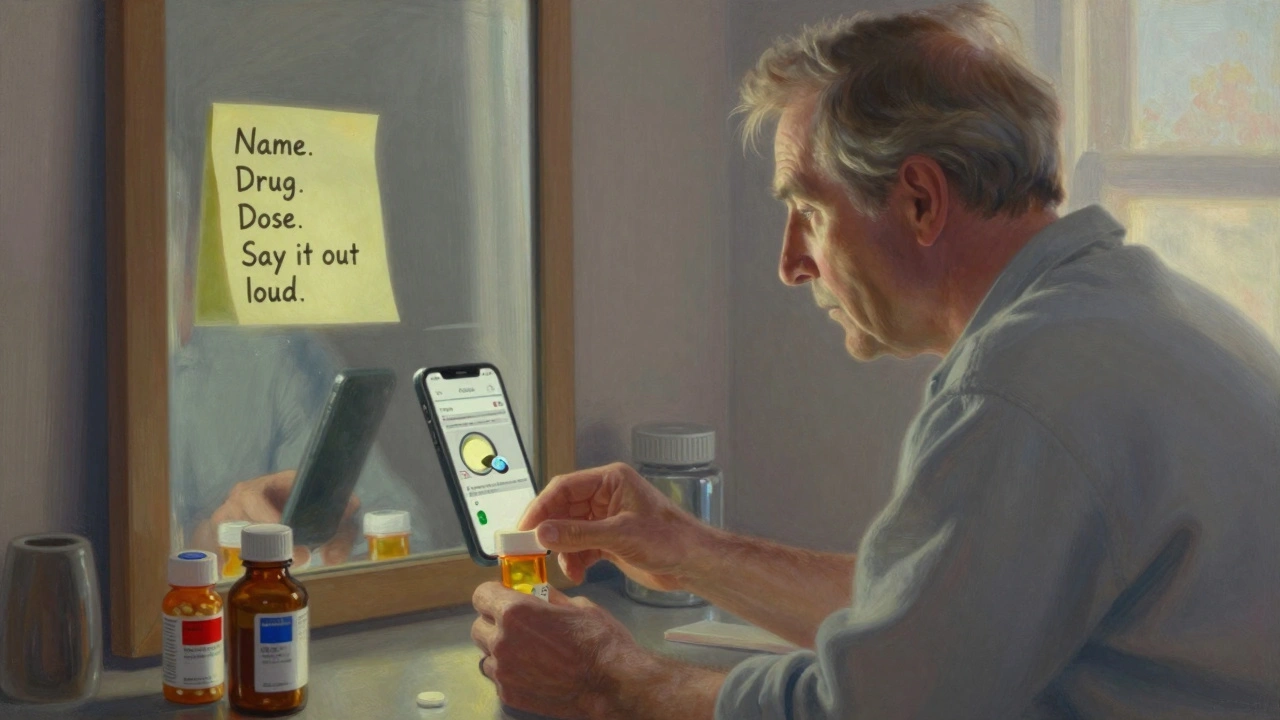
One man kept forgetting until he put a sticky note on his bathroom mirror: “Name. Drug. Dose. Say it out loud.” He started doing it without thinking. He’s been error-free for 18 months.
This Isn’t Just a Habit. It’s a Lifesaver.
Medication errors are silent killers. They don’t make headlines. But they’re happening in homes, nursing facilities, and hospitals every day.
Checking your label before every dose isn’t about being perfect. It’s about being present. It’s about saying, “I matter enough to protect myself.”
Start today. Pick one pill. Check the label. Say it out loud. Do it again tomorrow. And the next day.
In three weeks, you won’t even notice you’re doing it. But you’ll notice the peace of mind.
And that’s worth more than any app, organizer, or reminder ever could.
What if I take a pill without checking the label once? Am I in danger?
One mistake doesn’t mean disaster-but it does mean you’re playing Russian roulette with your health. Most errors happen because someone did it “just this once.” The goal isn’t perfection. It’s consistency. If you slip, don’t beat yourself up. Just reset. Check the next one. Every dose matters.
Can I rely on my pharmacist to catch mistakes?
Pharmacists are trained to catch errors, but they’re not mind readers. They fill dozens of prescriptions a day. If your name is on the label, they assume it’s yours. You’re the last line of defense. Your eyes, your voice, your hands-those are what keep you safe.
Do I need to check the label even if I’ve been on the same medicine for years?
Yes. Medications change. Your dose might be adjusted. The manufacturer might switch. The label might be redesigned. Even if you’ve taken the same pill for 10 years, the bottle you’re holding today might be different. Always check.
What if the label is hard to read or confusing?
Call your pharmacy. Ask for a large-print label. Ask them to explain any abbreviations. Don’t guess. Abbreviations like “QD” (once daily) or “BID” (twice daily) can be misread. Say “once a day” or “twice a day” out loud. If they won’t help, ask for a different pharmacy. Your safety isn’t negotiable.
Is it okay to use a pill organizer if I still check the label first?
Yes-absolutely. Pill organizers are helpful for sorting doses, but only if you fill them correctly. Always check the original bottle before putting pills into the organizer. Never fill one from memory. Always verify the label, then transfer. That’s how you stay safe.
How do I get my family to take this seriously?
Don’t lecture. Show them. Do the Three-Touch Method together. Let them see how easy it is. Share stories-like the one about the man who confused insulin with saline. Make it real. Then ask them to do it with you for a week. Most people will join in once they realize how simple-and how vital-it is.


