

When you pick up your prescription, the pharmacist doesn’t just hand you a bottle and say goodbye. They’re doing something far more important: making sure the medicine won’t hurt you. This step-confirming allergies and drug interactions-is one of the last safety checks before a medication reaches your hands. And it’s not just a formality. Every year, tens of thousands of people end up in the hospital because of avoidable reactions to medications they were never supposed to get. The good news? This step, when done right, can stop most of those cases.
Why This Step Matters More Than You Think
You might think your doctor already checked your allergies when they wrote the prescription. But that’s not always true. Allergy records in electronic systems can be outdated, incomplete, or even wrong. A 2023 study from the University of Michigan found that over 32% of patient allergy records hadn’t been updated in five years or more. That means someone could be flagged as allergic to penicillin from a childhood rash that turned out to be a virus-not an actual allergy. Meanwhile, they’re stuck with weaker, more expensive, or more side-effect-prone antibiotics. Drug interactions are even trickier. You might be taking five different meds. One for blood pressure, one for cholesterol, a painkiller, a sleep aid, and maybe a supplement. Individually, they’re fine. Together? They can cause dizziness, kidney stress, or even heart rhythm problems. Lexicomp and Micromedex, two of the most trusted drug interaction databases, track over 1,000 known drug-drug interactions. That’s why pharmacists don’t just look at the new prescription-they look at your whole list.What Happens at the Pickup Counter
It sounds simple, but the process is layered. Here’s what actually goes on in those 90 seconds before you get your meds:- Check the EHR - The pharmacist opens your electronic health record. They look for any documented allergies, especially those marked as severe (anaphylaxis, swelling, trouble breathing). They also check for any past reactions noted in clinical notes-even if they weren’t officially labeled as allergies.
- Run the interaction scan - The pharmacy system compares your new prescription with every other medication and supplement you’re taking. It flags anything that could cause harm: like mixing blood thinners with NSAIDs, or statins with grapefruit juice.
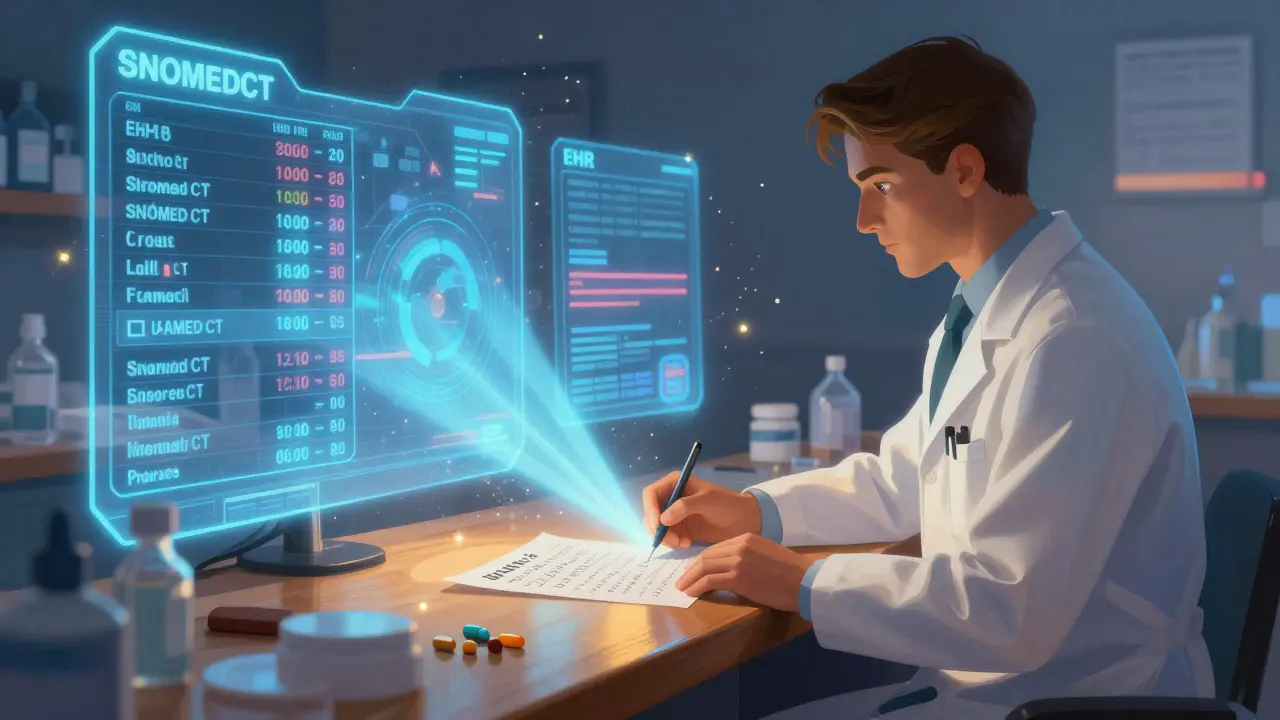
- Look at inactive ingredients - This is where things get surprising. Some people aren’t allergic to the active drug but to the dye, filler, or preservative in it. For example, someone allergic to red dye #40 might react to a capsule that uses it-even if the medicine itself is safe. Systems that screen only by active ingredient miss this. Better systems use structured picklists based on SNOMED CT terminology to catch these.
- Ask you - No system is perfect. So the pharmacist asks: “Have you had any new reactions since your last visit?” “Did you ever get a rash after taking amoxicillin?” “Are you taking any new vitamins or herbal products?” This verbal check catches what the computer misses.
The Tech Behind the Check
Most pharmacies use systems built into their pharmacy management software-like QS/1, PioneerRx, or Rx30-that connect to your EHR through HL7 interfaces. These systems pull data from Epic or Cerner, which are used in nearly 90% of U.S. hospitals. But not all systems are created equal. There are three main ways they check for allergies:- NDC-based screening - Uses the National Drug Code (the barcode number on the bottle). It’s precise but outdated fast. NDC codes get removed from databases within 18 months after a drug is discontinued, so it often misses newer versions or generics.
- Drug name concept screening - Looks at the active ingredient and all its brand and generic forms. This catches more real threats but floods pharmacists with alerts. One study found this method generates 3.2 times more useful alerts than NDC-but also requires 28% more time to review.
- Structured picklists (SNOMED CT) - Uses standardized medical terms. Instead of typing “penicillin allergy,” the system uses a code that links to related drugs like amoxicillin or cephalosporins. This reduces false alarms and helps avoid overuse of broad-spectrum antibiotics.
What You Can Do to Help
You’re not just a passive recipient here. You play a role in making this system work.- Update your allergy list every year - Even if nothing changed, tell your pharmacist. If you had a rash after taking sulfa drugs five years ago but never had a reaction since, it might not be a true allergy anymore.
- Bring a full list of everything you take - Not just prescriptions. Include OTC painkillers, herbal teas, CBD gummies, and supplements. Many interactions happen with things people don’t think of as “medicine.”
- Ask if your allergy label is accurate - If you’ve been told you’re allergic to penicillin, ask if you’ve ever been tested. Studies show 90% of people with this label don’t actually have a true allergy. A simple skin test can clear you for better, cheaper antibiotics.
- Speak up if something feels off - If you’ve never had a reaction to a drug before but the pharmacist hesitates, ask why. They might be seeing an old alert or a false flag.
Where the System Still Fails
Despite all the tech, gaps remain. One big one: conditions aren’t allergies. If your record says “asthma,” the system won’t flag a beta-blocker unless you also have “beta-blocker allergy” listed. That’s dangerous-beta-blockers can trigger asthma attacks, but most systems won’t catch it. Another problem: patients forget or downplay reactions. Someone might say, “I just got a little itchy,” and not realize that’s a sign of an allergic response. Or they might have had a reaction years ago and assume it’s irrelevant now. And then there’s the biologics blind spot. New drugs like monoclonal antibodies (used for arthritis, cancer, or psoriasis) have complex cross-reactivity patterns. Current systems only catch about 62% of these interactions. That’s a growing risk as more patients use these advanced therapies.What’s Changing in 2025
The rules are tightening. Starting in October 2024, Medicare will penalize hospitals and pharmacies that have more than a 15% override rate for allergy alerts. That’s pushing clinics to upgrade their systems. Epic’s 2024 update now lets pharmacists suppress low-severity alerts for patients with dozens of documented allergies-cutting down noise without losing safety. The FDA’s new Drug Allergy Communication Initiative requires all drug labels to use standardized formats (SPL) by December 2025. That means allergy info will be clearer and more consistent across brands. And AI is starting to help. Google Health’s pilot program analyzed clinical notes from 12 hospitals and found 31.7% more undocumented allergies by spotting phrases like “rash after amoxicillin” buried in doctor’s notes. That kind of tech could soon become standard.
What to Expect Next Time You Pick Up a Prescription
The pharmacist might ask a few quick questions. They might pause for a minute while they cross-check something. That’s not a delay-it’s a safeguard. If they override an alert, they’ll document why. That note goes into your record so the next pharmacist knows it was intentional. Don’t be annoyed by the questions. Don’t rush them. This isn’t bureaucracy. It’s your last line of defense against a reaction that could send you to the ER. And if you’ve ever been told you’re allergic to something but never tested-ask about it. You might be avoiding a perfectly good, cheaper, more effective drug for no reason.Real Talk: A Pharmacist’s Perspective
A Reddit thread from January 2024 had a pharmacist write: “I had five patients this month who couldn’t get amoxicillin for strep throat because of a penicillin allergy label-even though they’d never had a true reaction. One of them ended up with a resistant infection because we had to use a stronger antibiotic.” That’s the hidden cost of poor allergy documentation. It’s not just about safety. It’s about access. Better verification doesn’t just prevent harm-it opens up better treatment options.Final Thought
Medication safety isn’t just about what’s in the bottle. It’s about what’s in the system-and what’s in your memory. The technology is powerful. But it only works if you help keep your records accurate. Your next prescription pickup isn’t just a transaction. It’s a checkpoint. And you’re part of the team.What if I don’t remember my allergies?
It’s common to forget or downplay past reactions. If you’re unsure, tell your pharmacist what you *do* remember-even small things like a rash, swelling, or trouble breathing after taking a medicine. They can help determine if it was truly an allergy or something else. You can also ask for a referral to an allergist for testing, especially if you’ve been labeled with a penicillin allergy.
Can I skip the allergy check if I’ve been taking this medicine for years?
No. Even if you’ve taken a drug safely before, your body can change. You might have developed a new allergy, started a new medication, or have a new health condition that changes how your body reacts. Pharmacists check every time because safety isn’t based on history alone-it’s based on your current situation.
Why do I get flagged for an allergy I never had?
Often, it’s because someone entered your allergy incorrectly in the past-maybe a nurse mistyped “penicillin” when you had a reaction to a different antibiotic. Or maybe you had a viral rash that was mislabeled as an allergy. These outdated records stick around unless you update them. Always ask your pharmacist to review your allergy list during each visit.
Do supplements and vitamins count in interaction checks?
Yes. Many supplements interact with prescription drugs. St. John’s Wort can reduce the effectiveness of birth control and antidepressants. Vitamin K can interfere with blood thinners like warfarin. Even common ones like calcium or magnesium can affect how your body absorbs certain antibiotics. Always list everything you take-no matter how “natural” it seems.
What happens if the pharmacist overrides an alert?
They must document why. This reason is saved in your electronic record and visible to other providers. For example, they might write: “Patient has no history of reaction to penicillin; allergy label appears outdated.” This ensures continuity of care and prevents the same alert from popping up again unless something changes.


