
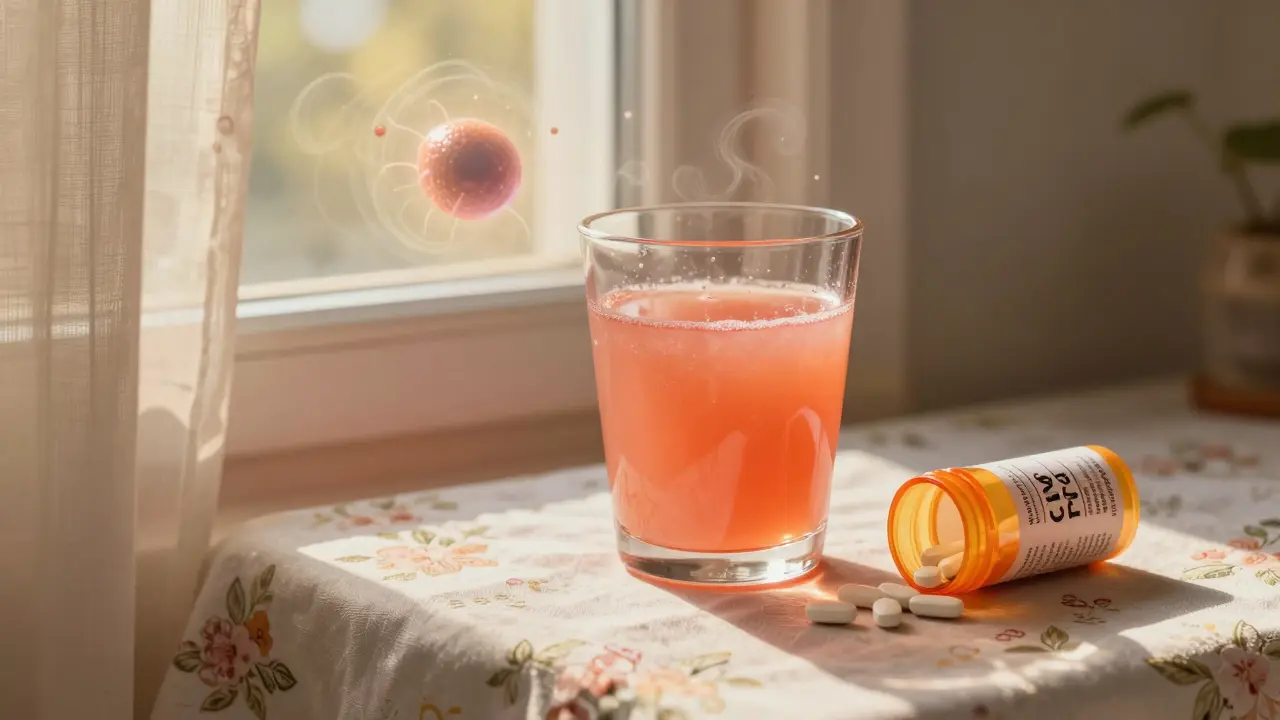
Drinking a glass of grapefruit juice in the morning might seem like a healthy habit-until it starts messing with your medication. This isn’t just a myth or a vague warning on a pill bottle. It’s a real, well-documented, and sometimes life-threatening interaction that affects more than 85 prescription drugs. And the worst part? You don’t even have to drink a whole pitcher. Just one small glass can change how your body handles your medicine-sometimes for days.
Why Grapefruit Juice Is a Problem
Grapefruit juice doesn’t just taste sour. It contains chemicals called furanocoumarins, natural compounds found in grapefruit that block a key enzyme in the gut. This enzyme, called CYP3A4, is responsible for breaking down about half of all oral medications before they enter your bloodstream. When grapefruit juice shuts down this enzyme, your body absorbs way more of the drug than it should.The result? Toxic levels of medication building up in your blood. You might not feel anything right away. But over time, this can lead to serious side effects-muscle damage, kidney failure, irregular heartbeats, even sudden death. The effect lasts a long time, too. A single 200-milliliter glass (about 6.7 ounces) can block CYP3A4 for up to 72 hours. That means even if you take your medicine at night and drink juice in the morning, you’re still at risk.
Which Medications Are Most at Risk?
Not all drugs react the same way. Some are barely affected. Others turn dangerous with even a sip. Here are the big ones doctors worry about:- Statins (cholesterol drugs): Simvastatin, a common statin, can see blood levels triple when taken with grapefruit juice. That raises your risk of rhabdomyolysis-a condition where muscle tissue breaks down and can damage your kidneys. Atorvastatin, on the other hand, only increases by about 30%, which is less risky. Pravastatin and Rosuvastatin are safe-they don’t rely on CYP3A4 at all.
- Calcium channel blockers (blood pressure drugs): Felodipine and Nifedipine can have their blood levels jump by 3 to 5 times. Amlodipine is much safer-it shows less than a 1.5-fold increase.
- Immunosuppressants: Drugs like Cyclosporine and Tacrolimus are used after organ transplants. Grapefruit can raise cyclosporine levels by 50-60%, which can cause kidney damage. Tacrolimus is less affected, making it a better alternative in some cases.
- Antiarrhythmics: Amiodarone can see a 30-40% increase in blood levels, raising the risk of dangerous heart rhythms.
- Other high-risk drugs: Some benzodiazepines, certain antidepressants, and erectile dysfunction drugs like Sildenafil (Viagra) can also be affected.
On the flip side, some medications show little to no interaction. Trazodone and Zolpidem (Ambien) are examples-clinical studies show no meaningful change in their levels with grapefruit juice. But unless your doctor confirms it’s safe, don’t assume anything.
Not All Citrus Is the Same
You might think, "What if I switch to orange juice?" That’s smart-but not all oranges are equal. Seville oranges (used in marmalade) and pomelos contain the same furanocoumarins as grapefruit and should be avoided too. But sweet oranges, lemons, and limes do not. They’re safe to drink with most medications.Even processing matters. Fresh-squeezed grapefruit juice has more furanocoumarins than pasteurized or bottled versions. But don’t rely on that. The difference isn’t enough to make it safe. The FDA says: if your drug label warns against grapefruit, avoid it completely.
Who’s Most at Risk?
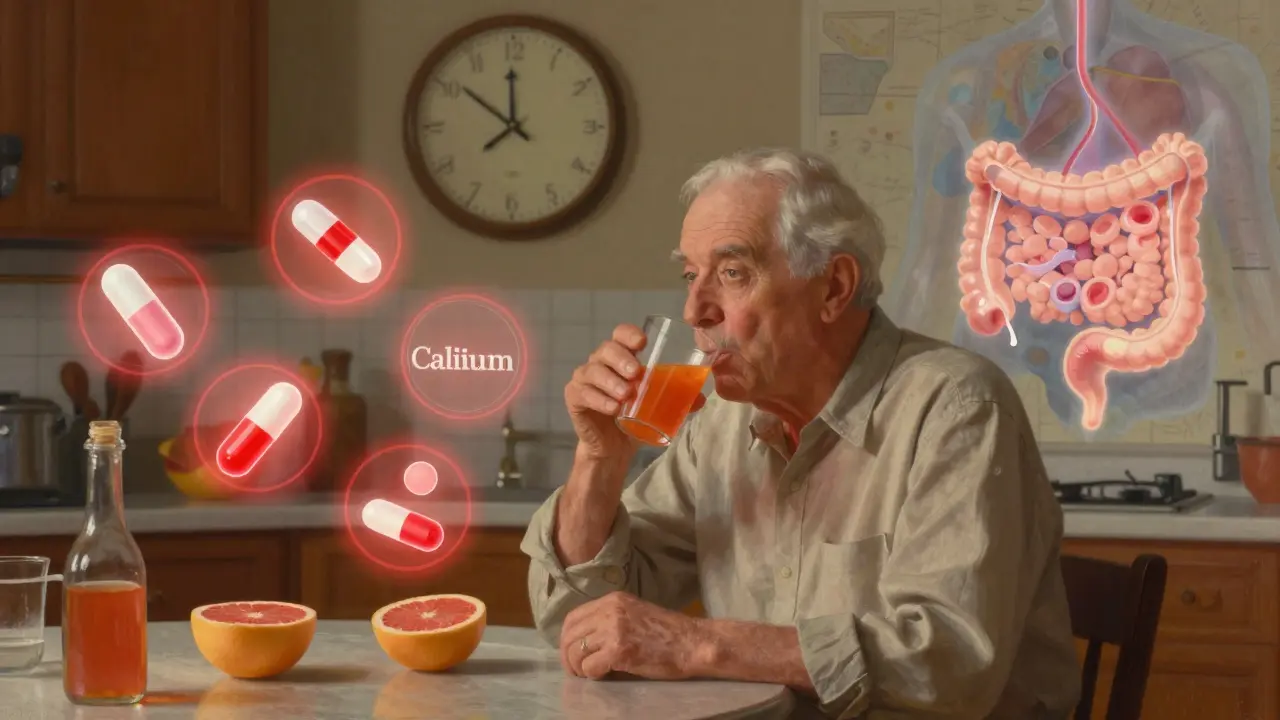
Older adults are especially vulnerable. People over 65 make up 40% of grapefruit juice drinkers in the U.S., and they’re also the group most likely to be on multiple medications. On average, they take 3 to 5 prescriptions daily-many of which interact with grapefruit. The American Geriatrics Society says this group should be extra cautious.There’s also big individual variation. One person might drink a glass and have no issue. Another might end up in the ER. Why? It comes down to how much CYP3A4 your gut naturally produces. But since there’s no test to measure that, doctors can’t predict who’s at higher risk. That’s why the safest rule is: if you’re on a medication that interacts with grapefruit, don’t drink it at all.
What Should You Do?
1. Check your medication labels. Since 2014, the FDA requires manufacturers to include grapefruit warnings on drug labels. Look for phrases like "Avoid grapefruit juice" or "Do not consume grapefruit products while taking this medication." 2. Talk to your pharmacist. Pharmacists are trained to spot these interactions. When you pick up a new prescription, ask: "Does this interact with grapefruit?" A 2021 study found that 89% of community pharmacists routinely screen for this. 3. Keep a full list of all your medications. This includes prescriptions, over-the-counter pills, vitamins, and herbal supplements. Some supplements, like St. John’s Wort, also interact with CYP3A4. Bring this list to every doctor’s visit. 4. Ask about alternatives. If you love grapefruit and you’re on a risky drug, ask your doctor if there’s a safer option. For example, switching from simvastatin to pravastatin or rosuvastatin eliminates the risk. Switching from cyclosporine to tacrolimus can be safer too. 5. Don’t just avoid it at dosing time. The effect lasts up to 72 hours. So even if you drink juice at breakfast and take your pill at bedtime, you’re still at risk. The FDA says: "Avoid grapefruit the whole period that you are on the medication."
What’s Being Done to Fix This?
Scientists aren’t ignoring this problem. In October 2023, the USDA announced that CRISPR-edited grapefruit with 90% less furanocoumarin had passed early safety trials. That could mean a future where you can enjoy grapefruit without the risk. But for now, that’s still years away.Meanwhile, drugmakers are changing their labels. A 2022 analysis found that 76% of affected drug labels now have clear warnings. But here’s the problem: only 38% of patients remember being told about the risk when they got their prescription. That’s why you can’t rely on someone else to remind you.
Final Rule: When in Doubt, Skip It
Grapefruit juice isn’t evil. It’s full of vitamin C and antioxidants. But when it comes to medications, it’s unpredictable. One glass can turn a safe drug into a dangerous one. There’s no safe amount for high-risk drugs. No exceptions. No "just a little."If you’re on any medication-especially for heart conditions, cholesterol, high blood pressure, or immune suppression-ask your doctor or pharmacist: "Is grapefruit juice safe with this?" If the answer isn’t a clear "yes," assume it’s no. Your body doesn’t always show warning signs before things go wrong. Better to skip the juice than risk your health.
Can I drink grapefruit juice if I take my medication at a different time of day?
No. The chemicals in grapefruit juice block the CYP3A4 enzyme in your gut for up to 72 hours. Even if you take your medicine at night and drink juice in the morning, the enzyme is still blocked. The interaction isn’t about timing-it’s about whether the enzyme is active when the drug is absorbed. The FDA says to avoid grapefruit entirely while taking affected medications.
Is it safe to eat grapefruit instead of drinking the juice?
No. The same furanocoumarins that are in the juice are in the fruit itself. Eating half a grapefruit has the same effect as drinking a glass of juice. The concentration might be slightly lower, but not enough to be safe. If your medication warns against grapefruit juice, it also warns against the fruit.
Do all statins interact with grapefruit?
No. Simvastatin and atorvastatin are the most affected. Simvastatin can see a 3-fold increase in blood levels, which raises the risk of muscle damage. Atorvastatin has a smaller increase-about 30%. But pravastatin and rosuvastatin don’t rely on the CYP3A4 enzyme, so they’re safe. If you’re on a statin and love grapefruit, ask your doctor if switching to one of the safer options is possible.
What about orange juice? Is that safe?
Sweet orange juice (like Valencia or Navel) is safe. It doesn’t contain furanocoumarins. But Seville oranges (used in marmalade) and pomelos do. They can cause the same interaction. Always check the label. If it says "100% orange juice," it’s likely safe-but if it’s unclear, ask your pharmacist.
I’ve been drinking grapefruit juice for years with my medication. Should I be worried?
If your medication is on the list of high-risk drugs-like simvastatin, felodipine, or cyclosporine-then yes. You may have been lucky so far, but the risk builds over time. Some people never have problems. Others develop serious side effects after months or years. Since you can’t predict who’s at risk, the safest choice is to stop. Talk to your doctor about alternatives. You don’t need to wait for symptoms to appear.


