
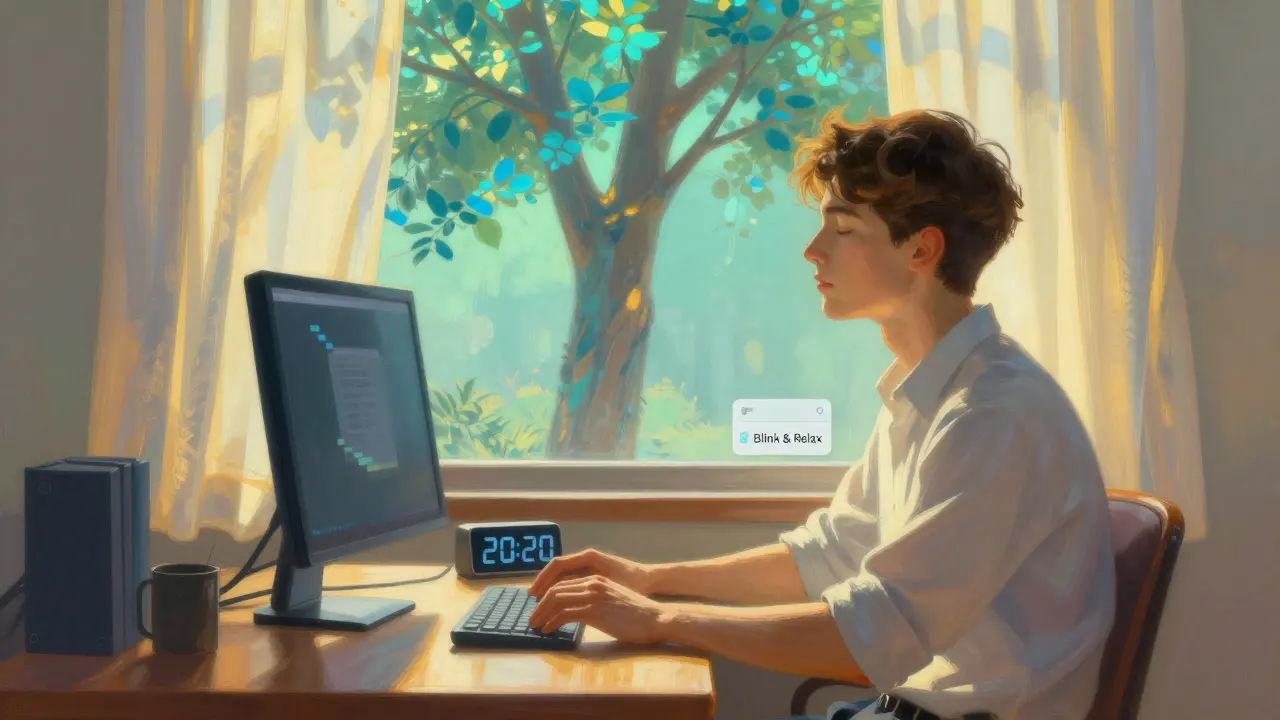
By 2025, most people spend over seven hours a day staring at screens. Whether you’re coding, scrolling, or video calling, your eyes are working harder than ever. And if you’ve ever felt that gritty, tired, burning sensation after a long day in front of your monitor-you’re not alone. This isn’t just fatigue. It’s computer vision syndrome, also called digital eye strain, and it’s one of the most common, yet ignored, health issues in the digital age.
What Exactly Is Computer Vision Syndrome?
Computer vision syndrome isn’t a single disease. It’s a collection of symptoms caused by prolonged screen use. The American Optometric Association says 65% of Americans experience at least one symptom. That’s more than two out of three people who use computers regularly. Symptoms include:- Eye strain and discomfort
- Headaches
- Blurred or double vision
- Dry, red, or burning eyes
- Neck and shoulder pain
- Sensitivity to light
Who’s Most at Risk?
It’s not just office workers. Students, remote employees, gamers, and even parents scrolling through phones during downtime are all affected. But some groups are hit harder.- People aged 18-34: 76% report symptoms
- Women: 18% more likely than men to report discomfort
- Those with uncorrected vision problems: Presbyopia (age-related farsightedness) and astigmatism make symptoms worse
- Remote workers: Screen time jumped 40% since 2020
The 20-20-20 Rule: Simple, Free, and Proven
The most effective prevention tool isn’t expensive glasses or fancy software. It’s the 20-20-20 rule. Every 20 minutes, look at something 20 feet away for 20 seconds. Sounds too easy? It works. Clinical data from St. Peter Eyecare Center shows this single habit reduces symptoms by 53%. You don’t need to leave your desk. Just turn your head. Focus on a tree outside, a poster on the wall, or even the edge of your room. Let your eyes relax. Blink fully. That’s it. Use a free app like EyeLeo or Time Out to remind you. Set it to ping every 20 minutes. After three weeks, it becomes automatic. One software developer on Trustpilot said his daily headaches dropped from five days a week to just one after sticking to this rule for a month.Screen Position and Ergonomics Matter More Than You Think
Where you place your screen is just as important as how long you look at it. The top of your monitor should be at or slightly below eye level. That means your gaze should be angled 15-20 degrees downward. Why? Looking up strains your neck. Looking down reduces eyelid exposure, helping your eyes stay moist. Distance? Keep the screen 20 to 28 inches from your eyes. That’s about arm’s length. Too close? Your eyes work overtime to focus. Too far? You lean in, straining your neck and shoulders. Use a stack of books or a monitor stand to adjust height. A tape measure takes 30 seconds. The payoff? A 40% drop in eye fatigue and a 30% reduction in neck pain, according to ergonomic studies.
Lighting: The Silent Culprit
Glare is your eyes’ worst enemy. Bright overhead lights or windows behind your screen create reflections that force your pupils to constantly adjust. Ideal lighting? 300-500 lux. That’s about half the brightness of a typical office. Use a desk lamp with a warm bulb to light your papers, not your screen. Close blinds if sunlight hits your monitor. Turn off fluorescent lights if you can. Use natural light when possible. And never work in a dark room with a bright screen-that’s a recipe for headaches.Computer Glasses: Helpful or Hype?
Blue light glasses are everywhere. They’re marketed as a miracle fix. But the science is mixed. Some users swear by them. On Reddit, 68% of users reported symptom relief. But double-blind studies from the American Academy of Ophthalmology show only a 15% additional benefit over regular clear lenses. That’s not nothing-but it’s not a cure. What actually helps? Anti-reflective coating. It cuts glare. That’s the real win. Blue light filtering? It might help you sleep better at night, but it doesn’t significantly reduce eye strain during the day. If you have uncorrected vision problems-like astigmatism or presbyopia-computer-specific glasses prescribed by an optometrist can make a huge difference. One student on Student Doctor Network thought blue light glasses helped… until she got an eye exam and found she needed a new prescription. Her symptoms vanished after that.Dry Eyes? Try This
Dry eyes from screen use aren’t just uncomfortable-they’re preventable. Use preservative-free artificial tears 2-4 times a day. No need to wait until your eyes burn. Proactive use works better. Cleveland Clinic data shows 78% of users saw improvement within a week. Also, practice conscious blinking. Set a reminder: “Blink fully every 4-5 seconds.” Dr. Reena Garg at Cedars-Sinai says this alone can improve tear film stability by 40%. And here’s a new option: In May 2023, the FDA approved EYSUVIS 0.25%, the first prescription eye drop specifically for dry eye caused by digital screen use. It’s not for everyone, but it’s a sign that this problem is being taken seriously.
What’s Changing in 2025?
Technology is catching up. New monitors from Dell and ASUS now come with flicker-free tech and auto-brightness adjustment. These features reduce eye strain by 22% in clinical tests. Your operating system already has tools. Windows 11’s Night Light and macOS’s Night Shift reduce blue light automatically after sunset. Turn them on. They’re free. Companies are noticing too. 68% of Fortune 500 firms now include CVS prevention in workplace wellness programs. That’s up from 22% in 2019. The American Optometric Association predicts that by 2025, 75% of digital users will experience CVS symptoms. That’s why they’re calling it the new dental hygiene-something you do daily, not just when it hurts.Your Action Plan: Start Today
You don’t need to overhaul your life. Just do these five things:- Set a 20-20-20 reminder on your phone or computer.
- Adjust your screen so the top is at eye level, 20-28 inches away.
- Turn down overhead lights. Use a desk lamp instead.
- Use preservative-free eye drops twice a day-morning and afternoon.
- Get a comprehensive eye exam. Ask for a computer-specific prescription if you’re over 40 or have blurry vision at arm’s length.
When to See a Professional
If symptoms persist after 3-4 weeks of following these steps, see an optometrist. Don’t assume it’s just “eye fatigue.” You might have:- Uncorrected astigmatism
- Early presbyopia
- Chronic dry eye disease
- Binocular vision dysfunction
Can blue light glasses cure computer vision syndrome?
No. Blue light glasses may help with sleep or reduce glare slightly, but they don’t fix the core causes of computer vision syndrome-like reduced blinking, poor screen positioning, or uncorrected vision. Studies show they offer only a 15% additional benefit over regular clear lenses. Focus on the 20-20-20 rule, screen height, and eye exams instead.
Is computer vision syndrome permanent?
No. CVS symptoms are temporary and improve when you change your habits. But if you ignore them for years, chronic dry eye or eye muscle fatigue can develop. That’s why prevention matters. The longer you wait, the harder it becomes to reverse the damage.
How often should I get an eye exam if I use screens all day?
Once a year. The American Optometric Association recommends a comprehensive eye exam every 12 months for regular computer users. If you’re over 40, have blurry vision, or wear glasses, you may need it more often. Don’t wait for symptoms-many vision problems start without pain.
Can children get computer vision syndrome?
Yes. Kids who spend hours on tablets or school devices can develop the same symptoms: headaches, blurred vision, and eye rubbing. Their eyes are still developing, so screen habits matter even more. Limit recreational screen time, encourage outdoor play, and ensure their school devices are positioned correctly.
Are there free tools to help prevent digital eye strain?
Yes. Use built-in features like Windows Night Light or macOS Night Shift to reduce blue light after sunset. Download free apps like EyeLeo or Time Out for 20-20-20 reminders. Adjust your screen brightness to match your room’s lighting. These cost nothing but can make a big difference.


