
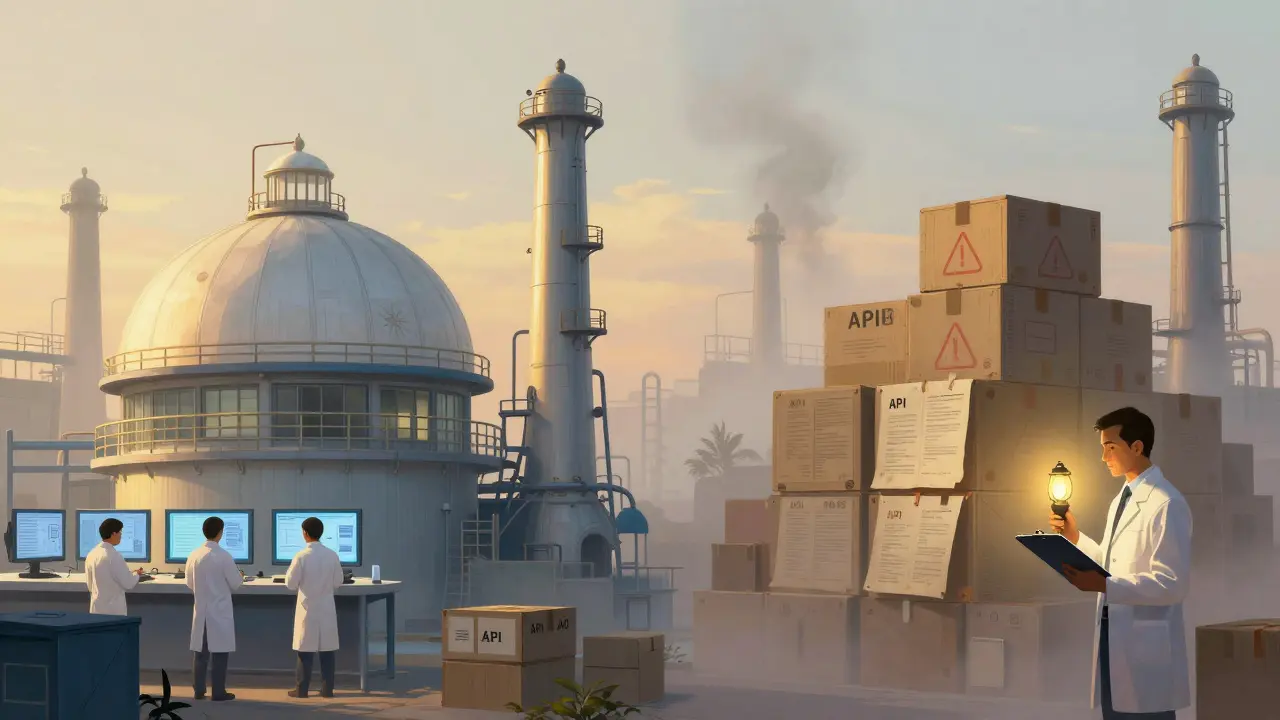
When you take a pill for high blood pressure or antibiotics, chances are it was made in either China or India. These two countries supply most of the world’s generic drugs and active pharmaceutical ingredients (APIs). But behind the low prices and high volumes lies a complex reality: FDA monitoring treats them very differently, and the risks aren’t the same.
Why FDA Monitoring Matters More Than You Think
The U.S. Food and Drug Administration doesn’t just approve drugs - it inspects the factories that make them. A single Form 483 observation during an inspection can delay shipments for months. Between 2020 and 2023, Chinese facilities received 30% more of these warning notices than Indian ones. That’s not a small gap. It means U.S. companies trust Indian plants more. Why? Because India’s manufacturing culture has been shaped by decades of trying to meet Western standards. India has over 100 FDA-approved manufacturing sites. China has just 28. That’s not because China makes fewer drugs - it makes more. But many of its plants don’t pass the bar. The FDA doesn’t care how much you produce. It cares if you follow the rules. And India, even with its own problems, has built systems to follow them.India’s Edge: Compliance Over Scale
India didn’t become the world’s pharmacy by accident. After its 1970 patent law changed, local companies started making cheap generic versions of Western drugs. But to sell those drugs in the U.S. and Europe, they had to learn how to meet strict quality rules. Companies like Cipla, Dr. Reddy’s, and Sun Pharma didn’t just copy formulas - they rebuilt their factories. They installed digital systems to track every batch. They trained staff in FDA’s 21 CFR Part 211 regulations. They hired people who spoke English and understood American inspection protocols. This isn’t theoretical. In 2023, only 18% of Indian pharmaceutical facilities faced FDA import alerts. In China, it was 37%. That’s a huge difference. Import alerts mean the FDA blocks shipments until the problem is fixed. For a U.S. drugmaker, that’s a supply chain nightmare. For an Indian supplier, it’s rare enough to be a talking point - not a daily worry. The result? More global companies are using the "China+1" strategy. They still buy from China for cost savings, but they’ve added India as a backup. Why? Because when a batch fails, you want to switch to a supplier who won’t need a six-month cleanup. India’s regulatory predictability reduces audit fatigue. One sourcing executive told Bain & Company: "We’d rather pay a little more in India than risk a shipment being held up in customs because of a Chinese plant’s paperwork mess."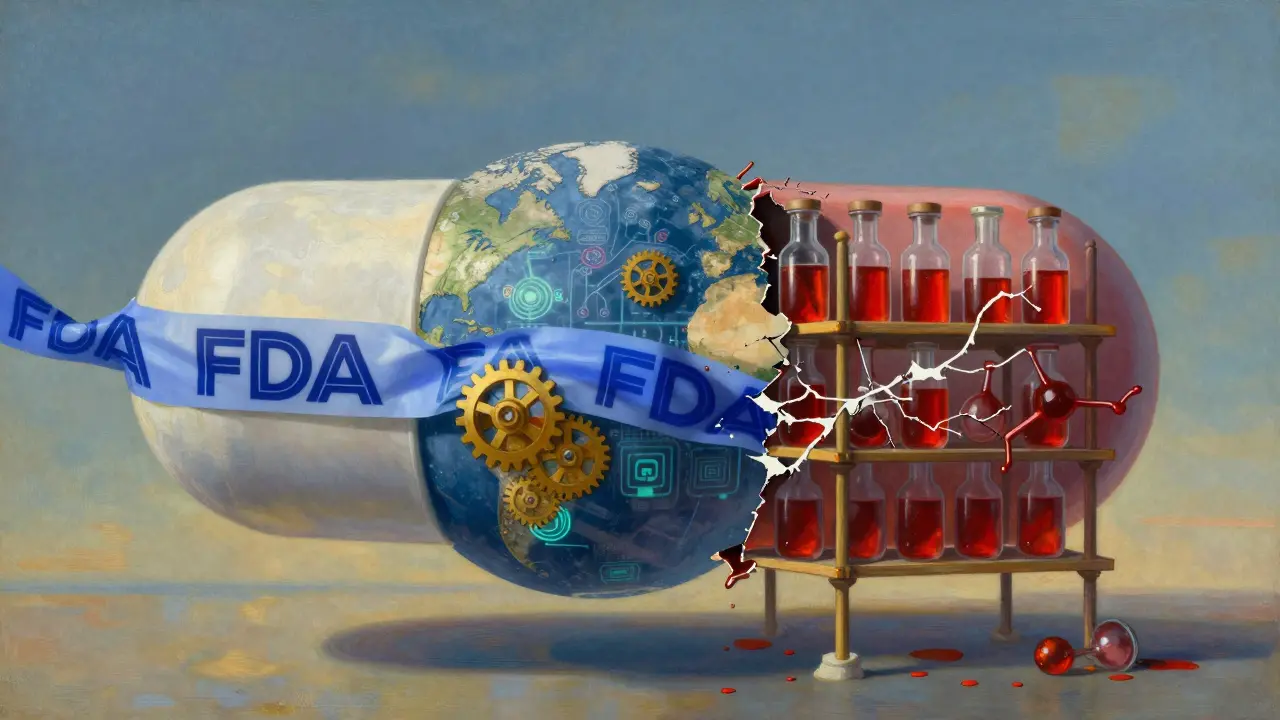
China’s Strength: Scale and Cost - But at a Price
China controls about 80% of the global supply of active pharmaceutical ingredients. That’s not a guess. It’s a fact backed by DrugPatentWatch. If you need raw materials for ibuprofen, metformin, or amoxicillin, you’re likely buying from a Chinese factory. The cost is low. The volume is massive. And for many countries - especially those with weaker regulatory systems - that’s enough. But for U.S. and European buyers, scale doesn’t replace compliance. China’s manufacturing growth was driven by state investment, not market discipline. Many smaller factories still cut corners. A 2023 FDA report found that 40% of violations in Chinese plants involved data integrity issues - falsified records, deleted logs, missing batch documentation. That’s not a typo. That’s a systemic problem. Labor costs in China are rising. The price advantage isn’t what it used to be. And geopolitical tensions have made U.S. regulators more suspicious. The FDA has increased its inspection frequency in China. Companies that used to rely on one Chinese supplier now have two - one in India, one in China - just to hedge risk.The Hidden Weakness: India’s Dependence on China
Here’s the irony: India’s strength comes with a dangerous blind spot. About 72% of India’s bulk drug ingredients - the actual chemicals that make medicines work - come from China. That’s up from 66% in 2022. So while India’s finished pills meet FDA standards, the foundation is built on Chinese soil. Think of it like a car company that builds high-quality vehicles in Germany but gets its engines from a factory in a country with shaky quality controls. If China restricts exports, or if a Chinese plant gets shut down by the FDA, India’s entire supply chain could stall. One pharmaceutical executive put it bluntly: "We’ve solved our compliance problem in India. Now we’ve got a single point of failure in China." The Indian government is trying to fix this. Under its "Make in India" initiative, it’s poured nearly $3 billion into production-linked incentives. The goal? To make India self-sufficient in APIs. But building API plants takes years. It’s not like assembling pills. It’s chemical engineering, safety systems, waste treatment, and regulatory paperwork - all at scale.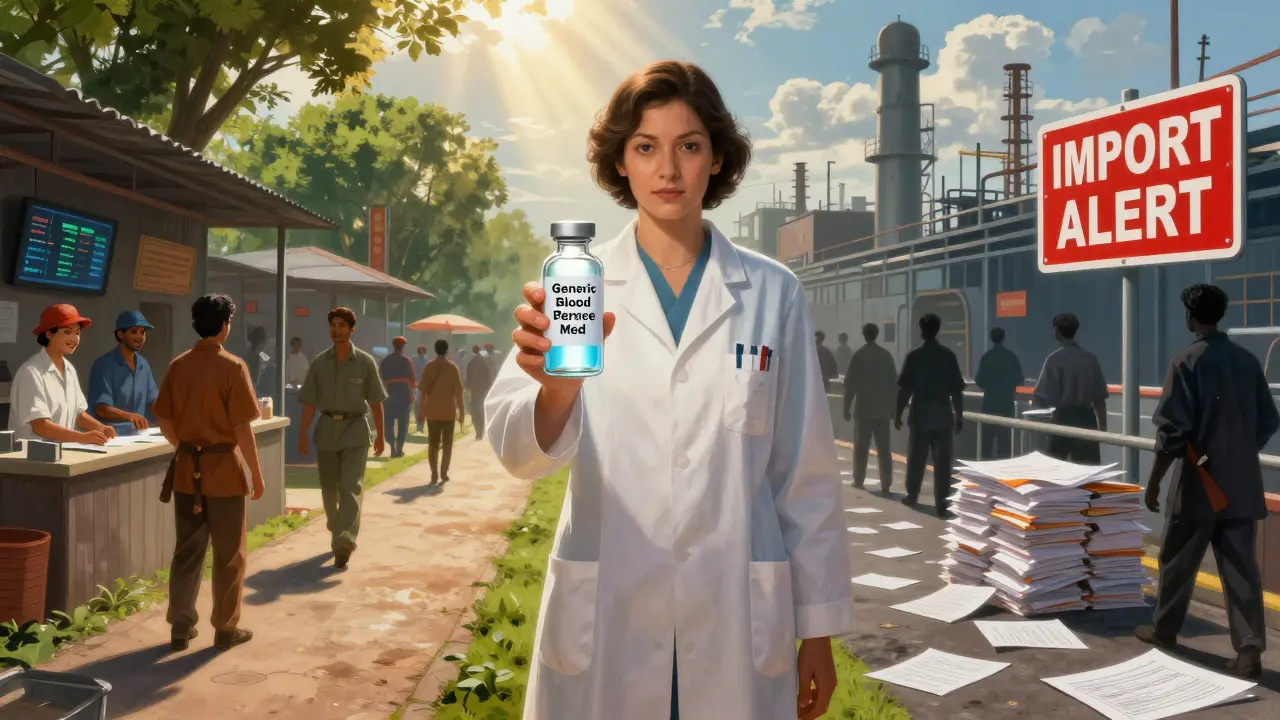
What’s Changing in 2025 and Beyond
India’s new Schedule M regulations, updated in 2023, are stricter than ever. They require digital record-keeping, real-time monitoring, and third-party audits. These aren’t just paperwork changes. They force factories to stop guessing and start measuring. Early results show a drop in non-compliance cases. Companies that invested early are now winning more U.S. contracts. China, meanwhile, is trying to move up the value chain. Instead of just making cheap generics, it’s investing in biologics, biosimilars, and cell therapies. Its biopharmaceutical market grew at 19.3% annually between 2015 and 2024 - faster than India’s 22% CAGR, but from a much smaller base. That’s a long-term play. But for now, most of China’s output is still low-margin APIs. The future belongs to companies that can balance cost, speed, and reliability. India isn’t perfect. It has infrastructure gaps, power shortages, and bureaucratic delays. But its compliance culture is real. China has scale, but its reputation for quality remains fragile. For U.S. drugmakers, the choice isn’t just about price anymore. It’s about trust.What This Means for You
If you’re a patient, this affects your medicine. If you’re a pharmacist, it affects your inventory. If you’re a business buying drugs for a hospital or clinic, it affects your contracts. - For patients: Generic drugs from India are more likely to be FDA-approved and consistently safe. That doesn’t mean Chinese-made drugs are unsafe - but the risk of variability is higher. - For hospitals and pharmacies: Ask your supplier where the API comes from. If it’s made in China but finished in India, that’s fine - as long as the final product is FDA-approved. But if the whole process is in China, you’re taking a bigger regulatory risk. - For businesses: Don’t just pick the cheapest supplier. Look at their FDA inspection history. Check if they’ve had import alerts. Ask if they use digital batch tracking. Those are signs of a serious operation. The global drug supply chain isn’t broken. But it’s fragile. And the two biggest players - China and India - are playing different games. One is racing to build trust. The other is trying to build scale. In the end, the FDA doesn’t care about GDP. It cares about whether your medicine works - and whether the factory that made it can prove it.Why does the FDA inspect factories in China and India?
The FDA inspects foreign manufacturing sites because U.S. law requires that all drugs sold in America - no matter where they’re made - meet the same safety and quality standards. The FDA doesn’t trust foreign governments to enforce these rules on its behalf. So it sends its own inspectors to check records, equipment, cleanliness, and data integrity. A single violation can block shipments or lead to import alerts.
Are Indian-made drugs safer than Chinese-made ones?
Not inherently. But Indian-made finished drugs are more likely to be FDA-approved because Indian manufacturers have spent decades aligning with U.S. standards. Chinese manufacturers produce more volume, but a higher percentage of their facilities fail inspections. The difference isn’t in the drugs themselves - it’s in the systems that make them. India’s compliance culture is stronger.
What’s the biggest risk in relying on China for pharmaceutical ingredients?
The biggest risk is supply chain disruption. If a Chinese API plant fails an FDA inspection, gets shut down, or faces export restrictions due to political tensions, it can cause global shortages. Since 80% of APIs come from China, even one major facility going offline can delay production of common medicines like antibiotics or blood pressure pills.
Why does India import so much from China if it’s better at compliance?
India is better at making finished drugs, but not at producing the raw chemicals (APIs) needed to make them. Building API plants requires heavy chemical infrastructure, specialized labor, and massive upfront investment. China has dominated that part of the chain for decades and produces APIs at lower cost. India is trying to change that with government incentives, but it will take years to catch up.
Should I avoid medicines made in China?
No. Many FDA-approved drugs come from Chinese factories. The key is whether the final product - not just the ingredients - has passed U.S. inspection. Always check the drug’s manufacturer and look for FDA approval. If the medicine is legally sold in the U.S., it meets safety standards. But if you have a choice between two identical generics - one made entirely in India, one made in China - the Indian version has a lower risk profile.
What’s the "China+1" strategy in pharma manufacturing?
It’s a supply chain strategy where companies maintain a primary manufacturing partner in China but add a second, reliable partner - usually in India - to reduce risk. This way, if China faces political, regulatory, or logistical problems, production can shift. India is the top choice for "China+1" because of its strong compliance history, English-speaking workforce, and existing FDA-approved facilities.


