

Safe Driving Antihistamine Selector
Select Your Antihistamine
Select an antihistamine to see driving safety information
Why Your Allergy Medicine Could Be Dangerous Behind the Wheel
It’s 7 a.m. You’ve got a stuffy nose, itchy eyes, and a long drive ahead. You grab a Benadryl from the cabinet-"non-drowsy?" the label says. You take it. You feel fine. But your reaction time? Slower. Your focus? Weaker. Your risk of crashing? Higher.
First-generation antihistamines like diphenhydramine (Benadryl), chlorpheniramine, and clemastine are still widely used because they’re cheap and easy to find. But they cross into your brain. They don’t just block histamine-they slow down your central nervous system. Studies show these drugs impair driving as much as alcohol. In controlled tests, drivers on diphenhydramine showed 30-50% more lane deviation, equivalent to a blood alcohol level of 0.05-0.08%. That’s the legal limit in most places. And you might not even feel it.
The Three Generations of Antihistamines-And Why It Matters
Not all antihistamines are the same. They’re grouped into three generations based on how they affect your brain.
- First-generation: Diphenhydramine, chlorpheniramine, hydroxyzine, clemastine. These are the old-school ones. They easily cross the blood-brain barrier. They make you drowsy. They’re in many cold and allergy combos, sleep aids, and even some "non-drowsy" labels that don’t tell the full story.
- Second-generation: Cetirizine (Zyrtec), loratadine (Claritin), fexofenadine (Allegra). These were designed to stay out of the brain. But they’re not all equal. Cetirizine still causes noticeable drowsiness in 15-20% of people. Loratadine is better, but not risk-free.
- Third-generation: Levocetirizine (Xyzal), fexofenadine (Allegra). These are the safest for drivers. They barely touch the brain. In over 16 double-blind studies using real-road driving tests, they showed no difference from placebo. No increased lane drifting. No slowed reactions. No higher crash risk.
If you drive regularly, your best bet is one of the third-generation options. They cost more, yes-but not as much as a hospital bill, a ticket, or a life lost.
What the Research Says About Real-World Risk
It’s not just theory. Traffic accident data paints a clear picture.
In Australia, Canada, and the U.S., antihistamines show up in biological samples of drivers involved in crashes. First-generation drugs appear far more often than second or third. One study found that drivers taking sedating antihistamines were six times more likely to be in a crash than those who weren’t. That’s higher than texting while driving.
And here’s the scary part: most people don’t realize they’re impaired. Research shows 70% of users can’t accurately judge how much their driving skills have dropped after taking a first-generation antihistamine. You feel fine. You think you’re okay. But your brain isn’t processing brake lights or lane changes the way it should.
Reddit users share real stories: "Took Benadryl before a road trip and had to pull over three times because I kept nodding off." One driver described drifting into the center line on a highway, waking up just in time. These aren’t rare cases. They’re common.
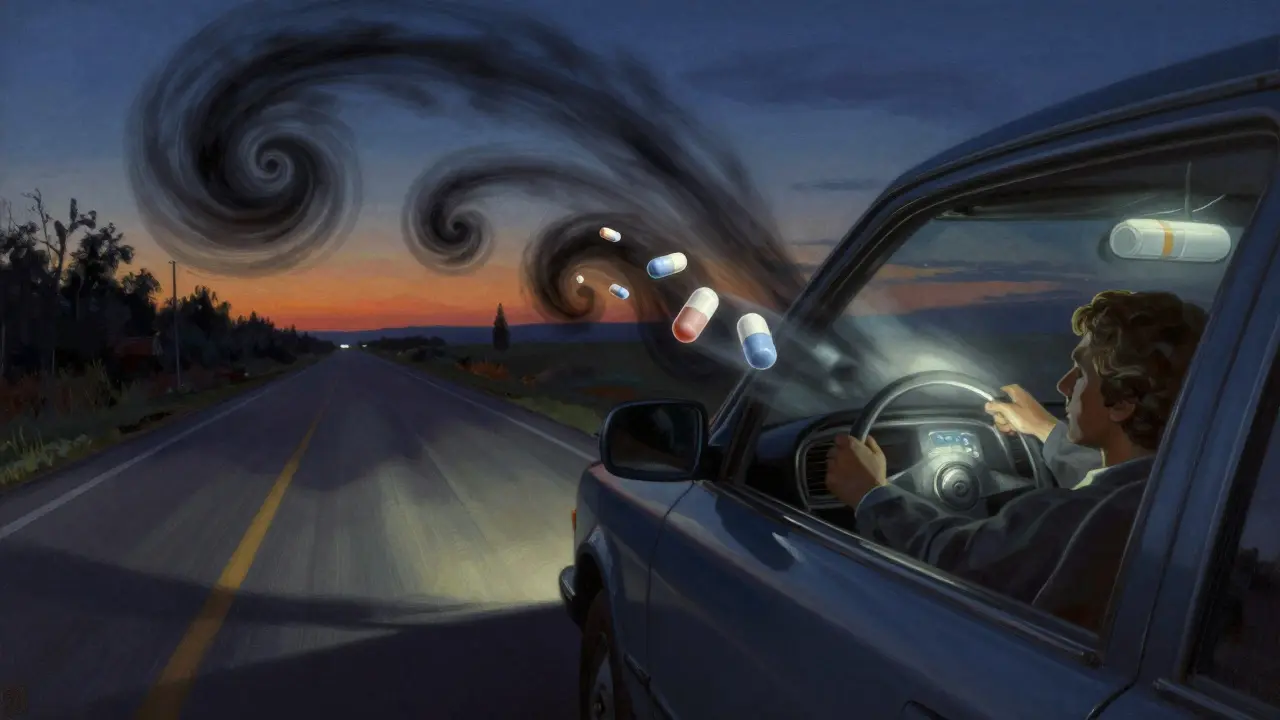
The Alcohol Factor: A Deadly Mix
Combining antihistamines with alcohol doesn’t just add risk-it multiplies it.
Studies show that when you mix diphenhydramine with even one drink, your impairment jumps 200-300% compared to either substance alone. Your reaction time drops. Your judgment blurs. Your ability to correct a swerve? Gone.
Many people don’t think of allergy meds as "drugs" that interact with alcohol. But they are. And the warning labels? Often buried in tiny print. If you’re taking a first- or even second-generation antihistamine, skip the beer, wine, or cocktail-especially before or during a drive.
What About "Non-Drowsy" Labels?
"Non-drowsy" doesn’t mean "no effect." It’s marketing, not science.
Loratadine (Claritin) is labeled non-drowsy. But in some people-especially women, older adults, or those with slower metabolism-it still causes mild impairment. Cetirizine (Zyrtec) is labeled non-drowsy too. But 1 in 5 users report feeling sluggish, foggy, or slow to react.
Even if you don’t feel sleepy, your brain might be. The Ford Driving Skills for Life program warns: "You may experience slower reaction time, haziness, or mild confusion even if you don’t feel drowsy." That’s why you shouldn’t rely on how you feel. Test yourself before you drive.
How to Stay Safe: Practical Rules for Drivers
If you have allergies and drive, here’s what actually works:
- Switch to third-generation: Choose levocetirizine or fexofenadine. They’re the only ones proven safe for driving in repeated use.
- Never mix with alcohol: Even one drink with a first- or second-gen antihistamine is dangerous.
- Test new meds at home: Take your first dose at least 48 hours before driving. Try reading, cooking, or walking. If you feel even slightly off, don’t get behind the wheel.
- Take doses at night: If you must use a sedating antihistamine, take it before bed. Let it wear off before morning.
- Check all labels: Many cold and flu products contain hidden antihistamines. Read the active ingredients, not just the brand name.
And if you’re unsure? Ask your pharmacist. They’re trained to spot these risks.

Legal Risks You Can’t Ignore
In Australia, driving under the influence of impairing medication is illegal-even if it’s over-the-counter. Police can test for drugs in your system, and if you’re impaired, you can be charged.
In Europe, 22 countries ban driving for 8-12 hours after taking first-generation antihistamines. Some classify them as controlled substances. In the U.S., while laws vary by state, a driver impaired by antihistamines can be charged with reckless driving or DUI if a crash occurs.
Insurance companies don’t care if you thought it was "safe." If you were impaired and caused an accident, your claim could be denied. And if someone else is hurt? The legal consequences could follow you for years.
What’s Changing in 2026?
The market is shifting. Third-generation antihistamines now make up 38% of the U.S. market by value-up from just 12% in 2000. More doctors are prescribing them first, especially for patients who drive or operate machinery.
Regulators are catching up. In March 2023, the European Medicines Agency required all antihistamine labels to clearly state driving risks by generation and chemical class. The FDA is pushing for similar updates.
And new drugs are coming. Seven next-generation antihistamines with even less brain penetration are in late-stage trials. But until they’re available, stick with what’s proven: fexofenadine and levocetirizine.
Bottom Line: Your Life Is Worth More Than a $4 Pill
First-generation antihistamines cost about $4 a month. Fexofenadine or levocetirizine cost around $35. That’s a big difference. But think about this: one crash can cost you your license, your job, your freedom, or your life.
There’s no excuse to gamble with your safety. If you drive, choose the safest option. Don’t trust labels. Don’t rely on how you feel. Don’t assume you’re fine because you "don’t feel sleepy." Your brain doesn’t always tell you the truth.
Switch. Wait. Test. Drive safely. It’s not just smart-it’s the only responsible choice.


