
Vitamin E & Warfarin Risk Calculator
Assess Your Vitamin E Dose Risk
Enter your daily vitamin E intake to see if your dose is safe with warfarin.
Enter your vitamin E dose to see your risk level
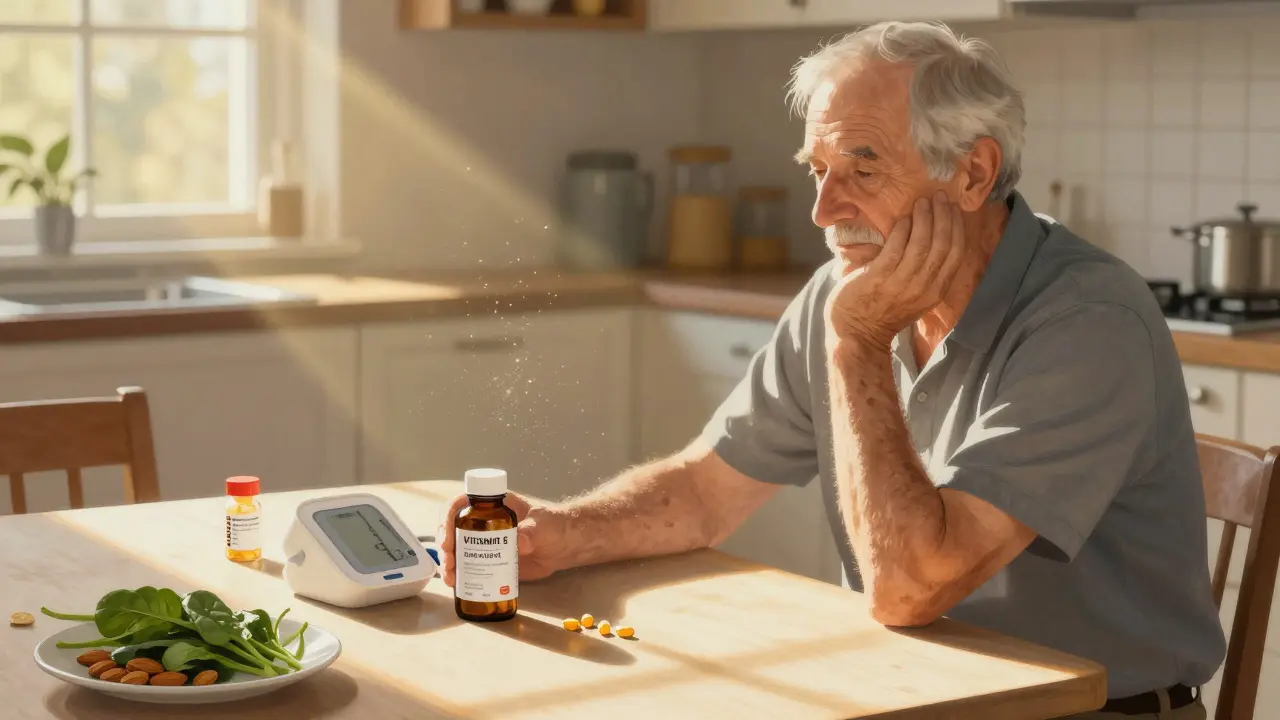
If you're taking warfarin for a heart condition, blood clot, or artificial valve, you've probably been told to watch your diet-broccoli, kale, green tea, even cranberry juice. But what about that bottle of vitamin E sitting on your shelf? It’s labeled "antioxidant," "supports skin health," and "100 IU per capsule." Sounds harmless, right? Here’s the problem: vitamin E can make warfarin work too well-and that’s dangerous.
How Vitamin E Interacts with Warfarin
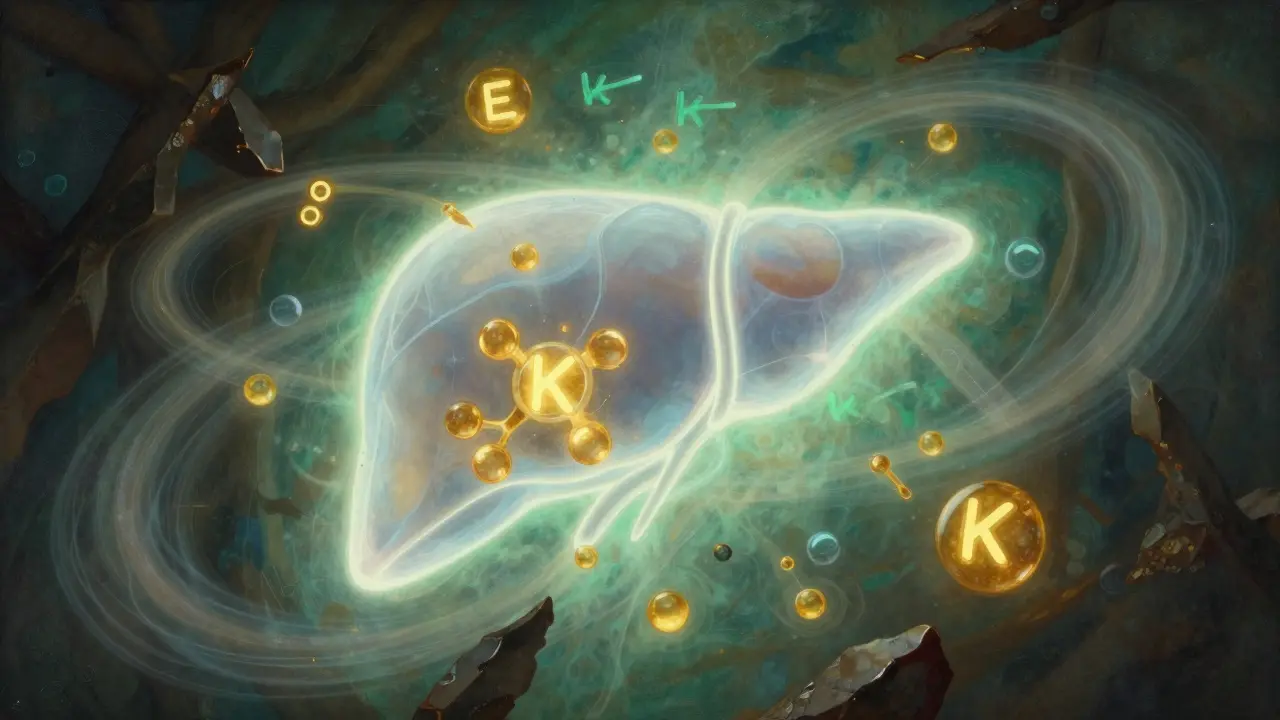
Warfarin doesn’t thin your blood like water. It blocks vitamin K, a nutrient your liver needs to make clotting proteins. Without enough of those proteins, your blood takes longer to clot. That’s the goal-unless it goes too far.
Vitamin E doesn’t directly interfere with vitamin K like some other supplements do. Instead, it works in two quieter, sneakier ways. First, it reduces platelet stickiness. Platelets are the first responders when you cut yourself. If they don’t clump well, even a small bump can lead to a big bruise. Second, some research suggests high doses of vitamin E may slightly slow down the production of clotting factors, adding to warfarin’s effect.
This isn’t just theory. A 2013 study of over 1,000 people with atrial fibrillation on warfarin found that those with higher vitamin E levels in their blood had significantly more bleeding events-including brain bleeds. The risk didn’t jump overnight. It built up. People with vitamin E levels above 4.49 μmol/mmol cholesterol had more bleeding. Those above 5.56 μmol/mmol cholesterol? Nearly double the risk of major bleeding.
The Dose Makes the Poison
Not all vitamin E is created equal. A 400 IU daily dose is the line most experts draw.
Back in 1996, a small study of 21 people on warfarin showed no change in INR (the test that measures how long your blood takes to clot) after taking 800 IU of vitamin E daily for four weeks. That study got a lot of attention. Some doctors even used it to say vitamin E was safe.
But here’s what that study missed: it was too short. A later case report showed a patient taking 800 IU of vitamin E daily didn’t bleed until week four. Then, suddenly, they had nosebleeds, bruising, and a dangerously high INR. Another unpublished study found that just 42 IU daily-less than half a typical multivitamin-was enough to cause bleeding in three people on a warfarin-like drug.
The pattern? Low doses (under 400 IU) might be fine for some people. But above that, the risk climbs. And you can’t predict who will react. Genetics play a role. Some people have variations in genes like CYP2C9 and VKORC1 that make them extra sensitive to warfarin. Add vitamin E on top? Their INR can spike without warning.
What the Guidelines Say
Professional guidelines don’t agree on everything, but they’re clear on one thing: caution.
The American College of Chest Physicians (2012) gave vitamin E a Grade 2C recommendation-meaning the evidence is weak, but the risk is real enough to avoid high doses. The University of California San Diego Anticoagulation Service says outright: avoid vitamin E supplements if you’re on warfarin. They list it alongside garlic, ginkgo, and fish oil-supplements known to increase bleeding risk.
A 2017 survey of 250 anticoagulation clinics found that 78% of them routinely warn patients about vitamin E. Sixty-three percent specifically tell people not to exceed 400 IU daily. The American Heart Association’s 2009 statement warned that doses of 400 IU or more may increase the risk of hemorrhagic stroke, especially in people on blood thinners.
Even the FDA can’t force supplement makers to prove safety before selling. Under the Dietary Supplement Health and Education Act of 1994, companies can sell vitamin E without proving it’s safe with warfarin. That puts the burden on you and your doctor to figure it out.
What You Should Do
If you’re on warfarin, here’s what actually works:
- Don’t start vitamin E without talking to your doctor. Even if you’ve taken it for years, your body’s response can change.
- If you’re already taking it, don’t stop cold turkey. Suddenly stopping vitamin E can make your INR drop too low, increasing clot risk. Work with your provider to adjust slowly.
- Keep your dose under 400 IU daily-if you take it at all. Most multivitamins contain 30-100 IU. That’s usually fine. But if you’re buying standalone vitamin E capsules, check the label. Many are 400, 600, or even 1,000 IU.
- Get your INR checked more often. If you’re taking vitamin E, expect weekly checks for the first month, then every two weeks. That’s 3-5 extra visits a year. It’s a hassle, but it’s safer than a bleed.
- Track your symptoms. Unexplained bruising, nosebleeds that won’t stop, blood in urine or stool, headaches with vision changes-these aren’t normal. Call your doctor immediately.
What About Direct Oral Anticoagulants (DOACs)?
If you’re on apixaban, rivaroxaban, or dabigatran instead of warfarin, the story changes. DOACs work differently than warfarin. They don’t rely on vitamin K. So far, studies haven’t shown vitamin E increases bleeding risk with these drugs.
But here’s the catch: research is still limited. The European Society of Cardiology’s 2023 guidelines say we need more data. Until then, if you’re on a DOAC, it’s still smart to avoid high-dose vitamin E. The antiplatelet effect doesn’t care what anticoagulant you’re on. Your platelets still need to work.

Why This Matters More Than You Think
More than 77% of American adults take supplements. Vitamin E is the third most popular single-ingredient supplement after vitamin D and fish oil. Sales hit $287 million in 2022. People take it because they believe it’s healthy. They don’t realize it can be dangerous when mixed with their heart medication.
Doctors don’t always ask about supplements. Patients don’t always mention them. A 2019 study found that nearly half of patients on warfarin were taking at least one supplement they didn’t tell their provider about. Vitamin E was one of the top three.
That’s why this isn’t just about one supplement. It’s about communication. It’s about knowing that "natural" doesn’t mean "safe." It’s about understanding that your body’s response to drugs and supplements isn’t one-size-fits-all.
There’s no magic number that works for everyone. Some people can take 200 IU without issue. Others bleed at 100 IU. That’s why monitoring matters more than assumptions.
Bottom Line
Vitamin E and warfarin don’t have to be a disaster-but they can be. The evidence is mixed, but the stakes are high: brain bleeds, internal bleeding, hospitalization, even death. The safest approach isn’t to guess. It’s to know your dose, know your INR, and know your doctor’s advice.
If you’re on warfarin, skip the high-dose vitamin E. Stick to food sources-nuts, seeds, spinach, and vegetable oils. They give you enough without the risk. And if you’re considering a supplement, talk to your anticoagulation clinic before you open the bottle. One conversation could save your life.


