
What You See on Your Prescription Label Might Be Confusing - Here’s Why
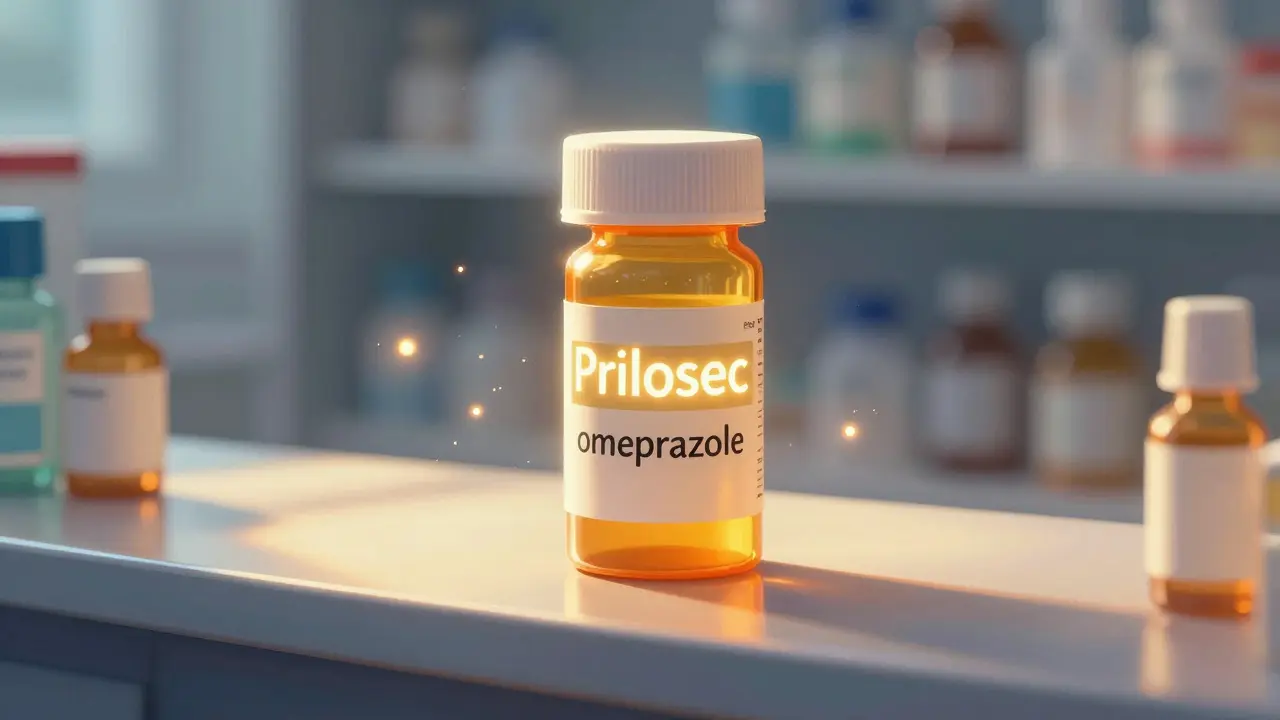
You pick up your prescription and see two names on the bottle: one big, one small. The big one says Prilosec. The small one underneath says omeprazole. You wonder - are these the same thing? Is one better? Why does the label even show both?
It’s not just you. Most people don’t know the difference between generic and brand-name drugs, even though they’ve used both. And that confusion can lead to anxiety, skipped doses, or even mistakes. The truth? They’re the same medicine. But the labeling? That’s where things get messy.
The Science Behind the Names
Every drug has two names because of how it’s made and sold. The generic name is the chemical name of the active ingredient - the part that actually works in your body. For example:
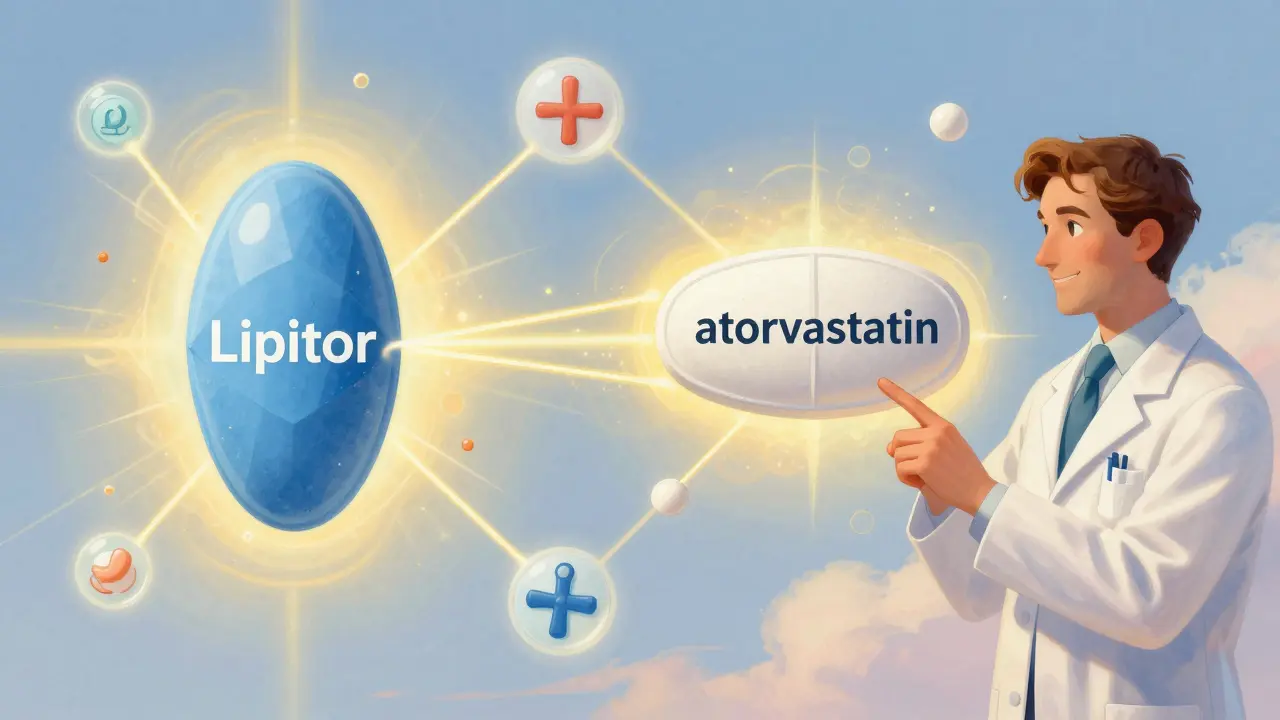
- Atorvastatin (generic) = Lipitor (brand)
- Sertraline (generic) = Zoloft (brand)
- Metformin (generic) = Glucophage (brand)
The brand name is the trademark created by the company that first developed the drug. That’s the name you see in TV ads, on posters in doctors’ offices, and sometimes on the bottle - usually in larger, bolder font.
Here’s the key: both versions contain the exact same active ingredient, in the same strength, same form (tablet, capsule, liquid), and work the same way in your body. The U.S. Food and Drug Administration (FDA) requires that generic drugs prove they deliver the same amount of medicine into your bloodstream as the brand version. That’s called bioequivalence. The acceptable range? A 90% confidence interval between 80% and 125% of the brand’s absorption rate. In plain terms? Your body gets the same effect.
Why Do They Look Different?
If they’re the same, why do generic pills look nothing like the brand? That’s not a mistake - it’s the law.
Trademark rules prevent generic manufacturers from copying the exact color, shape, or logo of brand-name pills. So while your brand-name Lipitor might be a blue, diamond-shaped tablet, the generic atorvastatin could be white and oval. The markings? Different. The size? Often smaller. The coating? Maybe a different texture.
This is why so many people think generics don’t work as well. They see a different pill and assume it’s different medicine. A 2022 CVS Health survey found that 24% of patients reported confusion or concern simply because their pill looked different after a refill.
But here’s the thing: those differences are only cosmetic. The active ingredient? Identical. The dosage? Exact. The way it treats your condition? No different.
Cost: The Real Difference
The biggest difference between generic and brand-name drugs? Price.
Generic drugs cost, on average, 80-85% less than their brand-name counterparts. For example:
- Lipitor (atorvastatin) brand: ~$300/month
- Generic atorvastatin: ~$4/month
- Zoloft (sertraline) brand: ~$450/month
- Generic sertraline: ~$5/month
That’s not a typo. That’s $445 saved every month.
Why the gap? Brand-name companies spend an average of $2.6 billion developing a new drug - including years of clinical trials, marketing, and patent protection. Generic manufacturers skip all that. They just prove their version works the same. No need to redo expensive trials. That’s why the FDA created the Hatch-Waxman Act in 1984 - to make affordable versions available after patents expire.
And it works. In 2022, 90% of all prescriptions filled in the U.S. were for generics. But those generics only made up 22.7% of total drug spending. That’s how powerful the savings are.
Who Makes the Generics?
Here’s a surprise: about half of all generic drugs are made by the same companies that make the brand names. Kaiser Permanente’s 2023 report found that big pharmaceutical firms often produce both versions - just under different labels. So when you think you’re getting a “cheap knockoff,” you might actually be getting the exact same factory product, just sold under a different name.
It’s not a different quality. It’s just a different price tag.
When Might You Still Want the Brand?
Most of the time, generics are just as safe and effective. But there’s one exception: drugs with a narrow therapeutic index (NTI).
These are medications where even tiny changes in blood levels can cause serious problems. Think warfarin (for blood clots), lithium (for bipolar disorder), or levothyroxine (for thyroid). For these, some doctors prefer to stick with the brand - not because generics are weaker, but because they want to minimize any possible variation, even if it’s within FDA limits.
The FDA keeps a list of these drugs, but it’s less than 1% of all medications. If your doctor says to stick with the brand, they’re not being old-fashioned - they’re being cautious. Ask them why. If they say “it’s just better,” ask for evidence. If they say “your levels need to be super stable,” that’s a valid reason.
What the Label Actually Tells You
On your prescription bottle, the brand name is usually printed in large, bold letters. The generic name is smaller, underneath. That’s standard. The National Association of Boards of Pharmacy says 92% of labels follow this format.
But here’s what you can do: Ask your pharmacist to point out both names. In 41 states, pharmacists are legally required to tell you both names when you pick up your medication. You don’t have to guess. You don’t have to remember. Just ask.
And if you’re confused about a new pill? Don’t assume it’s broken. Don’t stop taking it. Call your pharmacist. They can tell you if it’s a generic, what the active ingredient is, and why it looks different. University Hospitals found that just five minutes of pharmacist counseling cuts patient confusion about generics by 67%.
What Patients Really Say
Surveys show 78% of people who use generics are satisfied - once they understand they’re the same. But 32% are initially skeptical. Reddit threads, pharmacy review sites, and patient forums are full of stories like:
- “I switched to generic sertraline and felt weird for a week.”
- “My old brand made me sleepy. The generic made me jittery.”
These aren’t always about the active ingredient. Sometimes, it’s the inactive ingredients - the fillers, dyes, or coatings that help the pill hold together or dissolve. These don’t treat your condition, but they can affect how fast the drug gets absorbed. For most people, it’s nothing. For a few, it’s noticeable.
If you notice a change after switching, talk to your pharmacist. They can check if the generic has a different filler. Sometimes, switching to a different generic brand (yes, there are multiple generic makers) helps. But don’t assume it’s the drug itself.
What’s Changing in 2025 and Beyond
More generics are coming. The Inflation Reduction Act of 2022 caps out-of-pocket drug costs for Medicare Part D at $2,000 a year starting in 2025. That’s pushing even more seniors toward generics.
Also, more biologic drugs - complex medications for conditions like rheumatoid arthritis and cancer - are losing patent protection. Their generic versions, called biosimilars, are now entering the market. They’re not as cheap as regular generics (only 15-30% off), but they’re still a big savings.
And the FDA is speeding up approvals. Their GDUFA III program aims to cut generic drug review times by 20% by 2027. More options. Faster access. Lower prices.
But there’s a risk: 80% of the raw ingredients for these drugs come from China and India. Supply chain issues - like those during the pandemic - can cause shortages. That’s why some pharmacies might switch you to a different generic brand suddenly. It’s not a quality issue. It’s logistics.
Bottom Line: You’re Not Getting Less
Generic drugs aren’t “second choice.” They’re the standard. They’re tested just as hard. Made to the same rules. Used by millions. And they save billions.
If your doctor prescribes a brand-name drug, ask: “Is there a generic?” If they say no, ask why. If they say “it’s the same,” believe them.
And if your pill looks different? Don’t panic. Check the label. Ask your pharmacist. You’re not being tricked. You’re being saved money - without losing effectiveness.
Medicine doesn’t have to be expensive to be good. The label just needs to be clear.


