

When a patient walks into a clinic with five prescriptions, three chronic conditions, and a $300 monthly drug bill, who decides what stays, what switches to a generic, and what gets dropped? It’s not just the doctor anymore. In today’s healthcare system, generic prescribing is no longer a solo decision-it’s a team sport.
Why Team-Based Care Changed Generic Prescribing
For decades, prescribing was seen as a physician-only job. You diagnose, you write the script. Simple. But that model broke down when patients started juggling multiple meds for diabetes, high blood pressure, cholesterol, and arthritis. Medication errors climbed. Costs exploded. Adherence dropped. The Institute of Medicine called it out in 2001: fragmented care was killing quality. Team-based care didn’t just add people to the room-it restructured the whole process. Now, pharmacists, nurses, care coordinators, and physicians work together, each with defined roles. Pharmacists don’t just fill prescriptions-they audit them. They spot interactions, flag overprescribing, and recommend cheaper, equally effective generics. Nurses track blood pressure and glucose levels between visits. Care coordinators make sure the patient understands what to take and when. And the doctor? They focus on the big picture: complex diagnoses, treatment goals, and final approval. This shift wasn’t accidental. Medicare Part D, created in 2003, forced the issue by requiring Medication Therapy Management (MTM) programs for high-risk patients. Suddenly, pharmacists had a legal and financial reason to be part of the team. By 2023, 87% of Medicare Part D plans had contracts with pharmacists to manage medications. That’s over 12 million people getting structured, team-based help with their drugs.Who Does What in a Medication Team?
A well-run team doesn’t just have more bodies-it has clear roles. Here’s how it actually works on the ground:- Pharmacists: Conduct comprehensive medication reviews. They check for duplicates, interactions, unnecessary drugs, and cost-saving opportunities. They’re trained to know which generics are bioequivalent and which aren’t. They also counsel patients on how to take meds properly-something most doctors don’t have time for.
- Physicians: Provide medical oversight. They approve changes, manage complex cases like polypharmacy in elderly patients, and handle new diagnoses. They rely on the pharmacist’s review to make faster, safer decisions.
- Nurses and Medical Assistants: Monitor chronic conditions between visits. They track blood pressure, weight, lab results, and adherence. If a patient’s blood sugar isn’t improving on a certain drug, they flag it before the next doctor visit.
- Care Coordinators: Connect the dots. They schedule follow-ups, translate medical jargon for patients, help with prior authorizations, and make sure prescriptions get filled on time.
How Generic Substitution Actually Works in Teams
Switching from brand-name to generic isn’t just about cost. It’s about trust. Patients worry generics won’t work. Providers worry they’ll cause problems. Teams fix both. Pharmacists lead the charge here. They use evidence-based guidelines to identify which generics are safe swaps. For example, generic atorvastatin works just as well as Lipitor for cholesterol. Generic metformin is just as effective as Glucophage for diabetes. But not all generics are equal-some have different fillers or release profiles. That’s why pharmacists don’t just swap blindly. They check the patient’s history, kidney function, and previous reactions. Then they talk to the patient. Not in a rushed 30-second exchange. But in a 10-minute conversation: “This generic costs $12 a month instead of $150. It’s the same active ingredient. I’ve seen thousands of people switch with no issues. Your doctor agrees.” That kind of counseling boosts adherence by 28%, according to the American Pharmacists Association. Nurses reinforce this. They follow up with calls or texts: “Did you get your new script? How’s your stomach feeling?” Physicians sign off, but they’re no longer the bottleneck. That’s why one physician on Doximity said, “After we implemented team-based care, I cut 30% off my medication management time.”
Real Results: Cost, Safety, and Adherence
The numbers don’t lie. Team-based care doesn’t just feel better-it works better.- Adverse drug events dropped by 17.3% in practices using team-based medication management, according to ThoroughCare’s 2022 analysis.
- Generic substitution rates rose by 22% in Mayo Clinic’s AI-assisted pilot program, without increasing side effects.
- Medication adherence improved by 28% when pharmacists were part of the team, per the American Pharmacists Association.
- Hospital readmissions fell because teams caught problems early-like a patient taking two drugs that both raise potassium, or someone not filling their blood pressure med because it was too expensive.
Challenges: Why It’s Still Not Everywhere
Despite the wins, adoption is uneven. Only 32% of small practices use full team-based models. Why? First, cost. Setting up the system takes $85,000-$120,000 per practice. You need space, software, training, and staff. Many clinics can’t afford it. Second, culture. Some doctors still see prescribing as their exclusive domain. “I went to med school for this,” they say. But that mindset ignores reality: no one can memorize 1,500 drug interactions and 10,000 generic equivalents. Pharmacists specialize in that. They’re the medication experts. Third, tech. If your EHR doesn’t let pharmacists document recommendations or flag issues in real time, the team breaks down. Documentation quality varies wildly. The CDC has templates for Collaborative Practice Agreements (CPAs)-legal documents that define what pharmacists can do-but many small practices skip them. That increases liability risk by nearly 19%, according to the Medical Liability Association of New York. And there’s communication. Twelve percent of patient reviews mention confusion when team members don’t sync up. One patient got a new prescription from her specialist, but her primary care team didn’t know. She ended up taking two drugs that clashed. That’s a system failure-not a provider failure.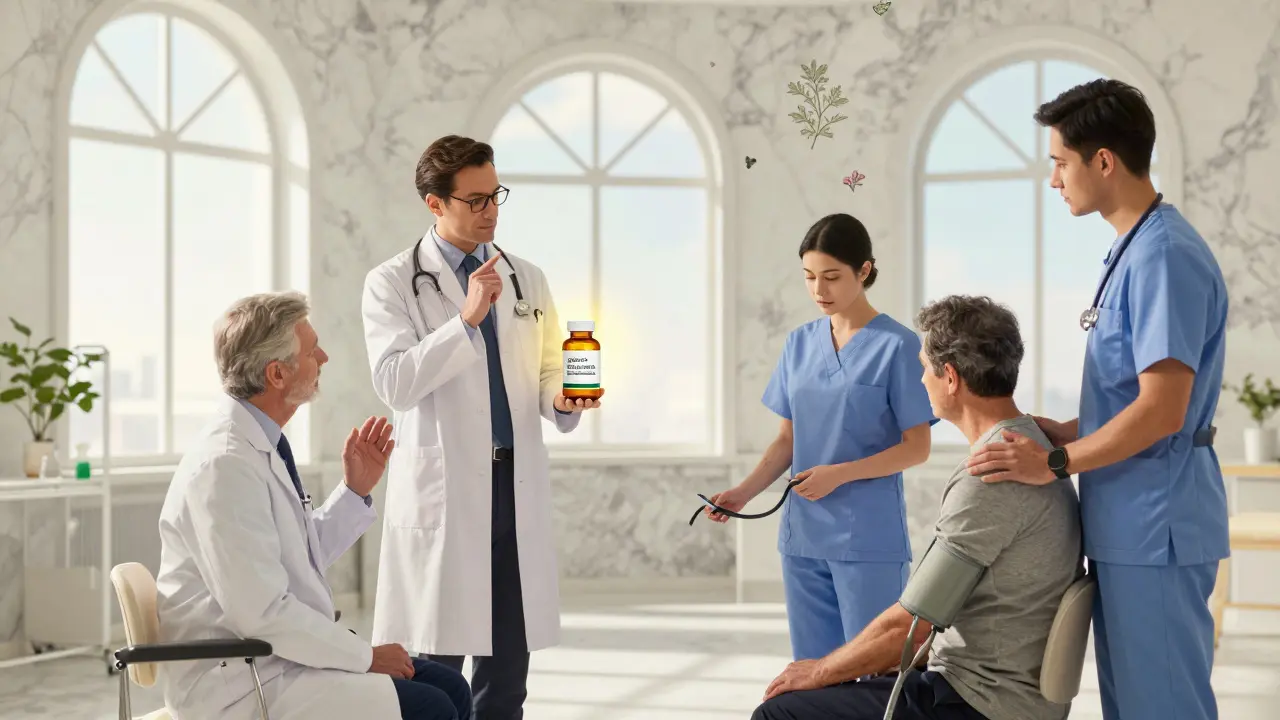
What’s Next? AI, Telepharmacy, and Broader Access
The future of team-based care is faster, wider, and smarter. In 2023, CMS lowered the eligibility threshold for Medicare MTM programs from five to four medications. That adds 4.2 million more people to the program. More patients means more need for pharmacists-and more pressure to scale. Telepharmacy is booming. Between 2020 and 2023, virtual medication reviews grew by 214%. Rural patients who used to drive 40 miles to a pharmacy now get a video call with a clinical pharmacist. They get their generics checked, their doses adjusted, their questions answered-all without leaving home. AI is starting to help too. Mayo Clinic’s pilot program used algorithms to suggest generic alternatives based on patient history, lab values, and drug interactions. The AI didn’t decide-it recommended. The pharmacist reviewed. The doctor approved. Result? 22% more appropriate generic use, with fewer adverse events. And the market is responding. The global team-based care market is projected to hit $53.2 billion by 2027. Health systems are investing. Regulators are pushing. Even skeptics are coming around.What Patients Should Expect
If you’re on multiple medications, here’s what to look for:- Do you get a medication review at least once a year? Not just a refill check.
- Is a pharmacist involved in your care? Do they ask about side effects or costs?
- Do your providers talk to each other? Can you see all your meds listed in one place?
- Are generics suggested? And are you told why they’re safe?
What Providers Need to Start
If you’re a clinician thinking about building a team:- Start with one high-risk patient-someone on five or more meds, with a history of hospitalizations.
- Partner with a local pharmacist. Offer to co-visit. Let them lead the med review.
- Use a simple CPA template from the CDC. Define roles. Document everything.
- Train your staff. Even a 16-hour workshop on team workflows makes a difference.
- Track outcomes: How many generics were switched? How many ER visits dropped?
Can pharmacists really prescribe generics without a doctor’s approval?
In team-based care, pharmacists don’t prescribe independently-they recommend. Under Collaborative Practice Agreements (CPAs), they can suggest generic switches, dose changes, or discontinuations, but the physician must approve and sign off. In some states, pharmacists have limited independent prescribing authority for specific conditions like hypertension or diabetes, but this still requires a formal agreement with a supervising doctor. The goal isn’t to replace physicians-it’s to use each person’s expertise efficiently.
Are generic drugs really as safe and effective as brand names?
Yes, for the vast majority of medications. The FDA requires generics to have the same active ingredient, strength, dosage form, and route of administration as the brand. They must also meet the same strict standards for quality and performance. Bioequivalence studies prove they work the same way in the body. There are rare exceptions-like narrow therapeutic index drugs (e.g., warfarin, levothyroxine)-where switching requires close monitoring. But for blood pressure pills, statins, metformin, and most common drugs, generics are just as safe and effective. Team-based care ensures these switches are made with patient history in mind, not just cost.
Why don’t all doctors use team-based care if it saves money and improves outcomes?
It’s not that they don’t want to-it’s that it’s hard to set up. Small practices lack funding, staff, and time. Training team members, integrating EHRs, and creating workflows takes months. Reimbursement is still inconsistent-only 41% of team-based medication services are paid at full cost. Many doctors also worry about losing control or facing legal risk. But the biggest barrier is habit. Medicine has been built around the lone expert model for over a century. Shifting to teamwork takes cultural change, not just new tools.
Does team-based care work for acute conditions like infections or injuries?
Not as much. Team-based care shines in chronic disease management-where decisions are ongoing, medications are long-term, and risks build over time. For a sudden infection or broken bone, you need a quick diagnosis and immediate treatment. There’s no time for a med review or pharmacist consultation. But even here, teams help: a nurse can ensure the patient gets the right antibiotic dose, and a pharmacist can flag allergies or interactions with existing meds. The model isn’t for every visit-it’s for the visits that matter most.
How do I know if my care team is doing a good job with my medications?
Ask these questions: Do you get a full list of your meds at every visit? Has anyone asked you if you can afford them? Have you been offered a cheaper generic? Has anyone checked for duplicates or interactions? Are your labs being tracked between visits? If you’re on five or more meds and no one has reviewed them in over a year, you’re not getting full team-based care. A good team doesn’t just refill prescriptions-they optimize them.


