
Sugar Intake Calculator
Your Daily Sugar Intake
Recommended Daily Limit
The American Diabetes Association recommends limiting added sugars to under 25 grams per day for optimal medication effectiveness.
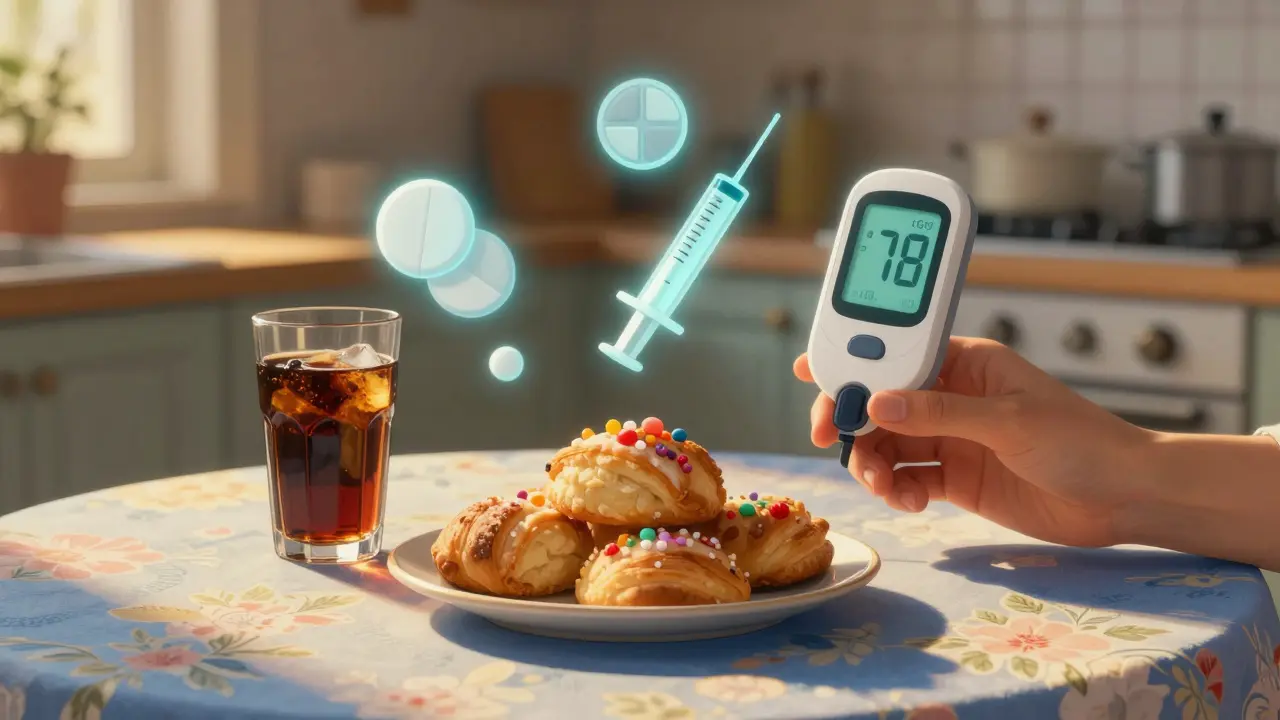
When you’re on diabetes medication, what you eat isn’t just about weight or energy-it directly changes how well your drugs work. Too much sugar can turn even the most effective treatment into a half-hearted effort. For people taking metformin, sulfonylureas, or insulin, sugar intake isn’t a suggestion-it’s a medical variable that needs managing like a dosage.
Why Sugar Undermines Diabetes Medications
Metformin, the most common first-line drug for Type 2 diabetes, doesn’t lower blood sugar by force. It helps your body use insulin better and reduces liver glucose output. But if you’re eating 100 grams of added sugar a day-roughly the amount in three cans of soda-the glucose flood overwhelms the system. A 2022 GoodRx analysis found patients consuming that much sugar needed 28% higher metformin doses just to reach the same blood sugar levels as those limiting sugar to under 25 grams daily.
Drugs like glyburide or repaglinide work differently-they force your pancreas to pump out more insulin. But if you skip meals or eat a huge sugary snack, your body gets caught in a dangerous cycle: too much insulin followed by a crash. The Cleveland Clinic reports patients with inconsistent sugar intake experience 15-20 hypoglycemic episodes per year, compared to just 3-5 for those who eat consistent carbs.
Even newer drugs like semaglutide or dapagliflozin, which work independently of insulin, still lose effectiveness with high sugar. The ADA says these medications drop 15-20% in performance when daily added sugar exceeds 100 grams. No drug cancels out poor diet. They all work better when sugar is controlled.
What Sugar Does to Your Blood Sugar Levels
It’s not just about how much sugar you eat-it’s how fast it hits your bloodstream. High-glycemic foods like white bread, pastries, and fruit juice spike glucose in under 30 minutes. Continuous glucose monitors (CGMs) show that people on metformin who eat these foods have 2.3 times more hyperglycemic spikes above 180 mg/dL than those eating low-GI foods.
Low-GI foods (under 55 on the glycemic index) like lentils, oats, and most non-starchy vegetables release glucose slowly. A 2025 review in the International Journal of Molecular Sciences found they improve insulin sensitivity by 25-40% and cut post-meal glucose spikes by 35-50 mg/dL on average. That’s the difference between a slow climb and a rollercoaster.
Fructose-found in fruit, honey, and high-fructose corn syrup-behaves differently than glucose. Some people handle it fine; others see sharp glucose swings even from natural sources like mangoes or grapes. CGM data shows individual responses vary wildly, which is why blanket advice like “avoid all fruit” is outdated. The key is tracking your own response.
Food Categories to Avoid With Diabetes Medications
Here are the top seven food types that sabotage diabetes meds, based on clinical guidelines from the ADA, Cleveland Clinic, and NHS:
- Sugary drinks: Soda, sweetened tea, fruit juice with over 20g sugar per serving. One 12-oz soda = 39g sugar-more than half your daily limit.
- High-sugar fruits: Mangoes, grapes, cherries, and dried fruit can spike glucose fast. A cup of grapes has 23g sugar. Eat them in small portions, paired with protein or fat.
- Processed and packaged foods: Granola bars, flavored yogurts, sauces, and canned soups often hide over 15g of added sugar per serving. Check labels: if sugar is in the top 3 ingredients, avoid it.
- High-fat meals: Fries, fried chicken, creamy pasta. Fat slows digestion, delaying glucose absorption and making blood sugar patterns unpredictable. This interferes with metformin’s absorption and timing.
- Refined carbs: White bread, bagels, pastries. These break down into pure glucose. One slice of white bread = 15g of carbs-equivalent to a small apple, but without the fiber.
- Sweetened alcohol: Cocktails with soda, syrups, or juice. A single piña colada can have 30g of sugar. Alcohol also increases hypoglycemia risk, especially with sulfonylureas.
- Low-fat dairy with added sugar: Many “healthy” yogurts have more sugar than ice cream. Choose plain, unsweetened yogurt and add your own berries.

How to Match Your Meals to Your Medication
Timing and consistency matter more than you think. If you take metformin twice daily, you don’t need perfect meals-but you do need predictable ones.
For sulfonylureas or meglitinides, eat the same amount of carbs at each meal. A variation of more than 15g between breakfast and lunch can trigger low blood sugar. The Cleveland Clinic’s protocol recommends 45-60g of carbs per meal for most adults on these drugs.
For insulin users, matching carb intake to bolus doses is non-negotiable. Data from the T1D Exchange registry shows those who log every gram of carbs they eat achieve HbA1c levels 0.8% lower than those who guess. That’s the difference between good control and complications.
Even with newer drugs like SGLT2 inhibitors-which make your kidneys flush out extra glucose-you still need structure. These drugs work best when paired with steady, moderate sugar intake. A 2025 review found they maintain 85-90% effectiveness regardless of sugar, but only if you’re not bingeing.
What Happens When You Ignore the Diet
Skipping dietary advice doesn’t just mean higher blood sugar. It leads to more medication changes, more ER visits, and more long-term damage.
Patients who skip nutrition counseling after starting diabetes meds take nearly 6 months longer to reach target HbA1c levels than those who work with a dietitian. A 2024 study from the American Association of Clinical Endocrinologists showed a 47% faster path to control with structured nutrition.
And the risks go beyond glucose. High sugar intake with metformin increases lactic acidosis risk in people with kidney issues (eGFR under 45). Case reports show a 3.2-fold spike in incidents when sugar-heavy diets are combined with metformin in this group.
Other medications can make things worse. Steroids like prednisolone can raise blood sugar by 50-100 mg/dL within a day. Diuretics like furosemide may require metformin dose adjustments. Even birth control pills can alter glucose metabolism in nearly 1 in 4 women.

What You Can Do Right Now
You don’t need to eliminate sugar forever. You need to manage it.
- Check labels. Look for “added sugars” on nutrition facts. The goal is under 25g per day.
- Swap drinks. Replace soda with sparkling water, unsweetened tea, or water with lemon.
- Plan meals. Eat similar carb amounts at each meal, especially if you’re on sulfonylureas.
- Use a CGM if you can. Even a short trial shows you exactly how your body reacts to different foods.
- Ask for a dietitian. The ADA says everyone starting diabetes meds should see one within 30 days. Yet only 39% of doctors refer you. Don’t wait-ask.
Medication is powerful. But it’s not magic. It works best when your plate works with it-not against it.
Why This Matters More Than Ever
Over 37 million Americans have diabetes. Most are on medication. And most are still eating like they’re not.
Diabetes isn’t just about pills. It’s about patterns. The same person who takes metformin faithfully but drinks two sodas a day will have worse outcomes than someone who skips the pill but eats whole foods and avoids sugar.
The science is clear: sugar intake isn’t a lifestyle choice-it’s a treatment variable. And if you’re taking diabetes meds, your diet is part of the prescription.


