
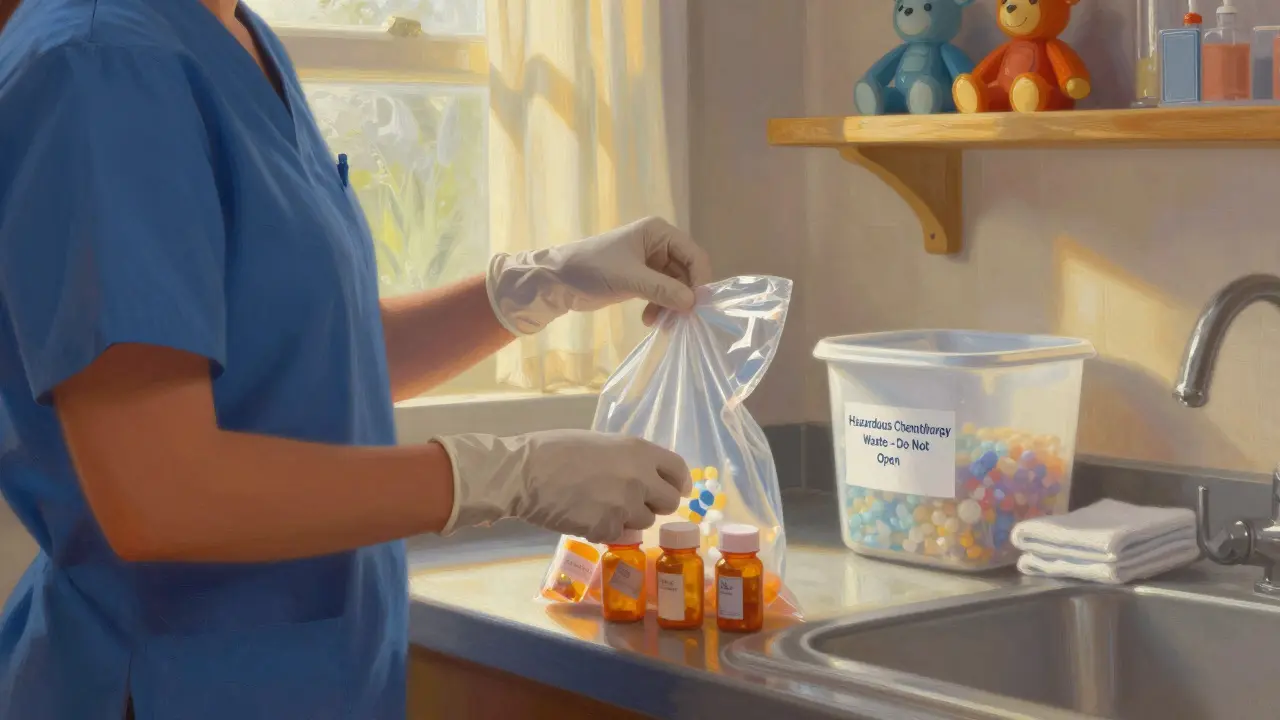
Why Chemotherapy Medications Can’t Be Tossed Like Regular Pills
Most people know you shouldn’t flush old pills down the toilet. But when it comes to chemotherapy drugs, the rules are far stricter-and the risks are much higher. These aren’t just strong painkillers or antibiotics. Chemotherapy drugs are designed to kill rapidly dividing cells, which means they can damage healthy cells too. Even tiny amounts left on gloves, in urine, or stuck to a pill bottle can cause serious harm to children, pets, or waste workers. The American Cancer Society says active chemotherapy compounds can stay in bodily fluids for up to 72 hours after treatment. That’s why throwing them in the trash like a bottle of ibuprofen isn’t just careless-it’s dangerous.
What Makes Chemotherapy Waste So Dangerous?
Chemotherapy drugs are called cytotoxic for a reason: they attack DNA. That’s how they kill cancer cells. But they don’t know the difference between a tumor and your skin, liver, or reproductive system. Exposure can lead to skin rashes, nausea, infertility, or even cancer in people who aren’t being treated. The Environmental Protection Agency found detectable levels of cyclophosphamide-a common chemo drug-in two-thirds of U.S. waterways. That contamination didn’t come from hospitals. It came from homes where people flushed pills or tossed them in the trash without proper containment. The Oncology Nursing Society warns that caregivers who handle contaminated laundry or clean up spills without gloves are at real risk. This isn’t theoretical. There are documented cases of nurses and family members developing blood disorders after repeated low-level exposure.
How to Handle Chemotherapy Medications at Home
Before disposal, you need to handle the drugs safely during use. Always wear disposable nitrile gloves-thin enough to feel the pill, but thick enough to block chemicals (0.07-0.15mm). Never crush pills, even if they’re hard to swallow. The powder can become airborne. If you’re using a patch, fold it with the sticky side in and tape it shut. For liquid meds, use a syringe with a cap, and never pour leftovers down the sink. After each use, wash your hands thoroughly-even if you wore gloves. And keep all chemo meds locked up, out of reach of kids and pets. Many patients get a dedicated storage box from their clinic. Use it.
Step-by-Step: How to Dispose of Chemotherapy Waste at Home
Follow this exact process every time:
- Wear nitrile gloves before touching anything used during treatment-pills, bottles, syringes, or even tissues you used to wipe your nose.
- Place all used items into a sealed, leak-proof plastic bag. This is your inner bag. Use bags rated for hazardous waste (at least 1.5 mil thick). Regular grocery bags won’t cut it.
- Seal the inner bag tightly with a zip-tie or by heat-sealing the top. Don’t just fold it.
- Place the sealed inner bag into a second identical plastic bag. This is your outer bag.
- Seal the outer bag the same way.
- Label both bags clearly: “Hazardous Chemotherapy Waste - Do Not Open.”
- Store the double-bagged waste in a secure, child-proof container, like a plastic bin with a lid, away from living areas.
- After 48-72 hours post-treatment, continue this routine for all bodily waste: used toilet paper, wipes, gloves, or clothing stained with urine or vomit.
Pro tip: Mayo Clinic testing shows double-bagging cuts exposure risk by 92% compared to single-bagging. Skipping the second bag isn’t worth the risk.
What You Should NEVER Do
- Don’t flush-not even one pill. The FDA’s flush list for opioids and painkillers does not apply to chemotherapy drugs. Flushing them is illegal under EPA rules.
- Don’t use Deterra or similar deactivation systems. Their website states clearly: “Not approved for hazardous chemotherapy agents.”
- Don’t mix with coffee grounds or cat litter. That works for regular meds, but chemo drugs don’t break down that way. The chemicals remain active.
- Don’t put in recycling. Even empty bottles can have residue. Treat them like hazardous waste.
- Don’t assume your local pharmacy will take it. Only 34% of U.S. pharmacies accept chemotherapy waste, even if they take regular pills.
What If You Have a Spill?
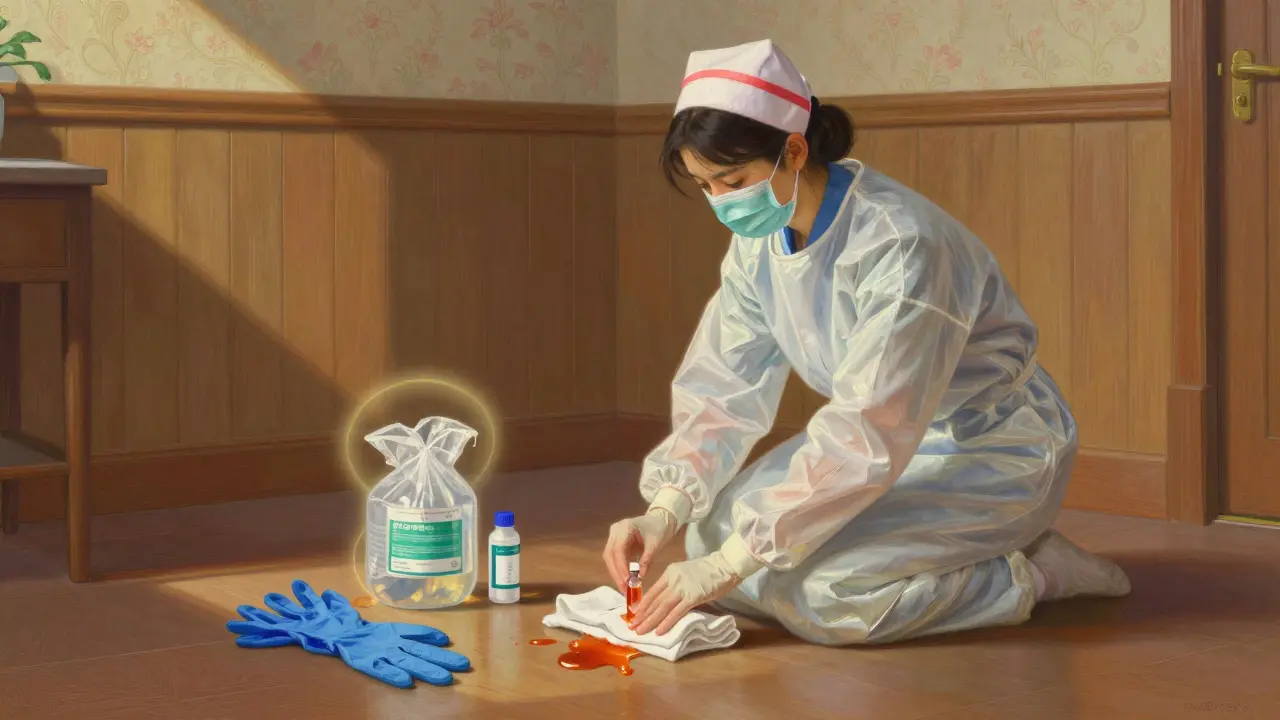
Spills happen. A dropped pill, a broken vial, a leaky bag. Here’s what to do:
- Put on gloves, a mask, and eye protection. If you have a disposable gown, wear it.
- Use paper towels or disposable cloths to soak up the spill. Don’t wipe-blot.
- Place all cleanup materials into your inner hazardous waste bag.
- Wash the surface with warm water and mild detergent. Rinse twice.
- Wipe the area again with a fresh damp cloth and put that in the bag too.
- Wash your hands thoroughly after removing gloves.
The Cancer Institute of New Jersey’s 15-step spill protocol exists for a reason. Don’t skip steps because you’re in a hurry. One mistake can expose your whole household.
Where to Take It for Final Disposal
Home storage is temporary. You still need to get the waste out of your house. Here are your options:
- Mail-back programs: Some clinics provide pre-paid envelopes for chemo waste. Only 28% of U.S. pharmacies offer these, but your oncology team should know if yours does.
- MedDrop kiosks: Stericycle runs over 1,800 of these across 47 states. They accept some-but not all-chemotherapy medications. Check meddrop.com for locations. Bring your double-bagged waste; they won’t take loose pills.
- Specialized hazardous waste facilities: Many counties have designated drop-off sites for household hazardous waste. Call ahead. Not all accept chemo.
- Ask your provider: Most cancer centers offer disposal services or know where to send it. Don’t be shy-this is part of your care.
If you’re unsure, call your oncology nurse. They’ve handled this hundreds of times. There’s no such thing as a dumb question when it comes to safety.

Costs and Supplies: What You’ll Need
Most clinics provide the first set of gloves and bags. But you’ll need replacements. On average, patients spend about $15.75 per month on disposal supplies. That’s for:
- Nitrile gloves (box of 100)
- Leak-proof plastic bags (ASTM D1735 certified)
- Zip-ties or heat-sealing tools
- Disposable wipes and cleaning supplies
Some insurance plans cover these costs under durable medical equipment. Ask your billing department. Don’t skip supplies because you’re trying to save money. The cost of exposure-medical bills, lost work, long-term health issues-is far higher.
Why So Many Patients Get It Wrong
According to a 2023 study in the Journal of Oncology Practice, only 53% of patients follow the correct disposal steps every time. Why? Because the instructions are confusing, inconsistent, or poorly explained. One patient told CancerCare: “I got a pamphlet with seven pages. I didn’t know what half the words meant.” Another said: “I thought if it’s not on the flush list, I can throw it away.”
Training matters. CancerCare’s survey found 68% of patients needed multiple sessions with nurses to get it right. If your provider didn’t walk you through it step-by-step, ask again. Bring a family member. Record the instructions. Write them down. This isn’t something you should guess at.
What’s Changing in 2026
Things are improving. In March 2023, the FDA required all oral chemotherapy drugs to include clear disposal instructions on the label. That affects 147 medications worth over $8 billion annually. The EPA is spending $4.7 million over the next few years to research better disposal tech. Two new systems-ChemiSafe and the Oncology Waste Management Unit-are in final testing and could be approved by late 2026. These devices will let patients deactivate chemo waste safely at home, like a coffee pod for hazardous drugs.
But until then, the rules haven’t changed. Double-bagging. No flushing. No shortcuts.
Final Reminder: This Is Part of Your Treatment
Disposing of chemotherapy waste isn’t a chore-it’s a critical part of your care. It protects your family. It protects the environment. It protects the people who collect your trash. Every step you take to do it right reduces the chance of someone else getting sick. You’ve fought hard to get through treatment. Don’t let a simple mistake undo that. Follow the steps. Ask for help. And remember: if you’re unsure, call your oncology team. They’re there for this, too.


