When a brand-name drug hits the market, it doesn’t just come with a price tag-it comes with a wall of patents. Sometimes, a single drug has more than 40 patents covering everything from the pill’s shape to the way it’s manufactured. These aren’t just protections for innovation-they’re barriers. And for generic drug makers, breaking through those barriers is a high-stakes game with billions on the line. That’s where Paragraph IV patent challenges come in.
What Exactly Is a Paragraph IV Challenge?
It’s not a lawsuit you file in court right away. It’s a legal notice tucked inside a generic drug application to the FDA. When a company wants to sell a copy of a brand drug, they submit an Abbreviated New Drug Application, or ANDA. That’s the paperwork that says, "This drug works the same as the brand, and here’s the proof." But here’s the twist: if the brand drug still has active patents listed in the FDA’s Orange Book, the generic maker must say so-and challenge them. That’s the Paragraph IV certification. It’s a formal statement that says: "These patents are invalid, unenforceable, or our drug won’t even infringe them." This isn’t just a technicality. Under U.S. law, filing this certification is treated as an act of patent infringement-even before the generic drug is made or sold. That’s why the brand company gets 45 days to sue. If they do, the FDA can’t approve the generic for up to 30 months. That’s called a regulatory stay. But if the court rules the patent is invalid, or if the patent expires early, the stay ends. And the generic can launch.Why Do Generic Companies Risk It?
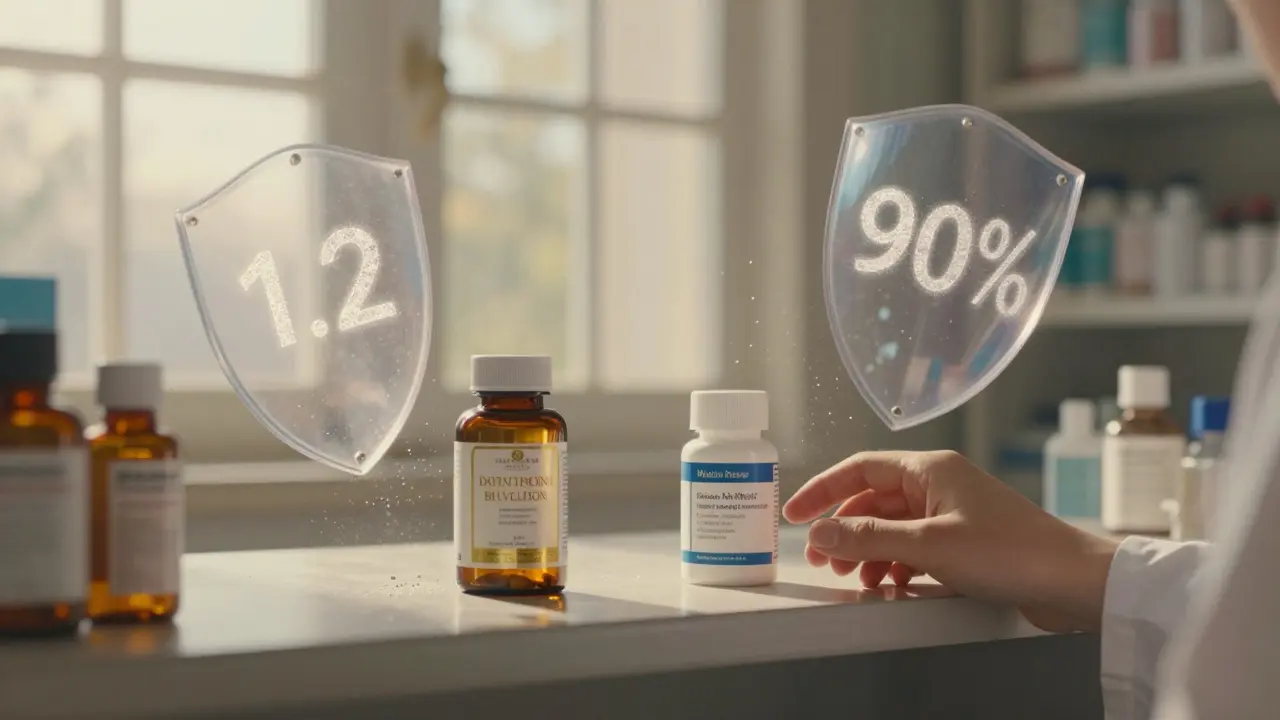
Because the reward is massive. The first company to file a successful Paragraph IV challenge gets 180 days of exclusive rights to sell the generic version. No competition. That’s huge. During that window, they can capture 70 to 80% of the market. In 2017, Teva made $1.2 billion in just six months selling the generic version of Copaxone, a multiple sclerosis drug. That’s not luck-that’s strategy. The math is simple: brand drugs cost hundreds or even thousands of dollars per month. Generics cost pennies. Once a generic hits, prices drop 80-90%. The FDA estimates that since 1990, Paragraph IV challenges have saved U.S. consumers more than $1.2 trillion. That’s the real engine behind the system: competition that forces prices down.How It Works: The 45-Day Countdown
It all starts when the generic company files its ANDA with the Paragraph IV certification. Within 20 days, they must notify the brand company and patent holders. That’s not a suggestion-it’s a legal requirement. The notification has to include a detailed legal and scientific explanation: why they think the patent doesn’t hold up. Then the clock starts. The brand has exactly 45 calendar days to file a patent infringement lawsuit. If they don’t, the FDA can approve the generic immediately. But 68% of brand companies file on day one. Another 22% wait until day 44, trying to squeeze out every hour of preparation time. If the lawsuit is filed, the 30-month stay kicks in. That’s a hard stop. The FDA can’t approve the drug until either:- The court rules the patent is invalid or not infringed,
- The patent expires,
- Or the 30 months run out.

It’s Not Just About Patents-It’s About Bioequivalence
A Paragraph IV challenge isn’t just legal. It’s scientific. The generic company must prove their drug is bioequivalent to the brand. That means it releases the same amount of active ingredient into the bloodstream at the same rate. The FDA requires this to be shown in clinical studies with 24 to 36 healthy volunteers. The data must show that the peak concentration (Cmax) and total exposure (AUC) of the generic fall within 80-125% of the brand’s numbers. That’s a tight window. If the numbers are off, the FDA rejects the application-no matter how strong the patent challenge is. This is why many generic companies invest millions in manufacturing before they even know if they’ll win the lawsuit. Teva spent $200 million building production lines before winning its challenge to Provenge in 2021. If they’d lost, that money would’ve been gone. That’s the risk.Why Most Cases Settle-And What’s Hidden in Those Deals
Here’s the uncomfortable truth: 72% of Paragraph IV cases never go to trial. They settle. And for years, those settlements looked shady. Brand companies would pay generic makers to delay their launch. That’s called a "pay-for-delay" deal. In 2013, the Supreme Court ruled in Actavis v. FTC that these deals could violate antitrust laws. Since then, the deals have changed form. Now, instead of direct cash payments, brand companies might offer the generic maker a license to sell another drug, or agree to let them enter the market just 75 days before the patent expires. That’s still a delay-but it’s now legally defensible. Still, the FTC found that between 2015 and 2020, 68% of Paragraph IV settlements included some kind of delay. That’s down from 78% in the previous five years, but it’s still a problem. The goal of the Hatch-Waxman Act was to get generics to market fast-not to extend monopolies through legal loopholes.The Rise of the Patent Thicket
Brand companies aren’t sitting still. They’ve learned how to fight back. Instead of one patent, they file dozens. Take Copaxone: it had over 40 patents covering everything from the syringe design to the manufacturing process. That’s a patent thicket-a web of overlapping claims designed to confuse and exhaust challengers. In the 1990s, generic companies won about half their Paragraph IV cases. By 2020, that number dropped to 35%. Why? Because brand companies got better at drafting patents that are harder to invalidate. Legal scholar Arti Rai from Duke University found that patent quality has improved, and generic companies now face more complex legal battles. The cost has soared too. In 2000, a Paragraph IV lawsuit cost about $5 million. By 2022, it hit $15.7 million. That’s why only the biggest generic manufacturers-like Teva, Mylan, and Hikma-are still playing. The top 10 companies now file 68% of all Paragraph IV challenges. Smaller players can’t afford the risk.