

Gut Bacteria Drug Interaction Checker
Check Your Medications
Enter a medication name to see if gut bacteria might affect it. This tool is based on research showing how gut microbes can alter drug effectiveness and safety.
Results
Enter a medication to see if gut bacteria affect it.
For decades, doctors treated drugs like they were simple chemicals that entered your body and did their job - no matter who you were. But what if your gut bacteria were secretly rewriting the rules? Turns out, the trillions of microbes living in your intestines don’t just help digest food. They actively break down, activate, or even poison medications. And that’s why two people taking the same drug at the same dose can have wildly different outcomes - one feels better, the other ends up in the ER.
Why Your Gut Is a Drug Factory
Your gut isn’t just a tube for food. It’s home to over 100 trillion bacteria, fungi, and viruses - a living ecosystem that interacts with almost every drug you take. These microbes have enzymes that human liver cells don’t. They can chop up pills, flip chemical bonds, and turn inactive drugs into active ones - or turn safe ones into toxins. A landmark 2019 study from Yale showed that gut bacteria were responsible for 20% to 80% of toxic metabolites circulating in patients taking certain drugs. That’s not a small side effect. That’s the difference between tolerating a medication and needing hospitalization. One drug in the study had 73% of its toxic byproducts created by gut microbes alone. And that’s just one example. Take irinotecan, a common chemotherapy drug. It’s designed to kill cancer cells. But in the gut, bacteria use an enzyme called beta-glucuronidase to turn a harmless waste product back into a deadly poison - SN-38. That poison attacks the lining of the intestines, causing severe, sometimes life-threatening diarrhea. About 25 to 40% of patients on irinotecan get this side effect. And the worse the diarrhea, the higher the bacterial enzyme levels. It’s not random. It’s predictable - if you know what to look for.Drugs That Get Rewritten by Bacteria
This isn’t rare. Over 60 commonly prescribed drugs are affected by gut microbes. Here’s how it plays out in real cases:- Clonazepam (an anti-seizure drug): Germ-free mice had 40-60% higher drug levels in their blood than normal mice. That means your gut bacteria are actively breaking it down - so if yours are different, your dose might be too high or too low.
- Digoxin (a heart medication): In some people, a specific bacterium called Eggerthella lenta breaks it down completely. That’s why some patients need double the dose - their gut bacteria are eating the drug before it can help.
- Prontosil (an old antibiotic): It doesn’t work at all unless gut bacteria activate it. In mice treated with antibiotics, effectiveness dropped from 90% to 12%.
- Lovastatin (a cholesterol drug): Long-term antibiotics can reduce its effectiveness by 35%. Your gut bugs aren’t just breaking down drugs - they’re helping some of them work.
And it’s not just about toxicity or effectiveness. Some drugs only work because bacteria turn them on. Others become dangerous because bacteria turn them into something else. There’s no one-size-fits-all anymore.
Why Antibiotics Can Make Drugs Fail - or Hurt You
Antibiotics don’t just kill bad bacteria. They wipe out the ones that help process your meds. That’s why a short course of amoxicillin could change how your body handles your painkiller, antidepressant, or blood thinner - even weeks later. In one study, mice given antibiotics showed 78% less brain damage from nitrazepam, a sedative, because the bacteria that turned it toxic were gone. That sounds good - until you realize the same thing could happen with your prescription. If your doctor prescribes antibiotics while you’re on another drug, you might suddenly have stronger side effects… or no effect at all. It’s a two-way street. Drugs also change your microbiome. Chemotherapy kills off good bacteria. Antidepressants alter microbial balance. Even NSAIDs like ibuprofen can damage the gut lining and shift bacterial populations. So you’re not just taking a pill - you’re reshaping your internal ecosystem, and that changes how future drugs work.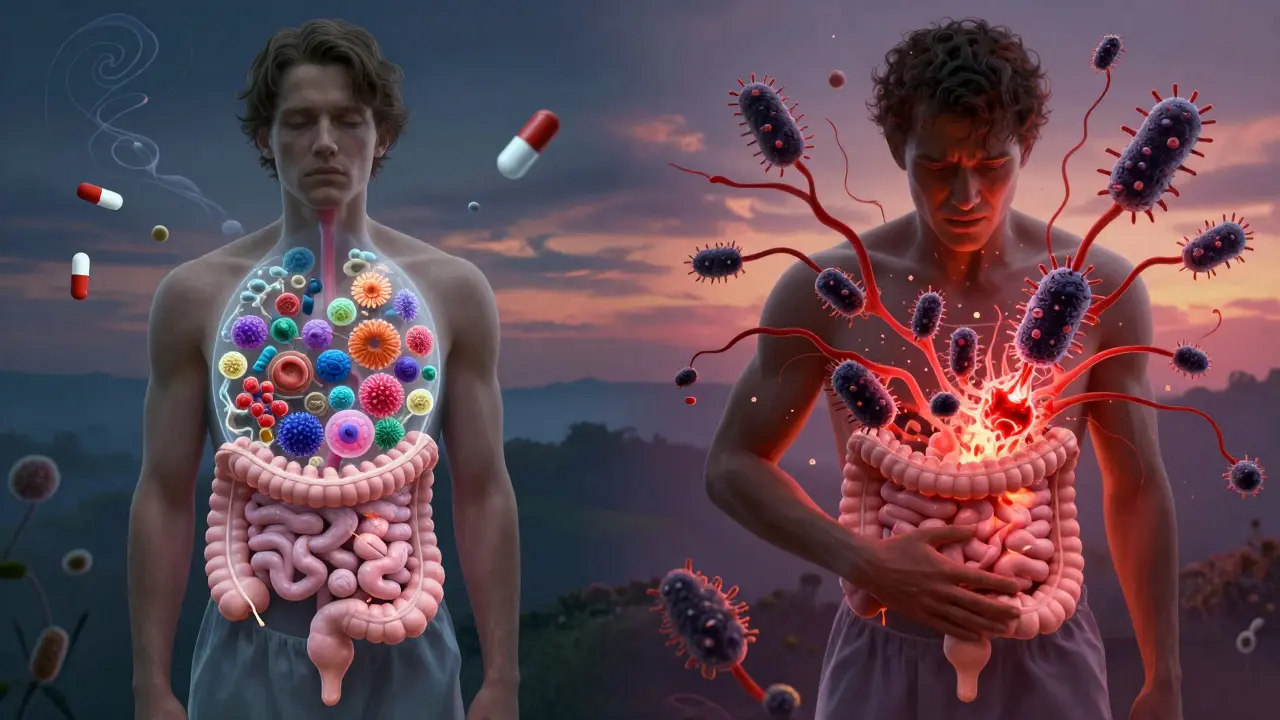
The Rise of Personalized Medicine - Based on Your Gut
This isn’t science fiction. It’s already changing how drugs are tested and prescribed. Since 2020, big pharma companies like Pfizer and Merck have started screening new drug candidates for microbiome interactions during early trials. Why? Because if a drug causes unexpected side effects in 10% of people, and it turns out those people have a specific bacterial strain, you can either tweak the drug - or test patients before prescribing it. Now, researchers can take a stool sample, sequence the DNA of your gut microbes, and see which drug-transforming genes you carry. The test costs $300-$500 and is 95% accurate for known metabolic pathways. In oncology, this is already being used to predict who will get severe diarrhea from irinotecan. If you have high beta-glucuronidase activity, doctors can give you a blocker - a simple pill that stops the enzyme - and cut your diarrhea risk by 60-70%. There are even probiotics in early trials designed to do one thing: modify your gut’s ability to metabolize a specific drug. Imagine taking a probiotic not to improve digestion - but to make your chemotherapy safer.What’s Holding This Back?
We know this matters. But we’re not using it yet - and here’s why. First, testing isn’t routine. Most doctors don’t screen for microbiome variations. There’s no standard test in clinics. Second, the science is still catching up. We’ve identified about 117 drugs affected by gut bacteria - but we don’t yet know how 40% of those interactions work at the molecular level. Third, it’s expensive. Setting up a microbiome screening program adds $2.5 million to a drug’s development cost. But that’s tiny compared to the $500 million companies lose when a drug gets pulled for unexpected side effects. Regulators are starting to catch on. The FDA and EMA now recommend - and in some cases require - microbiome interaction studies for new cancer drugs. But for most other medications? Still ignored.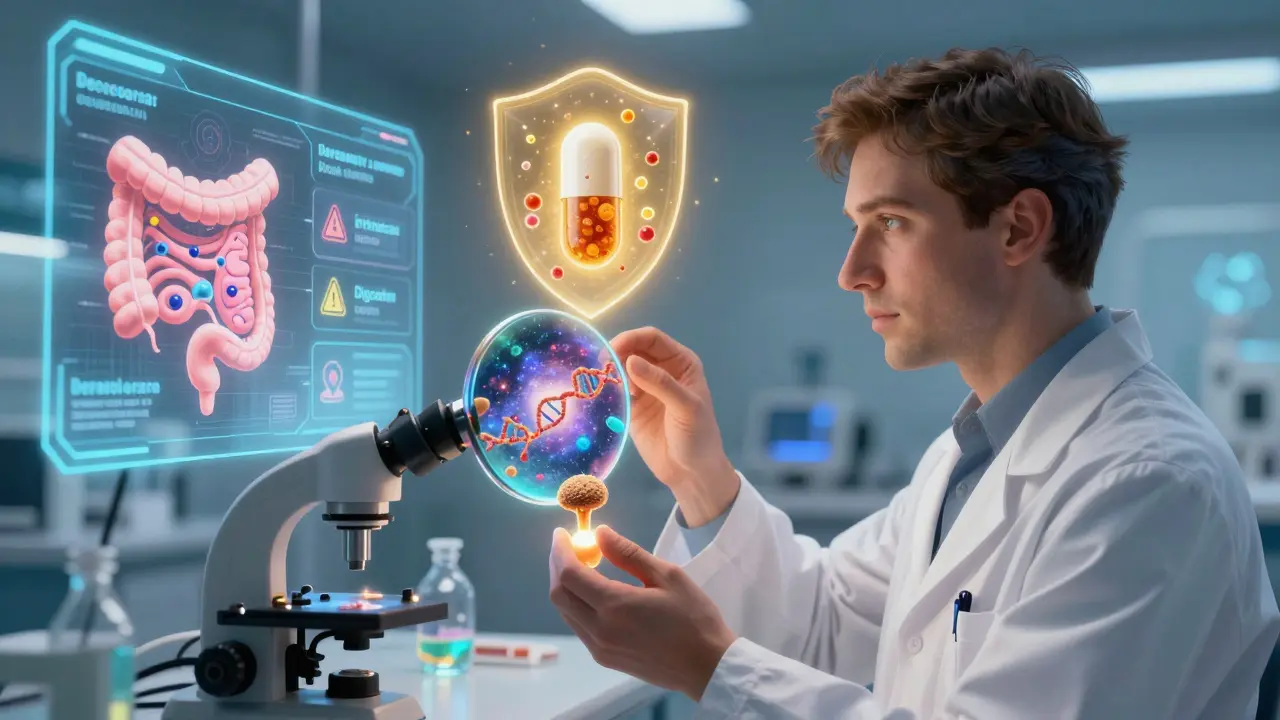
What You Can Do Right Now
You don’t need a lab test to protect yourself. Here’s what works today:- Know your meds. If you’re on chemotherapy, heart meds, antidepressants, or painkillers, ask your doctor: “Could my gut bacteria affect how this works?”
- Don’t take antibiotics unless necessary. Even a short course can alter your microbiome for months. Ask if there’s a targeted option.
- Track side effects. If you suddenly feel worse after starting a new drug - or if it stops working - consider your gut. Did you take antibiotics recently? Change your diet? Start probiotics?
- Don’t self-prescribe probiotics. Not all are equal. Some might interfere with your meds. Wait for clinical guidance.
The future of medicine isn’t just about your genes. It’s about your microbes. And that means your treatment plan should be as unique as your gut.
What’s Coming Next
By 2030, we’ll likely see:- Standard microbiome tests before prescribing high-risk drugs
- Personalized probiotics designed to block harmful drug metabolism
- Drug dosing algorithms that adjust based on your gut profile
- Pharmaceutical labels warning about microbiome interactions - just like they warn about alcohol or pregnancy
The NIH has already invested $14.7 million in this research between 2023 and 2025. This isn’t a fringe idea anymore. It’s the next big leap in precision medicine.
Can my gut bacteria make my medication less effective?
Yes. Certain gut bacteria can break down drugs before they enter your bloodstream. For example, the bacterium Eggerthella lenta inactivates digoxin, a heart medication. People with high levels of this bacteria may need much higher doses to get the same effect. Antibiotics can also wipe out these helpful microbes, making drugs less effective.
Do probiotics help with drug side effects?
Some may - but not all. Commercial probiotics are not designed to target drug metabolism. However, experimental probiotics in clinical trials are being engineered to block harmful bacterial enzymes, like beta-glucuronidase, which causes chemotherapy diarrhea. These are not yet available over the counter. Don’t assume store-bought probiotics will help - they might even interfere.
Can antibiotics change how my drugs work?
Absolutely. Antibiotics kill off bacteria that help metabolize drugs. This can lead to either increased toxicity (if bacteria that detoxify the drug are gone) or reduced effectiveness (if bacteria that activate the drug are wiped out). For example, antibiotics can reduce the effectiveness of lovastatin by 35%. Always tell your doctor if you’re on antibiotics when starting a new medication.
Is there a test to see how my gut affects my meds?
Yes, but it’s not routine yet. A stool sample can be analyzed via metagenomic sequencing to identify bacterial genes involved in drug metabolism. These tests are used in research and some cancer clinics, but they’re not widely available in general practice. Costs range from $300 to $500, and results can predict risks for side effects like chemotherapy-induced diarrhea.
Will my doctor test my microbiome before prescribing drugs?
Not yet - but they might soon. The FDA and European Medicines Agency now recommend microbiome testing for new cancer drugs. Oncology leads the way, with 65% of new drug applications including microbiome data. For other conditions, it’s still experimental. But as costs drop and evidence grows, expect this to become standard within the next five to seven years.


