
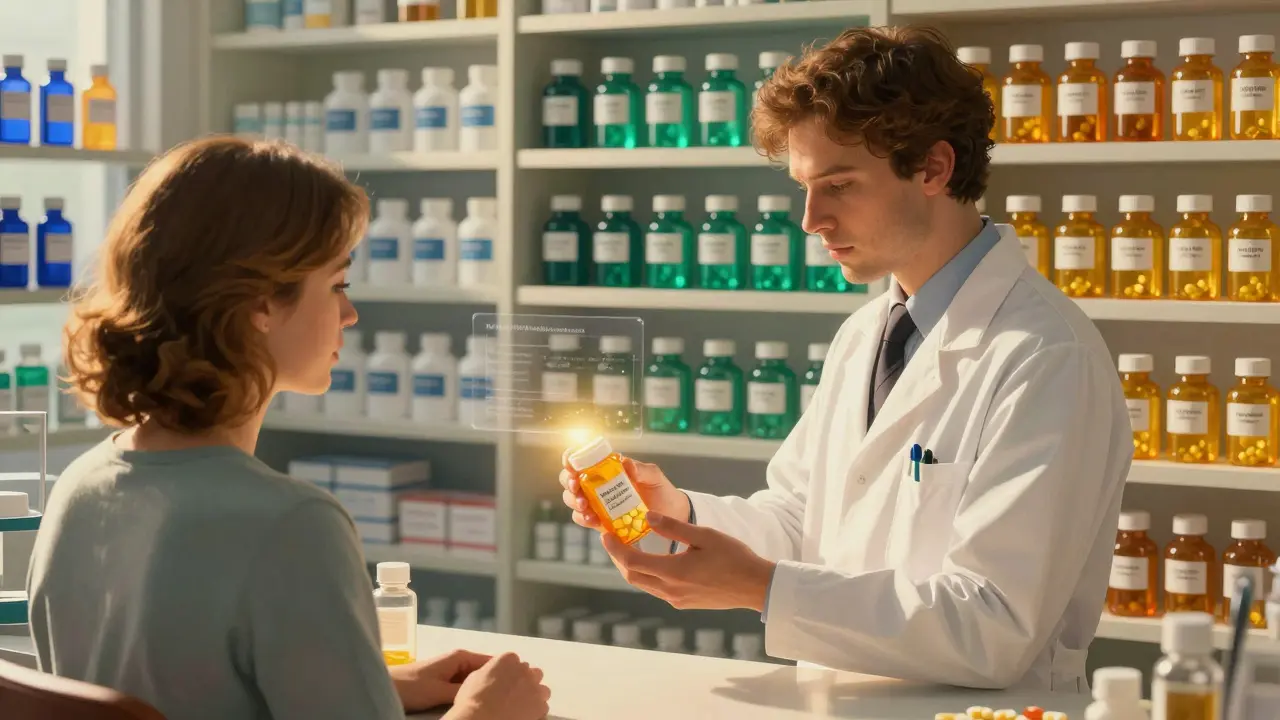
Every year, over 4 billion prescriptions are filled in the U.S. Most of them - about 9 in 10 - are generic drugs. That’s not because patients are choosing them. It’s because pharmacists are legally allowed to swap your brand-name medicine for a cheaper generic version without asking you first. This is called presumed consent. And while it saves billions, it also leaves many patients unaware they’ve been switched - until something goes wrong.
How Presumed Consent Works (And Why It Exists)
Presumed consent laws let pharmacists substitute generic drugs for brand-name ones without getting your permission at the counter. The idea is simple: if a generic drug is FDA-approved as therapeutically equivalent, why make you wait while the pharmacist asks? It’s faster, cheaper, and more efficient. The federal Hatch-Waxman Act of 1984 created the modern generic drug approval system, and states quickly followed with laws to make substitution automatic. Today, 43 states and Washington, D.C. operate under presumed consent. That means if your doctor prescribes Lipitor, and there’s an FDA-approved generic version called atorvastatin, the pharmacist can give you the generic without saying a word. You won’t know unless you check the label, ask, or notice your pill looks different. The savings are massive. Generic drugs make up 90% of all prescriptions but only 15% of total drug spending. Over the past decade, these substitutions have saved the U.S. healthcare system $1.68 trillion. That’s not just corporate profit - it’s lower co-pays for you, lower premiums for employers, and less strain on Medicare.Where the Rules Change - And Why It Matters
Not all states are the same. While 43 states presume your consent, 7 states - Alaska, Delaware, Hawaii, Maine, Maryland, New Mexico, and West Virginia - plus Washington, D.C., require the pharmacist to ask you outright before switching. In those places, you have to say yes. In the other 43, silence means consent. Even within presumed consent states, rules vary. Thirty-one states require pharmacists to notify you after the switch - usually through a handout, label note, or electronic alert. But 12 states don’t require any notification at all. That means in some places, you could get a different pill every time you refill - and never be told. Then there’s the matter of mandatory substitution. In 19 states, pharmacists aren’t just allowed to switch - they’re required to. California, Texas, and Illinois are among them. If a generic is available, they must dispense it unless the doctor writes “Do Not Substitute” on the prescription. In the other 31 states, substitution is optional. The pharmacist can choose to give you the brand name if they want - even if the generic is cheaper.The Hidden Risks: When Substitution Goes Wrong
For most medications, generics work just as well. The FDA requires them to be bioequivalent - meaning they deliver the same amount of active ingredient into your bloodstream at the same rate as the brand. But for some drugs, even tiny differences can cause serious problems. Drugs with a narrow therapeutic index (NTI) are the biggest concern. These are medications where the difference between an effective dose and a toxic one is very small. Examples include:- Antiepileptic drugs (like phenytoin, carbamazepine)
- Blood thinners (like warfarin)
- Thyroid meds (like levothyroxine)
- Immunosuppressants (like cyclosporine)
Biosimilars: The Next Frontier
The complexity doesn’t stop at generics. Biosimilars - cheaper versions of complex biologic drugs like Humira or Enbrel - are entering the market. But they’re not like small-molecule generics. They’re made from living cells, and tiny differences in manufacturing can affect how they work. Only 46 states allow automatic substitution of interchangeable biosimilars. Four states - North Carolina, Oklahoma, Pennsylvania, and Texas - ban it entirely. And only six states (Arizona, Indiana, Iowa, Massachusetts, New Jersey, and Pennsylvania) let pharmacists switch biosimilars without extra steps. The rest require the prescriber to specifically authorize the switch. The FDA’s Purple Book tracks which biologics are interchangeable. But most patients - and even many pharmacists - don’t know how to use it. A 2023 survey found that only 38% of community pharmacists felt confident in their ability to explain biosimilar substitution to patients.What You Can Do to Protect Yourself
You don’t have to be passive. Here’s how to take control:- Check your pill. If your medication looks different - color, shape, markings - ask why. It might be a generic. It might be a different brand. It might be a mistake.
- Read the label. The generic name will be printed on the bottle. If it doesn’t match your prescription, ask.
- Ask your doctor to write “Dispense as Written” or “Do Not Substitute.” This legally blocks substitution. Most doctors don’t know they can do this - but they can.
- Know your state’s rules. If you live in Hawaii, Maine, or Maryland, your pharmacist must ask you. In Ohio or Florida, they don’t have to. Look up your state’s pharmacy board website.
- Use your pharmacy’s app or portal. Many chains now send substitution alerts. Turn them on.

Why Pharmacists Support (and Struggle With) Presumed Consent
Most pharmacists support presumed consent. It saves time. A 2022 study found it cuts prescription processing time by 1.7 minutes per script. That’s 2.8 billion hours saved nationwide each year - and billions in labor costs. But it’s not easy. Pharmacists have to memorize 51 different sets of rules - one for each state and D.C. They need to know which drugs are substitutable (based on the FDA’s Orange Book), which ones have restrictions, and whether their state requires documentation or notification. New pharmacists spend over 17 hours in their first year learning substitution laws. Every year, they need another 4 hours of continuing education just to keep their license. Many independent pharmacies don’t have the resources to keep up. Chain pharmacies use automated systems that flag restrictions - but even those sometimes fail. And when something goes wrong? Liability is murky. In 26 states, pharmacists are protected from extra liability if they follow the law. In 24 states, they’re not. That means a pharmacist in New York could be sued for switching a thyroid med - even if they followed every rule - while a pharmacist in Texas can’t be.The Future: Standardization or Fragmentation?
The system is broken - not because it doesn’t work, but because it’s too complicated. A pharmacist in Michigan might be able to swap a blood thinner without a second thought. One in California might need a signed form. A patient who moves between states could get different treatment for the same drug. The National Academy for State Health Policy recommends a “tiered consent model”: keep presumed consent for most drugs, but require explicit permission for NTI drugs and biosimilars. The Uniform Law Commission is drafting a “Model State Substitution Act” to bring consistency across states. So far, 17 states are considering it. Meanwhile, the FDA is updating its guidance on biosimilars. Congress is debating federal standardization. And patients? They’re still waiting to be told.Bottom Line: You Have Rights - Even If You Don’t Know It
Presumed consent laws were designed to save money and time. They’ve done that - brilliantly. But they were never meant to erase your voice. You have the right to know what you’re taking. You have the right to ask for the brand name. You have the right to say no. You don’t need to be an expert. You just need to pay attention. Next time you pick up a prescription, check the label. Ask a question. If you’re on a drug for epilepsy, thyroid disease, or blood thinning - don’t assume anything. Your health isn’t a cost-saving metric. It’s yours.Can my pharmacist switch my brand-name drug without telling me?
In 43 states and Washington, D.C., yes - they can. This is called presumed consent. They’re not required to ask you first, but 31 of those states must notify you after the switch. In 7 states, including Hawaii and Maryland, they must ask you before substituting.
Are generic drugs always safe to substitute?
For most drugs, yes. The FDA requires generics to be bioequivalent to brand-name versions. But for drugs with a narrow therapeutic index - like seizure meds, blood thinners, or thyroid hormones - even small differences can cause serious side effects. Fifteen states have special rules for these drugs, but most don’t.
How do I stop my pharmacist from substituting my medication?
Ask your doctor to write “Dispense as Written” or “Do Not Substitute” on your prescription. This legally prevents substitution. You can also ask the pharmacist directly - and if they say no, ask why. Some states require them to honor your request.
Why do some states require consent and others don’t?
It’s a mix of history, politics, and pharmacy lobbying. States with strong generic drug manufacturers pushed for presumed consent to increase savings. States with more patient advocacy groups pushed for explicit consent to protect autonomy. There’s no national standard - which is why rules vary so much.
Can I be charged more if I don’t want a generic?
Yes. If you request the brand-name drug when a generic is available, your insurance may charge you the full retail price instead of the generic co-pay. But you still have the right to refuse the substitution - even if it costs more.
What should I do if I think a substitution caused me harm?
Contact your doctor immediately. Document the change - keep the pill bottle, pharmacy receipt, and any symptoms you experienced. File a report with your state pharmacy board. In some cases, you may have legal recourse, especially if the pharmacist didn’t follow state notification or restriction rules.


