
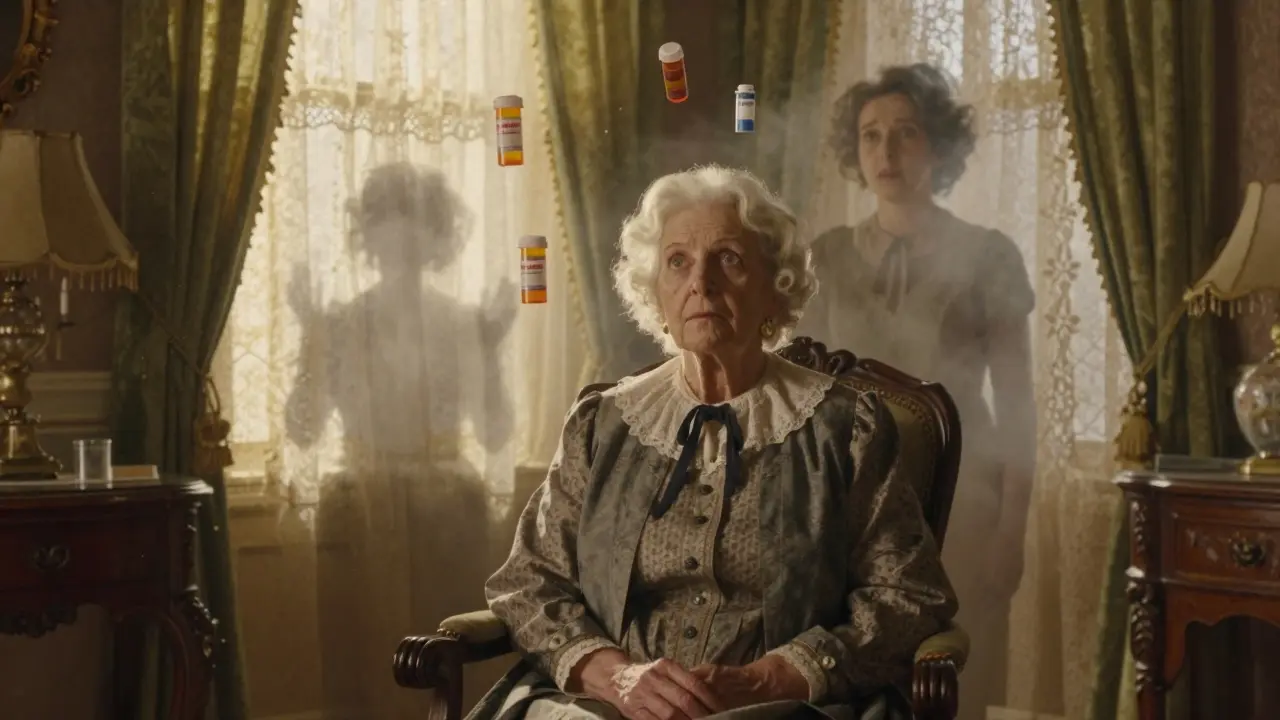
Many older adults are told their memory lapses, confusion, or sluggishness are just part of getting older. But what if those symptoms aren’t aging at all-they’re caused by a pill they’re taking every day?
What You’re Seeing Might Not Be Aging
It’s common for families to notice changes in a loved one: forgetting names, mixing up words, stumbling more often, or seeming unusually drowsy. Doctors often label this as early dementia or just "normal aging." But in up to 40% of cases, these signs aren’t caused by brain degeneration-they’re side effects of medications. And the good news? These symptoms can vanish once the right drugs are stopped.One of the biggest culprits? Anticholinergic drugs. These medications block a brain chemical called acetylcholine, which helps with memory, focus, and muscle control. When older adults take them, their brains get hit harder than younger people’s. Why? As we age, our liver and kidneys clear drugs slower-sometimes 30-60% slower. That means the same dose that’s safe for a 40-year-old can overload an 80-year-old’s brain.
Common anticholinergic medications include:
- Diphenhydramine (Benadryl)-used for allergies and sleep
- Oxybutynin (Ditropan)-for overactive bladder
- Tricyclic antidepressants like amitriptyline
- Quetiapine (Seroquel)-often prescribed for sleep or agitation
- Promethazine-for nausea and motion sickness
These aren’t rare prescriptions. Around 50-70% of seniors take at least one drug with anticholinergic effects. And when someone takes four or more medications (polypharmacy), the risk jumps sharply.
How to Spot the Difference Between Medication Side Effects and Real Dementia
True dementia-like Alzheimer’s-creeps in slowly. Symptoms get worse over months or years. Medication side effects? They show up fast.Here’s how to tell them apart:
- Sudden onset: Did confusion start two weeks after a new prescription? That’s a red flag.
- Fluctuating symptoms: Does your loved one seem clearer in the morning and foggy after dinner? That often matches when the drug peaks in their system.
- Reversible changes: If symptoms improve after stopping the drug, it wasn’t dementia.
- Physical signs: Dry mouth, constipation, blurry vision, trouble urinating, or dizziness often come with cognitive fog. These aren’t normal aging signs-they’re drug reactions.
One case from Indiana University involved a 68-year-old woman who couldn’t remember her grandchildren’s names or follow a simple conversation. Her family assumed she had Alzheimer’s. After a pharmacist reviewed her meds, they found she was taking Benadryl for sleep, oxybutynin for bladder control, and amitriptyline for nerve pain-all strong anticholinergics. Within six weeks of stopping them, her memory returned almost completely.
The Top Medications That Fool Doctors Into Thinking It’s Aging
Beyond anticholinergics, other drug classes are often mistaken for aging:- Benzodiazepines (like Ativan, Xanax): Cause short-term memory loss in 65% of seniors. Often prescribed for anxiety or insomnia, but they’re risky for long-term use.
- Corticosteroids (like prednisone): Can trigger mood swings, confusion, or even hallucinations in older adults.
- Opioids (like oxycodone): Lead to memory lapses in 57% of seniors. Even short-term use can cloud thinking.
- Antipsychotics (like risperidone): Sometimes given for agitation in dementia, but they can cause tremors, stiffness, and slow movement-mimicking Parkinson’s.
The American Geriatrics Society keeps an updated list called the Beers Criteria. It identifies 30+ medications that are generally unsafe for people over 65. In 2023, six more were added-including first-generation antihistamines and certain antipsychotics-because research showed they increased cognitive side effects by 35-50%.

The Anticholinergic Cognitive Burden (ACB) Score
Doctors now have a tool to measure how much a medication cocktail is affecting the brain. It’s called the Anticholinergic Cognitive Burden (ACB) scale.Each drug is scored:
- 1 = possible anticholinergic effect
- 2 = definite anticholinergic effect
- 3 = strong anticholinergic effect
Add up the scores for all medications a senior takes. A total of 3 or higher means a 49% higher risk of developing dementia over three years. That’s not a guess-it’s from a landmark study in the Journal of the American Medical Association.
Here’s a quick example:
| Medication | Use | ACB Score |
|---|---|---|
| Benadryl (diphenhydramine) | Sleep aid | 3 |
| Oxybutynin | Bladder control | 3 |
| Amitriptyline | Depression/nerve pain | 2 |
| Lorazepam (Ativan) | Anxiety | 1 |
| Total | 9 |
A score of 9 is very high. This person isn’t just at risk-they’re already experiencing brain fog. Stopping or switching even one of these drugs can make a big difference.
What to Do: A Practical Step-by-Step Plan
You don’t need to be a doctor to protect a senior from these hidden side effects. Here’s what works:- Get a full medication list-including vitamins, supplements, and over-the-counter drugs. Write it down. Don’t rely on memory.
- Use the Beers Criteria-search "2023 Beers Criteria list" online. Cross-check every drug on the list.
- Calculate the ACB score-add up the scores for each anticholinergic drug. If it’s 3 or higher, ask for a review.
- Ask the doctor: "Could any of these be causing confusion or memory issues?" Be specific. Don’t accept "it’s just aging." Ask if any can be stopped or switched.
- Request a deprescribing plan-don’t quit cold turkey. Some drugs need to be tapered over weeks. A pharmacist can help design a safe schedule.
- Track symptoms-keep a journal. Note when the person feels clearer or foggier. Does it line up with when they take a pill?
Studies show that when medication reviews are done properly, 35-45% of people previously diagnosed with dementia show major improvement. Some return to near-normal function.

Who Should Be Involved?
This isn’t something one person can fix alone. You need a team:- Pharmacist: They know drug interactions and side effects better than most doctors. Ask for a medication therapy review.
- Geriatrician: A doctor who specializes in aging. They’re trained to spot drug-induced symptoms.
- Caregiver: You’re the eyes and ears. Track changes in behavior, sleep, appetite, and balance.
Medicare now requires a medication review during the Annual Wellness Visit. If your doctor hasn’t brought it up, ask. You have the right to this check-up.
What’s Changing in 2025?
The FDA is rolling out new rules this year. Starting in Q3 2025, 12 high-risk drug classes must include mandatory cognitive side effect warnings on labels and in prescribing guides. That’s a big step.Researchers are also testing a blood test that measures acetylcholine levels. Early results show it can identify medication-induced brain fog with 89% accuracy. In the next few years, AI tools will scan electronic health records to flag seniors at high risk for these side effects before they even start feeling foggy.
But you don’t need to wait for tech to help. Right now, you can act.
Final Thought: It’s Not Normal. It’s Not Inevitable.
Aging brings changes. But forgetting your own phone number because of a sleep aid? That’s not aging. That’s a preventable side effect.Thousands of seniors are misdiagnosed every year. Their lives are changed unnecessarily-by pills they didn’t know were dangerous.
Don’t accept "it’s just getting older." Ask the questions. Get the list. Check the scores. Push for a review. You might not just be helping someone remember their grandkids’ names-you might be giving them back years of clarity, independence, and peace.


