
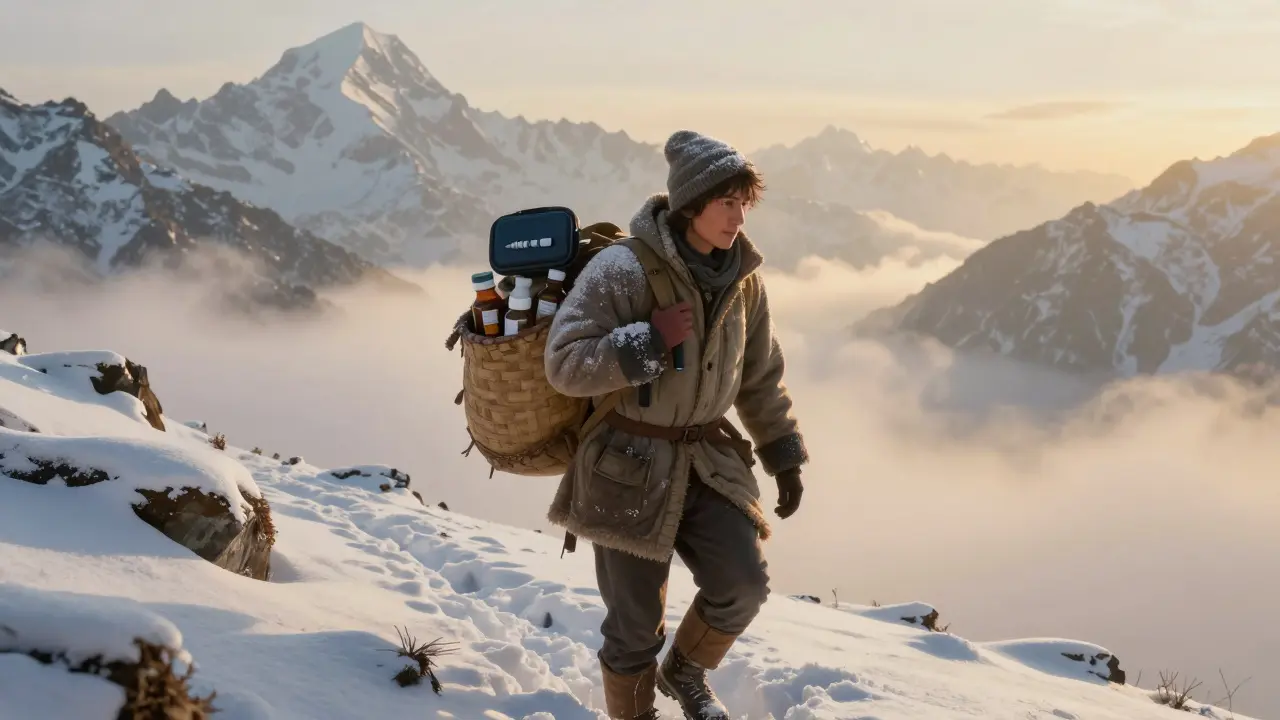
When you’re heading into the mountains for a pilgrimage or trek, your body isn’t just facing long walks and cold weather-it’s fighting for oxygen. At elevations above 8,000 feet, your lungs struggle to pull in enough air, and without proper preparation, even healthy people can end up sick, stranded, or worse. Altitude sickness isn’t just a headache or nausea-it can turn into life-threatening conditions like High Altitude Pulmonary Edema (HAPE) or High Altitude Cerebral Edema (HACE). And in remote areas, help might be a day’s walk away. This isn’t about being overly cautious. It’s about knowing what to pack, how to use it, and when to act.
Know the Risks Before You Go
Every year, tens of thousands of pilgrims and trekkers head to places like Mount Kailash, Everest Base Camp, or the Himalayan shrines of Gosainkunda. Around 25% to 85% of them will experience some form of altitude sickness, depending on how fast they climb. The higher you go, the worse it gets. At 17,500 feet, nearly half of all trekkers show symptoms. That’s not luck-it’s physics. Your body needs time to adjust to thinner air. But pilgrims often fly straight into Lhasa at 12,000 feet or drive up to sacred sites overnight. No time to adapt. No time to breathe. That’s where medication becomes your safety net.Acute Mountain Sickness (AMS) is the most common. It starts with headache, dizziness, nausea, and fatigue. If you ignore it, it can become HAPE-fluid in the lungs-or HACE-swelling in the brain. Both can kill within hours if untreated. The good news? Most cases are preventable. The bad news? Many people don’t know how.
Essential Medications to Carry
You can’t rely on local pharmacies. A 2013 survey found that 89% of health camps along pilgrimage trails didn’t have acetazolamide, dexamethasone, or nifedipine-the three drugs that save lives at altitude. Don’t gamble on finding them when you’re already struggling to breathe.- Acetazolamide (Diamox): The gold standard for prevention. Take 125 mg twice a day, starting one day before ascent and continuing for three days after reaching high altitude. It helps your body breathe faster, which speeds up acclimatization. Side effects? You’ll pee more often (67% of users report this), and your fingers and toes may tingle. That’s normal. It’s not dangerous.
- Dexamethasone: This is your emergency tool for HACE. Start with 8 mg, then take 4 mg every 6 hours. It reduces brain swelling fast. But don’t use it to keep going higher. Use it to stabilize until you can descend. It’s not a substitute for getting down.
- Nifedipine (extended-release): Used for HAPE. Take 20 mg every 12 hours. It opens up blood vessels in the lungs, reducing pressure and fluid buildup. Only use it if you or someone in your group shows signs of severe breathing trouble.
- Supplemental oxygen: Portable canisters (like those from OxySure or Oxylite) are worth carrying if you’re going above 15,000 feet. They won’t replace descent, but they can buy you hours to get help.
Don’t forget your regular meds. If you’re diabetic, insulin degrades in cold weather. At temperatures below freezing, it can lose 25% of its potency in just 24 hours. Use insulated cases designed for travel. Glucometers can give false readings below 32°F-error rates jump to 18% at 14°F. Test your device in cold conditions before you go.
Build a Complete First Aid Kit
Medications for altitude aren’t enough. You need a full kit. Here’s what works:- Antibiotics: Azithromycin (500 mg daily for 3 days) for traveler’s diarrhea-common in 60% of trekkers, especially between 9,000 and 14,000 feet.
- Anti-inflammatories: Ibuprofen (400 mg tablets) helps with headache, fever, and muscle pain. It’s safer than aspirin at altitude.
- Antihistamines: Diphenhydramine (25-50 mg) for allergic reactions or sleep aid. Avoid sleep aids that make you drowsy if you’re climbing.
- Topicals: Antibiotic ointment, hydrocortisone cream for rashes, and blister pads. Blisters are the #1 reason people quit treks.
- Electrolytes: Powder packs or tablets. Dehydration worsens altitude sickness. Drink 4-5 liters of water daily.
Keep everything in its original packaging with pharmacy labels. If you’re carrying controlled substances-like strong painkillers or ADHD meds-you may need a doctor’s letter and international permits. About 17% of trekking groups run into this issue. Don’t wait until you’re at the border to find out.
Pre-Trip Medical Checkup Is Non-Negotiable
A 2020 survey of travel medicine specialists found that 92% recommend a pre-trip visit with your doctor. Not your friend who went to Nepal once. Not a walk-in clinic. Your regular physician. They’ll check for hidden conditions-heart issues, lung problems, anemia-that make altitude riskier. They’ll also help you adjust your meds for the trip.Diabetics, asthmatics, pregnant women, and people with high blood pressure need special planning. The Himalayan Rescue Association says 83% of serious altitude complications could be avoided with proper screening. That’s not a small number. That’s most of them.
How to Store Medications in Extreme Cold
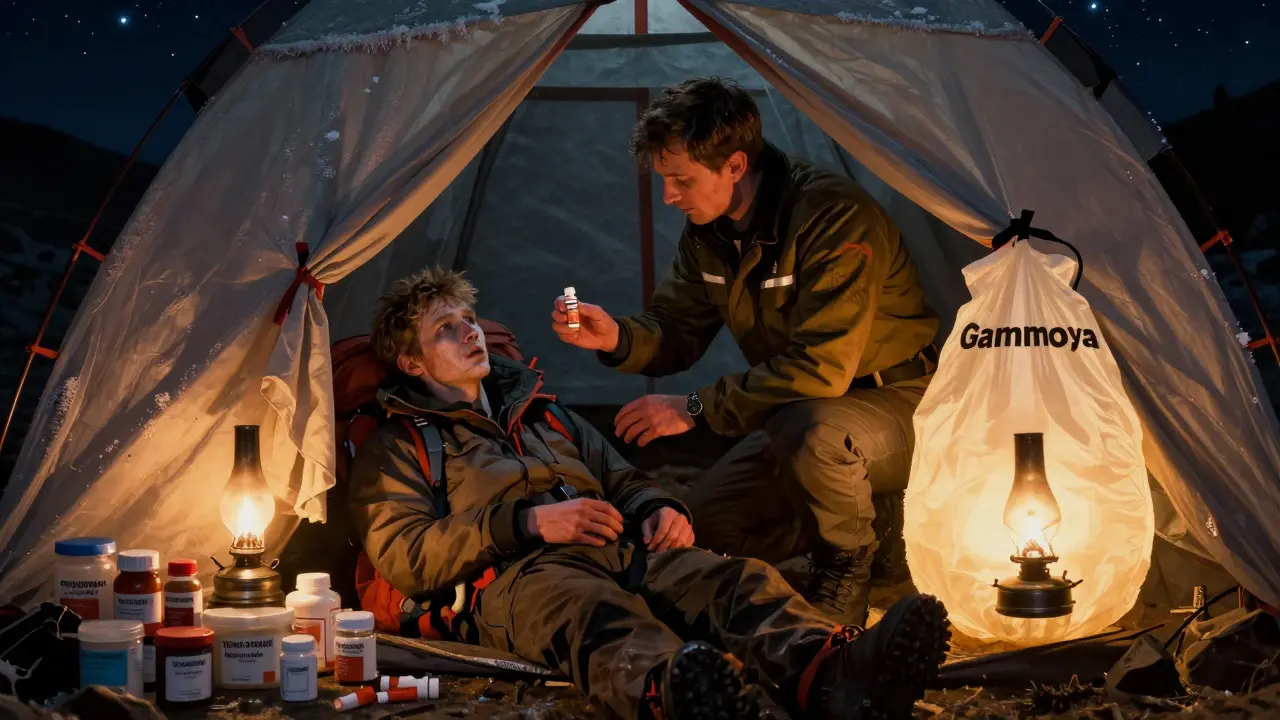
Your pills won’t work if they freeze or overheat. Insulated, waterproof containers are a must. Look for ones rated to maintain 59-77°F (15-25°C). Some have gel packs you freeze before the trip. Others use phase-change materials that stabilize temperature for hours.Insulin, asthma inhalers, and epinephrine auto-injectors are especially sensitive. Store them close to your body-inside your jacket, not your backpack. At night, sleep with your meds. If you’re using a Gammow Bag (a portable hyperbaric chamber), make sure you know how to use it before you leave. Less than 5% of health camps have one, but if you’re in a group, carry it. It’s saved lives.
Ascent Strategy: Slow Is Safer
Medications help, but they’re not magic. The best prevention is still slow ascent. Above 10,000 feet, don’t climb more than 1,000 feet (305 meters) per day. Take a rest day every 3,000 feet. Sleep lower than you climb. This is the gold standard. But pilgrims often can’t follow it. If you’re flying into a high-altitude city, take acetazolamide before you land. Spend your first day resting, hydrating, and avoiding alcohol. No one gets sick from sitting still.And never sleep during ascent. If you feel dizzy or nauseous while walking, stop. Don’t lie down. Keep moving slowly. Resting horizontally can make symptoms worse.
What to Do If Someone Gets Sick
If someone in your group has severe headache, confusion, coughing up frothy sputum, or can’t walk straight-descend immediately. Don’t wait. Don’t give them more pills. Don’t hope it’ll pass. Get them down at least 1,500-2,000 feet. That’s the only cure that works every time.Use dexamethasone or nifedipine only as a bridge to descent. They buy time. They don’t fix the problem. If you’re stuck in a storm or on a ridge, use supplemental oxygen or a Gammow Bag. But your goal is always: get lower.
Recent Trends and What’s Changing
In 2021, Nepal launched a national campaign to distribute 15,000 pre-packaged altitude kits to trekking agencies. The result? A 22% drop in altitude-related hospitalizations. More agencies now require medical checkups before booking. By 2027, 95% of high-altitude tour operators plan to make them mandatory, driven by insurance rules and lawsuits.Companies are now offering pre-packaged medical kits for different altitude zones-below 10,000 feet, 10,000-15,000 feet, and above 15,000 feet. These kits include exact doses of acetazolamide, dexamethasone, nifedipine, and electrolytes, with clear instructions. About 76% of trekkers now buy them. It’s not about convenience-it’s about survival.
Final Checklist Before You Leave
- [ ] Consult your doctor 4-6 weeks before departure - [ ] Get prescriptions for acetazolamide, dexamethasone, nifedipine, and antibiotics - [ ] Pack all meds in original containers with labels - [ ] Carry a doctor’s letter for controlled substances - [ ] Use insulated, waterproof storage for all meds - [ ] Test your glucometer and insulin setup in cold conditions - [ ] Bring at least 2x your daily supply of each medication - [ ] Include oxygen canisters if above 15,000 feet - [ ] Know how to use a Gammow Bag if carrying one - [ ] Share your medication plan with your group - [ ] Leave copies of your meds list with someone at homePreparing for a pilgrimage or trek isn’t just about boots and backpacks. It’s about carrying your health with you. The mountains don’t care how devout you are or how fit you look. They only respond to preparation. Pack smart. Know your meds. Listen to your body. And if something feels wrong-don’t push through. Descend. It’s not failure. It’s wisdom.


