

When stomach acid keeps creeping up into your chest and throat, it’s not just discomfort-it’s a sign your body is struggling. Gastroesophageal reflux disease, or GERD, affects about 1 in 5 adults in the U.S., and many more around the world. It’s not something you just live with. With the right mix of diet, lifestyle tweaks, and medication, most people can take back control. But it’s not one-size-fits-all. What works for one person might do nothing for another. Here’s what actually helps-and what doesn’t.
Start with What You Eat and When
Your diet isn’t just about calories. For GERD, it’s about timing, fat content, and specific triggers. High-fat meals slow down digestion and relax the lower esophageal sphincter (LES), the muscle that keeps acid in your stomach. Studies show meals with more than 30 grams of fat can increase reflux episodes by 40%. Cutting fat to under 30% of your daily calories isn’t a suggestion-it’s a key step.
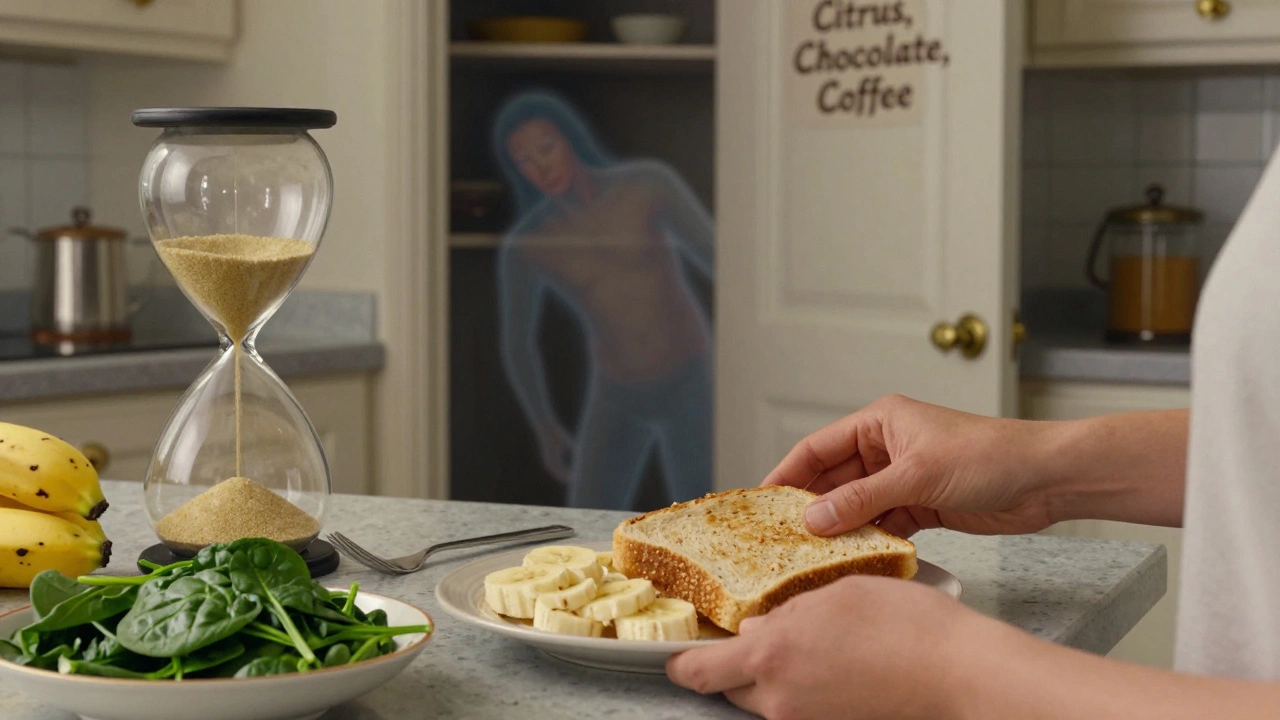
Some foods are almost guaranteed trouble. Citrus fruits like oranges and lemons have a pH between 2.0 and 4.0-acidic enough to burn your esophagus directly. Tomato sauce? Same story. Even though it’s a vegetable, tomato is highly acidic and triggers reflux in up to 70% of people with GERD. Chocolate isn’t just a treat-it contains methylxanthine, which weakens the LES by 10-15%. Peppermint? It might calm your stomach, but it also relaxes the LES. Coffee and tea? They boost acid production by 23% within 30 minutes. Carbonated drinks puff up your stomach, raising pressure and forcing acid upward.
It’s not just what you eat, but when. Lying down within an hour after eating increases reflux by 50%. Wait at least three hours. Elevating the head of your bed by six inches helps too-gravity keeps acid where it belongs. This isn’t just propping up with extra pillows. You need to raise the entire bed frame. Pillows alone can make it worse by bending your neck and increasing pressure.
Lifestyle Changes That Actually Work
Smoking doesn’t just hurt your lungs. Each cigarette lowers LES pressure by 30-40% within minutes. Quitting isn’t just good for your heart-it’s one of the most effective GERD interventions you can make. Alcohol does the same thing. Limit yourself to under two standard drinks a day. One glass of wine might be okay. Two? You’re asking for trouble.
Weight loss is powerful. Losing just 10% of your body weight can cut GERD symptoms by 40%. That’s not a vague recommendation. It’s backed by clinical data. If you’re overweight, losing weight isn’t optional-it’s part of treatment. Even modest loss helps. You don’t need to become an athlete. Just move more, eat less processed food, and watch portion sizes.
Diaphragmatic breathing-deep belly breaths taken slowly after meals-can reduce symptoms by 35% in mild cases. It sounds simple, but most people don’t do it long-term. Try 15 minutes after lunch and dinner. Breathe in through your nose, let your belly rise, then exhale slowly through your mouth. Do this consistently for a week. You might be surprised.
Medications: From Antacids to Newer Options
Not everyone needs surgery. Most people find relief with medication-but not all meds are created equal.
Antacids like Tums (calcium carbonate) work fast. They neutralize acid right away, giving relief in minutes. But the effect lasts less than an hour. They’re great for occasional heartburn, not daily GERD.
H2 blockers like famotidine (Pepcid) reduce acid production by 60-70%. They kick in within an hour and last 10-12 hours. Good for nighttime symptoms or if you know you’re going to eat something risky. But they lose effectiveness over time.
Proton pump inhibitors (PPIs) are the go-to for moderate to severe GERD. Drugs like omeprazole, esomeprazole (Nexium), and pantoprazole cut acid by 90-98%. They’re not instant. It takes 2-5 days of daily use to reach full effect. Take them 30-60 minutes before your first meal. If you take them after eating, they won’t work as well. A 2023 Mayo Clinic study found 40% of people get poor results simply because they take them at the wrong time.
But PPIs aren’t perfect. Long-term use (over a year) is linked to higher risks: 15-20% increased chance of pneumonia, 30% higher risk of C. diff infection, and a 10-15% increased risk of chronic kidney disease. The FDA warns about low magnesium levels too. If you’re on a PPI for more than a year, ask your doctor about checking your magnesium levels every six months.
Enter vonoprazan (Voquezna), approved by the FDA in December 2023 and now also approved for long-term use as of May 2024. This is a potassium-competitive acid blocker (P-CAB). It works faster and more completely than PPIs. In studies, 95% of patients maintained stomach pH above 4 for a full 24 hours-compared to only 65% with standard PPIs. It’s especially helpful for nighttime breakthrough reflux, which affects 70% of PPI users. It’s not cheap, but for people who don’t respond to PPIs, it’s a game-changer.
Surgery: When Medication Isn’t Enough
If you’ve tried diet, lifestyle changes, and medication-and you’re still struggling-surgery might be the next step. About 10-15% of GERD patients end up here.
The gold standard is laparoscopic Nissen fundoplication. Surgeons wrap the top of your stomach around your esophagus to reinforce the LES. Success rates are high: 90-95% of patients are symptom-free at five years. But side effects are real. About 5-10% have trouble swallowing afterward. Up to 20% get gas-bloat syndrome-feeling full, bloated, and unable to burp. It’s not fun.
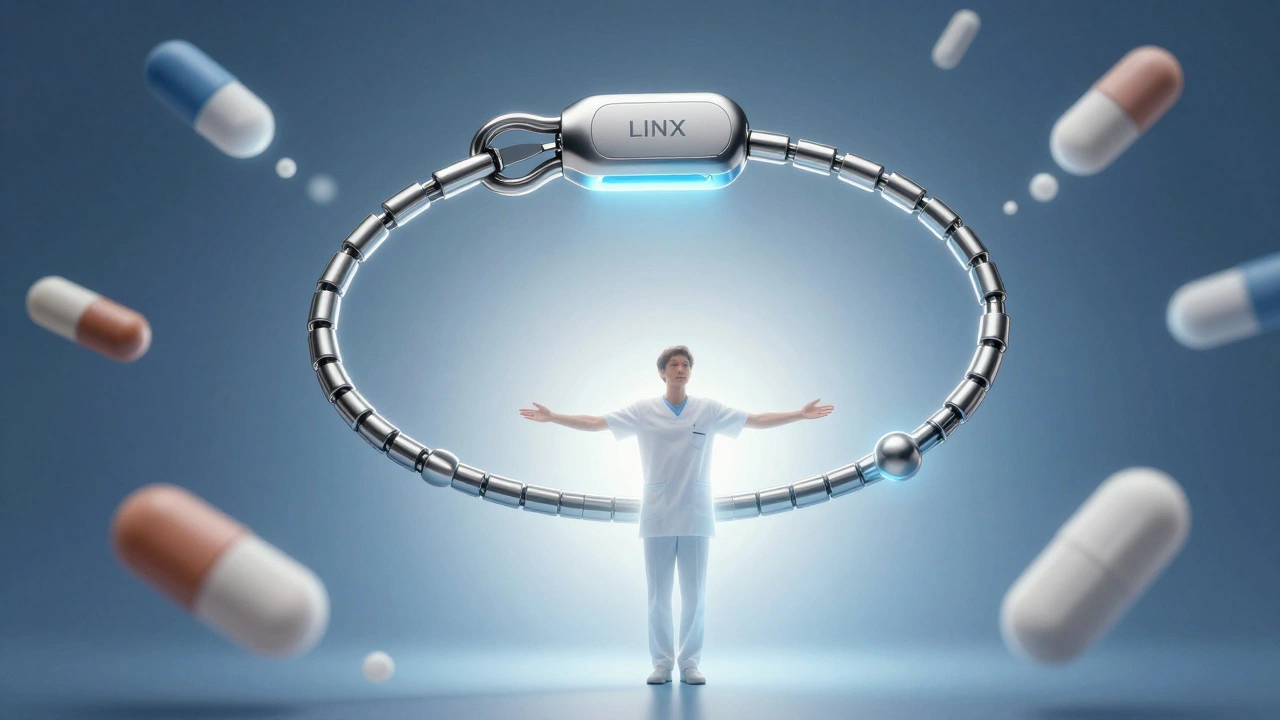
The LINX Reflux Management System is a newer option. It’s a small bracelet of magnetic titanium beads implanted around the LES. It lets food pass through but snaps shut to block acid. Studies show 85% of patients stay off daily PPIs after five years. Only 2-3% need reoperation. It’s less invasive than fundoplication and doesn’t alter your stomach’s shape. But you can’t get an MRI afterward. And it’s not for people who’ve had prior stomach surgery.
Another option is transoral incisionless fundoplication (TIF). It’s done through the mouth with no cuts. Success rates are 70-75% at three years. But it’s technically demanding. As of January 2025, only 127 providers in the U.S. are certified to do it.
What Works for Whom?
There’s no universal answer. Reddit’s r/GERD community has over 142,000 members. Some report total relief with just a low-fat diet and bed elevation. Others tried PPIs for years, then switched to LINX-and now live without daily meds. One user wrote, “PPIs worked for five years, then stopped. LINX gave me two years symptom-free.”
But side effects are common. In Amazon reviews for omeprazole, nearly 30% mention headaches or diarrhea. About 12% report vitamin B12 deficiency symptoms-something doctors often miss.
Trustpilot reviews for LINX show 78% positive ratings. The top praise? “Freedom from daily pills.” The top complaints? “Hard to swallow pills” and “still feel bloated.”
Experts agree: start with lifestyle. If symptoms persist, move to H2 blockers or PPIs. If you’re still struggling, consider P-CABs like vonoprazan. And if medications aren’t cutting it, surgery is a valid, safe option.
What to Do Next
Don’t guess. Track your symptoms. Keep a food and symptom diary for two weeks. Write down what you ate, when you ate it, and how you felt afterward. You’ll likely find 2-3 specific triggers. That’s your personal list.
Take your PPIs before your first meal-not after. If you’re on them for over a year, ask your doctor about checking magnesium and kidney function.
Consider a consultation with a gastroenterologist if you’ve been on PPIs for more than six months without full relief. You might need an endoscopy to check for esophagitis or Barrett’s esophagus, which carries a small but real risk of turning into cancer.
And if you’re thinking about surgery? Talk to a surgeon who specializes in GERD procedures. Ask about success rates, side effects, and long-term outcomes-not just the sales pitch.
GERD is manageable. It’s not a life sentence. But it demands attention. The right combination of habits, meds, and sometimes surgery can turn daily discomfort into quiet, comfortable living.
Can GERD be cured without medication?
Yes, for some people. A strict low-fat diet, weight loss, avoiding trigger foods, not eating before bed, and elevating the head of the bed can eliminate symptoms without drugs. Studies show 30-40% of patients achieve full control with lifestyle changes alone. But it requires consistency. If symptoms return, medication may be needed.
Are PPIs safe for long-term use?
PPIs are effective, but long-term use (over a year) carries risks: higher chances of pneumonia, C. diff infection, chronic kidney disease, and low magnesium. The FDA recommends monitoring magnesium levels every six months for patients on long-term therapy. Use the lowest effective dose and consider stopping under medical supervision if symptoms improve.
What’s the difference between vonoprazan and PPIs?
Vonoprazan (Voquezna) is a potassium-competitive acid blocker (P-CAB), not a PPI. It blocks acid production faster and more completely. While PPIs take 2-5 days to reach full effect and only maintain pH >4 in 65% of patients over 24 hours, vonoprazan achieves this in 95% of patients within hours. It’s especially useful for nighttime reflux and for those who don’t respond well to PPIs.
Is LINX surgery better than fundoplication?
LINX has fewer side effects than fundoplication. It doesn’t cause gas-bloat syndrome in most patients and preserves normal swallowing. Success rates are similar-85% off PPIs at five years for LINX vs. 90-95% for fundoplication. But LINX isn’t for everyone. You can’t have an MRI after implantation, and it’s not recommended if you’ve had prior stomach surgery. Fundoplication is more invasive but has a longer track record.
How long does it take to see results from lifestyle changes?
Some people feel better in days, especially if they stop eating late at night or cut out coffee and alcohol. For weight loss or fat reduction to make a difference, it usually takes 4-8 weeks. Consistency matters more than speed. Track your symptoms daily to see what’s working.
Can stress make GERD worse?
Stress doesn’t cause GERD, but it can make symptoms feel worse. It increases sensitivity to acid and may slow digestion. Managing stress through breathing, yoga, or mindfulness can reduce symptom perception-even if acid levels stay the same. Many patients report fewer episodes when they manage stress, even without changing diet or meds.
Should I avoid all acidic foods?
Not necessarily. While citrus, tomatoes, and vinegar are common triggers, not everyone reacts the same. Some people can tolerate small amounts without issues. The key is to test. Eliminate all acidic foods for two weeks, then reintroduce them one at a time. If a food causes symptoms, avoid it. If not, you can include it in moderation.
What’s the best way to take a PPI?
Take it 30-60 minutes before your first meal of the day. PPIs work best when your stomach’s acid-producing cells are active-right before eating. Taking it after a meal or at bedtime reduces effectiveness by up to 40%. Use the same time every day. Don’t crush or chew the pill unless directed-most are designed to be swallowed whole.


