

When your pharmacist hands you a generic pill instead of the brand-name version, you might not think twice. But behind that simple swap is a complex legal and scientific system designed to ensure safety, save money, and keep the healthcare system running. At the heart of it all are the FDA therapeutic equivalency codes-a set of letters and numbers that tell pharmacists, doctors, and state regulators whether a generic drug can legally replace the original. These aren’t just recommendations. They’re the law.
What Are Therapeutic Equivalency Codes?
Therapeutic Equivalency (TE) codes are assigned by the FDA to multisource prescription drugs listed in the Approved Drug Products with Therapeutic Equivalence Evaluations, better known as the Orange Book. This isn’t a marketing brochure-it’s the official legal reference used across all 50 states to determine if a generic drug can be substituted for a brand-name version. The code starts with a letter: A or B. That single letter makes all the difference. An A-rated drug means the FDA has found it to be therapeutically equivalent to the brand-name drug. That means it has the same active ingredient, strength, dosage form, and route of administration. More importantly, it has been proven through testing to deliver the same clinical effect and safety profile. In plain terms: if your doctor prescribes Lipitor, and you get an A-rated generic at the pharmacy, you’re getting the same medicine-just cheaper. A B-rated drug means the FDA hasn’t confirmed therapeutic equivalence. Maybe the bioequivalence data is incomplete. Maybe the delivery system is too complex to measure reliably. Maybe the inactive ingredients affect how the drug is absorbed. These drugs are approved to sell, but they’re not approved to substitute. Pharmacists can’t swap them out unless the prescriber specifically says “do not substitute.” The second character in the code adds more detail. For example:- AA: Immediate-release oral tablets with no bioequivalence concerns.
- AB: Products that initially had questions but later proved equivalent through additional data.
- BT: Topical products with unresolved bioequivalence issues-think creams or gels.
- BN: Nebulized aerosol products, where delivery method makes testing harder.
- BX: No data available to judge equivalence at all.
How the Law Made This System Possible
Before 1984, getting a generic drug approved meant running the same expensive clinical trials as the brand-name maker. That made generics rare and expensive. The Hatch-Waxman Amendments changed everything. This landmark law created the Abbreviated New Drug Application (ANDA) pathway. Now, generic manufacturers don’t have to repeat every clinical trial. They just need to prove their product is bioequivalent to the brand-name version-the Reference Listed Drug (RLD). Bioequivalence means the generic releases the same amount of active ingredient into the bloodstream at the same rate as the original. But bioequivalence alone isn’t enough. Two drugs can have the same blood levels and still behave differently in the body. That’s why the FDA added the therapeutic equivalence layer. It’s not just about what’s in your blood-it’s about what happens in your body. The legal authority for all of this comes from the Federal Food, Drug, and Cosmetic Act (FD&C Act), specifically Section 505. The FDA doesn’t invent these rules. It implements them. And states? They enforce them.State Laws Are the Final Gatekeepers
The FDA sets the standard. But state pharmacy boards decide what happens in the pharmacy. Every state uses the Orange Book as the official guide for substitution. If a drug has an A rating, state law generally allows substitution. If it’s B-rated, substitution is prohibited unless the doctor writes “dispense as written.” Take California. Its Business and Professions Code Section 4073 says pharmacists can substitute only if the generic has an A rating. New York’s Education Department requires pharmacists to check the current Orange Book edition before swapping any drug. Texas, Florida, Illinois-all follow the same rule. Some states even go further. A few require pharmacists to notify the patient when substitution occurs. Others require documentation in the patient’s record. A few still have “negative formularies” that list specific drugs that can’t be substituted, even if they’re A-rated. Bottom line: Even if the FDA says a drug is interchangeable, the law in your state might still block the swap. That’s why pharmacists don’t guess. They open the Orange Book.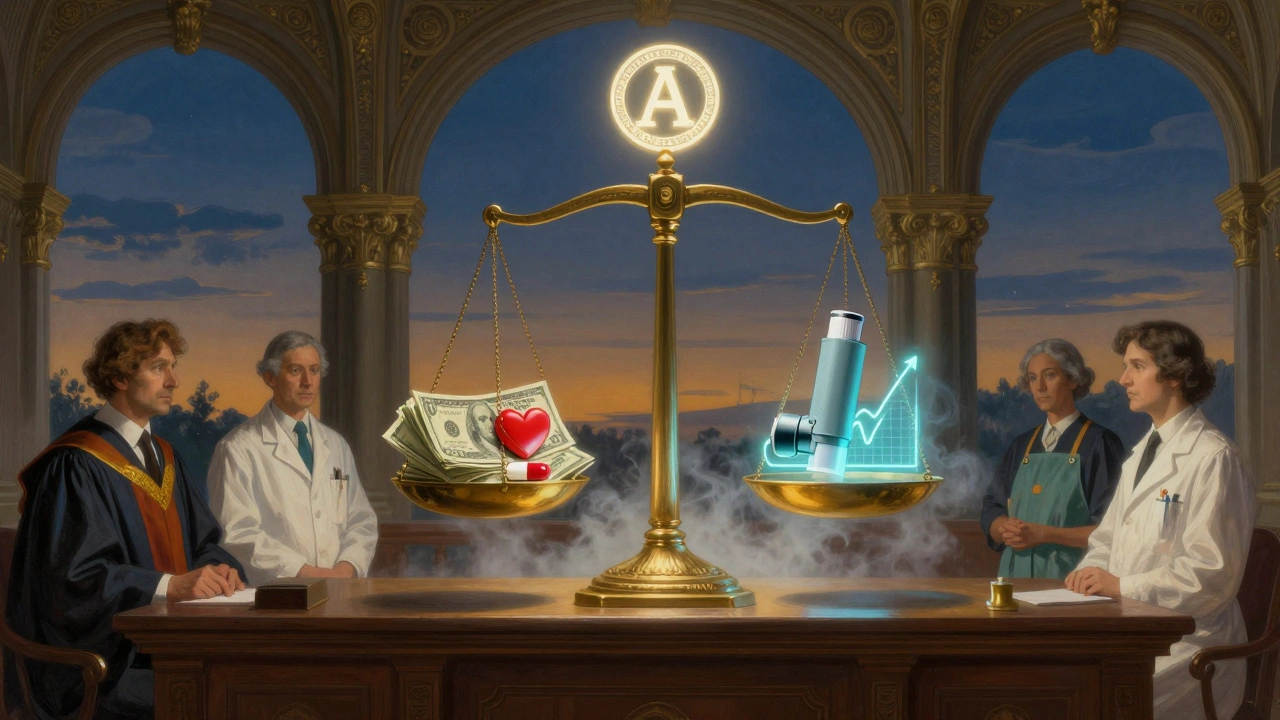
Why Some Generics Still Have B Ratings
You’d think if a drug is approved, it’s interchangeable. But reality is messier. Complex drug delivery systems-like inhalers, patches, gels, and extended-release tablets-are hard to test. Bioequivalence studies that work for pills don’t always apply to creams that need to penetrate skin or inhalers that must deliver precise doses to the lungs. For example, a topical cream labeled BT means the FDA can’t confirm whether different brands deliver the same amount of medicine through the skin. Even if the active ingredient is identical, differences in base ingredients (like oils or thickeners) can change how the drug is absorbed. A 2021 study in the Journal of Generic Medicines found that only 5.3% of generic prescriptions involved B-rated drugs. But those 5.3% matter. They’re often the most expensive drugs-insulin pens, asthma inhalers, arthritis creams-where small differences can impact patient outcomes. Pharmacists are cautious. A 2023 survey by the National Community Pharmacists Association found that 42% of pharmacists struggled to interpret B codes, especially for complex products. Many won’t substitute them, even if the law allows it, because they’re afraid of liability. Brand-name companies know this. In 2022, the FDA received 1,247 citizen petitions challenging TE codes-up 17% from the year before. Most came from manufacturers trying to delay generic competition for high-profit drugs with complex delivery systems.The Real Impact: Billions Saved, Lives Protected
The system works. And it saves a lot of money. In 2022 alone, A-rated generics saved the U.S. healthcare system $298 billion, according to IQVIA. Since 1995, the total savings from generic substitution under this system have exceeded $1.7 trillion. That’s not just a number. It’s a mother choosing between her insulin and her rent. It’s a veteran getting his blood pressure meds without skipping doses. It’s a child with asthma using an inhaler instead of an ER visit. As of October 2023, 62.1% of FDA-approved multisource drugs had A ratings. That’s 8,742 products. The rest? B-rated or unclassified. The FDA knows the system needs improvement. In 2023, they launched the Complex Generic Drug Initiative to reduce the B-code backlog. Their goal? Cut B-rated products from 24.3% to under 15% by 2027. They’ve already cut review times for complex generics from 34 months to 22 months. They’re also modernizing the Orange Book. Since January 2023, it’s been fully digital with API access for electronic health records. That means pharmacists can check codes directly in their dispensing software-no more flipping through paper books.
What You Should Know as a Patient
You don’t need to memorize TE codes. But you should understand what they mean for you. If your prescription is for a drug with an A rating, your pharmacist can legally substitute a generic. You’ll pay less. You’ll get the same medicine. If your prescription says “do not substitute,” or if the generic has a B code, your pharmacist can’t swap it without your doctor’s OK. If you’re unsure, ask: “Is this generic approved to substitute for the brand?” Don’t assume all generics are the same. Two generics of the same drug can have different TE codes based on their formulation. One might be AA. Another might be AB. Both are safe. But only the AA one can be swapped automatically. And if you notice a change in how a medication works after switching generics-side effects, lack of effect, unusual reactions-tell your doctor. It’s rare, but it happens. The system isn’t perfect. But it’s the best we have.What’s Next for Therapeutic Equivalency?
The FDA’s 2023-2027 Strategic Plan puts expanding therapeutic equivalence for complex drugs at the top of its list. That means more inhalers, patches, and injectables will get A ratings in the coming years. The Generic Drug User Fee Amendments (GDUFA) III pledged $28.7 million to develop better testing methods for complex products. Scientists are working on new ways to measure skin absorption, lung deposition, and controlled-release profiles-methods that go beyond blood tests. Industry experts say this is the most sophisticated balancing act in modern drug regulation. On one side: lower costs, broader access. On the other: safety, precision, and trust. The FDA isn’t just approving drugs. It’s building a legal framework that lets millions of Americans afford the medicines they need-without compromising care.What does an A-rated drug mean for substitution?
An A-rated drug means the FDA has determined it is therapeutically equivalent to the brand-name version. This means it has the same active ingredient, strength, dosage form, and route of administration, and has been proven to deliver the same clinical effect and safety profile. Pharmacists can legally substitute an A-rated generic for the brand-name drug unless the prescriber writes "do not substitute."
Can a pharmacist substitute a B-rated generic without permission?
No. A B-rated drug has unresolved bioequivalence issues or insufficient data to confirm therapeutic equivalence. State laws prohibit substitution of B-rated drugs without explicit permission from the prescribing provider. Pharmacists are required to check the FDA’s Orange Book before substituting any generic, and they cannot legally swap a B-rated product unless the prescription says "dispense as written" or the prescriber approves the change.
Why do some generic drugs have different TE codes even if they contain the same active ingredient?
Two generics of the same drug can have different TE codes because the code is assigned to each specific product, not just the active ingredient. Differences in inactive ingredients, manufacturing processes, or delivery systems-like extended-release coatings or topical bases-can affect how the drug is absorbed or released. Even small changes can impact bioequivalence. The FDA evaluates each product individually, so one generic might be AA-rated while another for the same drug is AB-rated or even B-rated.
Are over-the-counter (OTC) drugs assigned TE codes?
No. TE codes are only assigned to prescription drugs approved under Section 505 of the FD&C Act. Over-the-counter (OTC) drugs are regulated under different standards and are not evaluated for therapeutic equivalence by the FDA. Pharmacists can substitute OTC products based on store policy or patient preference, but these substitutions are not governed by the Orange Book or TE codes.
How often is the Orange Book updated, and why does it matter?
The Orange Book is updated monthly with new approvals, withdrawn products, and revised TE codes. This matters because a drug’s therapeutic equivalence status can change. A product previously rated B might be upgraded to AB after new data is submitted. A brand-name drug might lose exclusivity, allowing new generics to enter with A ratings. Pharmacists must always use the most current version to ensure legal and safe substitution. Outdated information could lead to improper substitutions or missed savings.


