

If you’ve ever opened a prescription bottle in the U.S. and winced at the price, you’re not alone. A 30-day supply of generic atorvastatin costs $12 in Canada but $85 at your local pharmacy. That’s not a typo. The gap isn’t just wide-it’s a chasm. And for millions of Americans, buying generics abroad isn’t a fringe idea anymore. It’s a survival tactic.
Why U.S. Drug Prices Are So High
The U.S. doesn’t negotiate drug prices the way other countries do. In Canada, the UK, or Germany, the government sets limits on what pharmacies can charge. In the U.S., drugmakers set prices, and pharmacy benefit managers (PBMs) negotiate rebates behind closed doors. The result? You pay the list price. The average American pays nearly three times more for the same medicine than someone in a comparable country. Here’s the twist: U.S. generic prices aren’t always higher. In fact, the government’s own data shows U.S. generics cost 67% of what they cost in other OECD countries. So why does your bill still feel crushing? Because the U.S. uses generics for 90% of prescriptions, while other countries use them for just 41%. That means you’re buying more generics-but still paying more overall because brand-name drugs are priced like luxury goods.Where to Find Real Savings
Not all countries are equal when it comes to generic prices. If you’re looking for the cheapest options, here’s where to look:- Canada: Generic prices are 32% lower than U.S. retail. Many U.S. pharmacies even source their generics from Canadian wholesalers.
- United Kingdom: NHS prices are 47% below U.S. list prices for the same generic drugs.
- Sweden: The cheapest country in Europe for generics, with prices under 30% higher than Finland’s and over 70% lower than Switzerland’s.
- India: Manufacturing hub for many global generics. Prices can be 80-90% lower-but quality control is inconsistent.
- South Korea: Over half of 26 tested generics were cheaper than in G20 countries.
The Quality Risk: Is It Worth It?
The FDA requires generics to be bioequivalent-meaning they deliver the same amount of active ingredient into your bloodstream as the brand name, within a narrow 80-125% range. The European Medicines Agency uses similar standards. But not every country enforces them. In 2022, the FDA inspected foreign manufacturing plants and found that 12.3% received “Official Action Indicated” ratings-meaning serious violations. That’s more than double the rate for U.S. plants. Temperature control is another hidden danger. The International Air Transport Association found that 20-25% of shipped medicines experience temperature excursions. That can ruin insulin, antibiotics, or even antidepressants. One Reddit user reported getting sertraline tablets from India that varied in size and color. They had to visit their doctor because the medication didn’t work. So yes, you can save money. But you might also risk your health.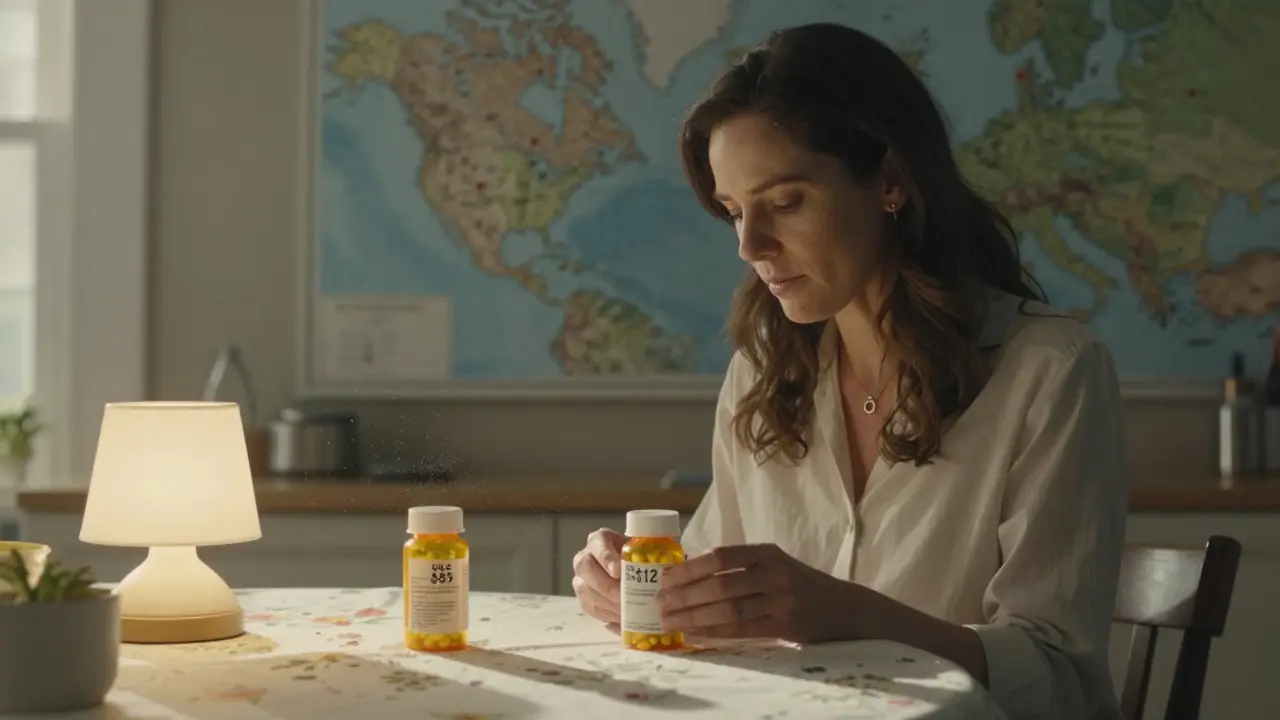
How to Buy Safely (If You Decide To)
If you’re serious about buying abroad, don’t just Google “cheap generic pills.” Follow these steps:- Use only accredited pharmacies. Look for the VIPPS seal from the National Association of Boards of Pharmacy. As of July 2024, only 63 international pharmacies were accredited.
- Check the country. Stick to Canada, the UK, Australia, or New Zealand. These countries have strong regulatory systems.
- Verify the prescription. The FDA allows personal importation only if you have a valid prescription and the drug is for personal use (no more than a 90-day supply).
- Look for contact info. Legitimate pharmacies list a physical address, phone number, and licensed pharmacist on staff.
- Avoid “too good to be true” deals. If a site offers 90% off brand-name drugs, it’s likely fake.
What You’ll Actually Save
Real-world savings vary by drug and country. Here’s what users report:- Atorvastatin (Lipitor generic): $12 in Canada vs. $85 in the U.S. (86% savings)
- Metformin: $15 for 90 tablets in the UK vs. $78 in the U.S. (81% savings)
- Levothyroxine: $18 in Canada vs. $92 in the U.S. (80% savings)
- Simvastatin: $22 in Australia vs. $65 in the U.S. (66% savings)
The Legal Gray Area
The FDA technically doesn’t allow you to import prescription drugs from abroad. But they also don’t go after individuals. That’s called “enforcement discretion.” As long as you’re not reselling, you’re not breaking the law in practice. But it’s still technically illegal. State programs like Florida’s and Vermont’s are changing that. They’re the first legal pathways. Maryland, Colorado, and Maine have also been approved. But PhRMA-the drug industry’s main lobbying group-is fighting back. In April 2024, a federal court blocked Minnesota’s program, saying it violates federal law. So while you can buy abroad now, the legal landscape is shifting fast.
What Goes Wrong
Most people who try this succeed. But 32% report problems:- Shipment seized by customs (18%)
- Received counterfeit pills (9%)
- Medication delayed (5%)
- Language barriers on packaging (27%)
- Can’t return defective drugs (33%)
Who Should Avoid This
Not everyone should buy abroad. Avoid it if:- You take medications that need strict temperature control (insulin, epinephrine, some biologics)
- You have a complex medical condition requiring close monitoring
- You can’t verify the pharmacy’s credentials
- You’re buying for someone else
What’s Next
The U.S. government is watching. The Congressional Budget Office estimates state importation programs could cut U.S. drug spending by 1.2-2.3% by 2030. That’s billions saved. But the drug industry argues it would hurt innovation. They say U.S. patients fund 67% of global drug research. Meanwhile, the WHO is updating its global quality standards. If countries start meeting higher benchmarks, safety will improve. But that’s years away. For now, the choice is yours. You can pay full price at home. Or you can take a calculated risk to save hundreds-or even thousands-each year.Just don’t skip the research. Your health depends on it.
Is it legal to buy generic medicines from other countries?
Technically, the FDA prohibits importing prescription drugs from abroad. But in practice, they don’t pursue individuals who import small amounts (up to a 90-day supply) for personal use, as long as the drugs aren’t counterfeit or dangerous. State-run importation programs like Florida’s and Vermont’s are now legal exceptions, approved by the FDA. These programs allow residents to buy from accredited Canadian pharmacies under strict rules.
Which countries have the cheapest generic drugs?
Canada, the United Kingdom, Sweden, and Australia consistently offer the lowest generic drug prices. Canada’s prices are about 32% lower than U.S. retail. The UK’s NHS prices are 47% lower. Sweden has the cheapest generics in Europe, with prices over 70% lower than Switzerland’s. India offers the lowest manufacturing prices, but quality control is inconsistent. Stick to countries with strong regulatory systems: Canada, the UK, Australia, and New Zealand.
Are generic drugs from other countries the same as U.S. ones?
Legally approved generics must contain the same active ingredient and meet bioequivalence standards. However, differences in manufacturing, packaging, and inactive ingredients can exist. The bigger risk is unregulated sources. The FDA found that 12.3% of foreign manufacturing plants had serious violations. Only accredited pharmacies (like those with VIPPS certification) guarantee quality. Avoid pharmacies that don’t require a prescription or can’t provide contact information.
Can temperature changes ruin imported medicines?
Yes. The International Air Transport Association found that 20-25% of temperature-sensitive drugs-like insulin, epinephrine, and some antibiotics-experience harmful temperature changes during international shipping. This can reduce potency by up to 30%. If you’re buying these types of medications, choose pharmacies that use cold-chain shipping and provide tracking. Avoid vendors who ship in regular envelopes or don’t mention temperature control.
How do I know if an online pharmacy is safe?
Look for the VIPPS seal from the National Association of Boards of Pharmacy. Only 63 international pharmacies had this accreditation as of July 2024. Also check: a physical address, a licensed pharmacist on staff, a U.S. phone number, and a requirement for a valid prescription. Avoid sites that sell without a prescription, offer “miracle cures,” or have poor reviews. Use the FDA’s list of unsafe websites to avoid.
What should I do if my imported medication doesn’t work?
Contact your doctor immediately. Do not take more of the medication. Report the issue to the FDA’s MedWatch program. Unfortunately, most international pharmacies have strict return policies, and customs may not allow you to send the product back. Keep all packaging, receipts, and communication records. If you suspect counterfeit medication, report the pharmacy to the FDA and the National Association of Boards of Pharmacy.
Can I get help from my U.S. pharmacy to buy abroad?
Some U.S. pharmacies now partner with accredited international suppliers, especially in states with importation programs. Ask your pharmacist if they offer a cost-saving program through Canada or the UK. Some mail-order pharmacies also offer discounted generics through legal channels. Don’t rely on your pharmacy to find deals on random websites-but do ask if they have a safe, approved option.


